Qiaotou Three-Tender is a signature small-wok stir-fry of Zigong's salt-merchant cuisine, built around three kinds of pork offal — liver, kidney flowers, and tripe — each cooked separately and served as three side-by-side plates. All three are velveted in water-starch, then blasted in smoking-hot rapeseed oil for roughly ten seconds each, pulled at eighty percent done so residual heat finishes the job on the plate. Pork liver comes out silken and fragrant; kidney flowers crisp-snapping and fresh; tripe chewy, aromatic, and tender — three distinct textures that share one doubanjiang-and-Sichuan-peppercorn base. The defining principle is an unforgiving one: one stroke too many and the offal turns tough; one stroke too few and it's raw.


Qiaotou Three-Tender traces to Qiaotou Town in Zigong's Gongjing District, roughly fifteen kilometers from the city center, where chef Xie Quanzhi opened a small family restaurant with his three sons in the early 1980s. His stir-fried pork liver, kidney flowers, and tripe quickly drew food lovers from across Zigong and neighboring counties, at times generating queues of over two hundred waiting numbers. As the three sons later established their own restaurants under the same name, the brand spread. In 2014, the trademark 'Qiaotou Three-Tender' was officially registered; the dish has since been listed in Gongjing District's salt-cuisine honor roll and was named a Zigong salt-bang heritage brand in 2023. The dish belongs to Zigong's centuries-old salt-merchant culinary tradition: the city's Qing-dynasty salt industry attracted both wealthy merchants and large numbers of laborers, creating a sophisticated yet robust local cuisine that valued fierce heat, pronounced mala flavor, and the transformation of inexpensive offal ingredients into memorable food through precision technique.
Three plates arrive steaming, side by side. A slice of liver barely requires chewing — it dissolves smooth, leaving a savory doubanjiang char and a low Sichuan-peppercorn buzz on the lips. A kidney flower, scored in a wheat-ear pattern, curls slightly at the edges from the heat and snaps when bitten, the freshest and most vibrant of the three. The tripe squares are thicker, chewier, with an earthy depth that the pickled chili brightens against. All three share the same aromatic base but each pulls different flavors from it. Eat while the plates are still radiating heat — once the wok breath dissipates, the dish goes flat.
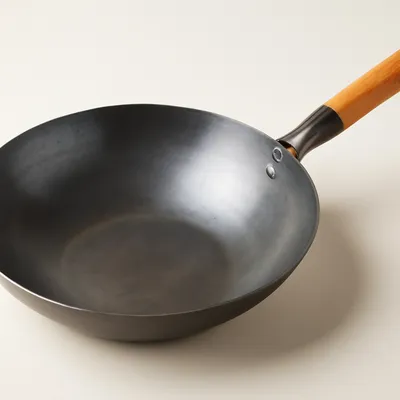
Two things produce the dish's tenderness: velveting and split-second timing. Each cut of offal is coated in water-starch before hitting the wok; the starch gelatinizes on contact with the smoking oil, forming a moisture-trapping shell that slows direct heat from desiccating the protein fibers — that thin coat is why even a smoke-hot wok leaves the liver silken. The second factor is the 'eighty-percent rule': everything is plated at eighty percent done, letting residual heat carry each piece to exactly right. Wait for full doneness in the wok and the dish arrives at the table overdone. The kidney's characteristic snap comes from the rapid contraction of renal tubule tissue under extreme heat — but the window for that texture is only a few seconds wide; past it, the pieces go rubbery. Wok-hei — the Maillard browning that a commercial flame at high temperature triggers on the food's surface — gives the char-fragrant note that ties all three plates together. The 'one-bowl method' (一碗料法), in which all aromatics for each component are pre-combined in a single small bowl and tipped in simultaneously with the offal, removes any pause from the ten-second cook; hesitation means an extra five seconds in the wok, which is the difference between tender and tough.
Variations
The three components are traditionally cooked and plated separately; some restaurants combine all three offal in one wok for convenience, but practitioners argue this ruins the dish because each has a different doneness window — cooking them together inevitably over or undercooks at least one. Heat-seekers can finish with a drizzle of Sichuan peppercorn oil. Some kitchens around Zigong substitute duck gizzard for tripe to emphasize crunch. An expanded version adds beef honeycomb tripe and tendon to create a 'five-tender' format, though the registered trademark covers the original three-component set only.
On the Palate
Where Qiaotou Three-Tender sits in the Chinese flavor cloud
Ingredients
Serves 2



How it's made
7 steps · 25 min active + 20 min waiting
- 120 min
Score the kidneys in a wheat-ear pattern using two perpendicular sets of diagonal cuts, then section into bite-sized pieces; soak in cold water for 20 minutes to remove any gamey odor. Slice liver as thin as possible, about 3 mm. Cut tripe into 2 cm cubes; blanch briefly in boiling water, drain, and pat dry.
- 25 min
Velvet each offal separately: toss kidney, liver, and tripe each with a small pinch of salt and enough water-starch to coat; divide into three bowls.
Watch outSlice the liver as thin as you can, about 3mm — thick pieces can't cook through in ten seconds without going tough on the outside.
- 35 min
Prepare three aromatic bowls — one per component. In each small bowl combine Doubanjiang, crushed pickled chili, dried chili, Sichuan peppercorn, sliced ginger, smashed garlic, and chopped scallion. Pre-measuring everything is the one-bowl method that allows a continuous ten-second cook without pause.
- 41 min
Cook liver: heat wok with rapeseed oil until oil smokes; pour liver and its aromatic bowl in simultaneously. Stir in broad, rapid strokes for about 9 seconds — three strokes, tip in the aromatics bowl, three more strokes, off the heat, three final strokes. Plate at 80% done; residual heat finishes it.
Watch outThe oil must be actually smoking before the liver drops — a lukewarm wok stews it grey instead of searing it silky.
- 51 min
Wipe the wok, return to full heat. Cook kidney the same way: oil to smoking, kidney and aromatics together, rapid stir about 10 seconds, plate at 80% done.
Watch outPlate the kidney at eighty percent done — the carry-over heat finishes it on the plate; cook it fully in the wok and it arrives rubbery.
- 61 min
Wipe the wok, return to full heat. Cook tripe by the same method, allowing a few extra seconds — about 12 to 15 seconds total — to account for the denser texture. Plate.
- 71 min
Serve all three plates simultaneously while still steaming. Once the wok breath fades, the dish loses its essential character.
Watch outGet all three plates out while the wok breath still steams off them — once that aroma fades the dish loses its soul.