
Hamo no otoshi is the signature summer fish dish of Kyoto, made from hamo (pike conger eel). Because the flesh is laced with countless fine intermuscular bones, the eel is first given honekiri, a specialized knife technique in which a chef makes many fine parallel cuts down to but not through the skin, severing the bones into harmless fragments. The bone-cut fillet is briefly blanched in hot water (yubiki) and immediately plunged into iced water; this is the otoshi, named for "dropping" the flesh into the ice. As it sets, each cut flares open and the white flesh curls into a shape likened to a peony, giving the dish its other name, botan-hamo. It is served cold with tart ume (plum) sauce or ponzu, and is eaten across the city during the July Gion Matsuri, which Kyotoites also call the Hamo Festival.




Kyoto sits inland, far from the sea, yet hamo became one of its defining ingredients precisely because the fish is exceptionally hardy. In the centuries before refrigeration, peddlers carried fish from the Seto Inland Sea and Osaka Bay over the mountains in tubs of seawater; most fish spoiled in the summer heat, but hamo could survive the journey and arrive in Kyoto still alive. Its peak coincides with early summer after the rainy season, the same weeks as the July Gion Matsuri, so the festival is popularly nicknamed the Hamo Festival and the fish served then is called festival hamo. The honekiri bone-cutting technique developed in Kansai kitchens specifically to make this bone-laden fish edible, and chefs are said to need close to a decade to master it. The precise inventor and date of the technique are unrecorded.
Cold, with a firm yet tender bite that gives way cleanly; the white flesh has flared into delicate curled petals, glossy and faintly sweet, while the skin adds a slight chew. Properly bone-cut hamo carries no perceptible bones at all — the fragments simply dissolve in the mouth. The plum sauce or ponzu cuts the richness with a sharp, clean acidity that lifts the mild flesh. Poor honekiri betrays itself instantly: stray slivers of bone prick the tongue, and flesh that was over-blanched turns dry and stringy rather than blooming open.
Hamo flesh is riddled with fine, hard intermuscular bones that cannot be filleted out, so the honekiri knife severs them in place: the blade descends through the flesh at intervals of roughly one cut per millimeter — many cuts across each sun (about 3 cm) — stopping just short of the skin, which holds the fillet together while the bones are chopped into fragments small enough to be unnoticeable. The brief hot-water blanch (yubiki, around 80°C) denatures the surface proteins of the cut flesh; because the muscle was scored, the contracting fibers pull each segment outward and the fillet curls open into the peony shape. The immediate ice-water shock halts cooking and firms the texture by tightening the proteins, leaving the interior just-set rather than overcooked. The acidity of ume (from citric and malic acids in the pickled plum) and of ponzu (citrus) brightens the mild, lean summer flesh and balances its faint sweetness.
Variations
Beyond the cold otoshi, hamo appears in many forms: hamo-chiri, a light hot pot of blanched eel; hamo-shabu, swished briefly in dashi; yaki-hamo, grilled and often glazed teriyaki-style; and hamo-sushi, the soy-glazed flesh over rice. In autumn the lean summer fish gives way to fattier eel paired with matsutake mushrooms in dobin-mushi, a clear broth steamed in a teapot — the two are called a "destined pairing" (deai-mono). The cold dish is dipped variously in ume (plum) sauce, ponzu, or karashi-su-miso, a mustard-vinegar miso.
On the Palate
Where Hamo no Otoshi sits in the Japanese flavor cloud
Ingredients
Serves 4
How it's made
7 steps · 30 min active + 10 min waiting
- 120 min
Use hamo (pike conger) that a fishmonger has already filleted and bone-cut (honekiri); if you are skilled, perform honekiri yourself, making many fine cuts about one millimeter apart down to but not through the skin. Cut the prepared fillet into bite-size pieces about 3 cm wide.
Watch outScore the fillet with many fine cuts about a millimeter apart, down to but not through the skin — the skin holds it together while the cuts chop the hard little bones into unnoticeable fragments.
- 25 min
Bring a pot of water to roughly 80°C — hot but not at a rolling boil — and prepare a large bowl of iced water alongside.
- 31 min
Lower a few pieces of hamo into the hot water skin-side down; in 10 to 20 seconds the flesh will whiten and the cuts will flare open into a peony shape.
Watch outBlanch skin-side down in roughly 80-degree water — in 10 to 20 seconds the scored flesh whitens and flares open into a peony; a rolling boil overcooks it.
- 41 min
Immediately lift the pieces out and plunge them into the iced water to stop the cooking and firm the flesh.
Watch outPlunge straight into iced water the instant it blooms — this stops the cooking and firms the flesh so the petals stay crisp.
- 55 min
Once fully chilled, drain the hamo and pat it dry; work in small batches so the water temperature stays steady.
- 65 min
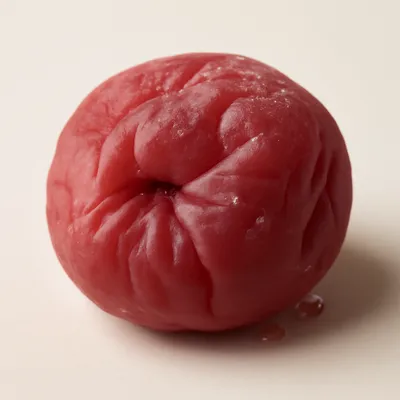
Make the ume sauce by sieving the flesh of pickled plums (umeboshi) and loosening it with a little mirin and dashi; alternatively prepare ponzu.
- 73 min
Arrange the bloomed hamo, petals facing up, on a chilled plate and serve cold with the ume sauce or ponzu alongside.
Archive tool suggestions — not reviewed
These legacy suggestions have not been evidence-reviewed and are not presented as required tools.


