
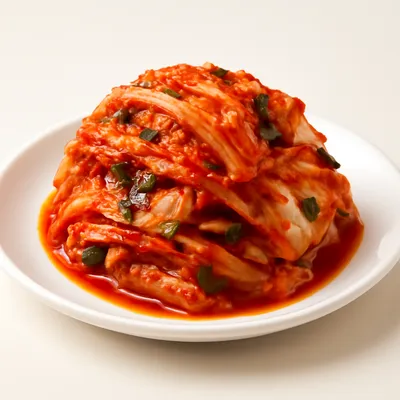
Morioka reimen is a cold-noodle dish from Morioka in Iwate Prefecture, Tohoku, adapted from Korean naengmyeon. Its noodles are made mainly from potato starch and wheat flour, which gives them a smooth, translucent look and an unusually firm, springy, almost rubbery chew — quite unlike soft wheat or buckwheat noodles. They are served chilled in a clear, refreshing broth simmered from beef and chicken bones, topped with kimchi, cucumber, half a boiled egg, slices of beef or chashu, and, distinctively, a wedge of fruit such as apple, pear or watermelon. It is one of Morioka's 'three great noodles' alongside wanko soba and jajamen. The course is a main.




Morioka reimen is credited to Aoki Teruhito (born Yang Yong-cheol in Hamhung, in present-day North Korea), who moved to Japan in 1938. In 1954 he opened a yakiniku restaurant in Morioka called Shokudoen and put a cold noodle on the menu, recreating the naengmyeon of his homeland with locally available ingredients; drawing on both Pyongyang- and Hamhung-style cold noodles, he arrived at the chewy, potato-starch noodle now associated with the city. The dish was unfamiliar at first and spread gradually, becoming established through Morioka's cold-noodle and yakiniku shops; the name 'Morioka reimen' was reportedly settled on around 1986–87 to brand it as a local specialty. It is now recognized as one of the three great noodles of Morioka.
The defining sensation is the noodle's bounce: cold, glossy and translucent, it resists the teeth and snaps cleanly rather than yielding softly, so each strand feels alive in the mouth. The broth is clear, cold and savory with a clean beef-and-chicken depth, brightened by tangy, lightly spicy kimchi and cool cucumber. The fruit is the surprise — a sweet, juicy wedge that refreshes the palate between mouthfuls of salty broth and chili. A good bowl is bracingly cold throughout; warm broth or a soft, slack noodle is a failure.
The chew comes from the noodle's starch chemistry. Potato starch is rich in amylopectin and, mixed with the gluten-forming proteins of wheat flour, is forced through a press under pressure; the strands drop straight into boiling water, where the starch gelatinizes and the gluten sets into a dense, elastic network. A cold-water rinse and ice bath after boiling firm the surface and tighten that network further (the starch partially retrogrades), which is why the noodles are springy rather than soft and are always served cold. The broth relies on glutamate-inosinate synergy — glutamate from the kombu or seasonings working with inosinate from the long-simmered beef and chicken bones — to taste deeply savory while staying clear and light, and serving it chilled keeps that clarity crisp.
Variations
Spice level is the main variable: shops let diners choose how much kimchi or chili paste goes in, from mild to fiery 'betsukara' (chili served on the side). The fruit topping shifts with the season — watermelon in summer, apple or Asian pear otherwise. Within Tohoku, Morioka reimen is distinct from Korean cold noodles proper: Pyongyang naengmyeon leans on buckwheat for a softer, earthier strand, while Hamhung naengmyeon is a spicy, near-broth-less mix. Morioka's other two 'great noodles' are unrelated dishes — wanko soba, served in endless tiny refills, and jajamen, hot udon-like noodles with a meat-and-miso topping.
On the Palate
Where Morioka Reimen sits in the Japanese flavor cloud
Ingredients
Serves 2


How it's made
8 steps · 40 min
- 1120 min
Make the broth ahead: simmer beef and chicken bones with aromatics for a couple of hours, skimming, then season lightly with soy sauce and salt; strain and chill until cold.
- 210 min
Prepare the toppings: boil and halve an egg, slice cucumber into batons, ready the kimchi, slice cooked beef or chashu, and cut a wedge of fruit.
- 35 min
Bring a large pot of water to a rolling boil for the noodles.
- 42 min
Cook the potato-starch reimen noodles in the boiling water for the brief time specified, stirring so they do not clump.
- 52 min
Drain immediately and rinse the noodles under cold running water, rubbing off surface starch, then plunge into ice water to firm them.
Watch outRinse the boiled noodles under cold water then plunge into ice — this rubs off surface starch and tightens the network so they turn springy, not soft.
- 61 min
Drain the chilled noodles well and coil them into a cold bowl.
- 71 min
Pour the cold broth around the noodles.
Watch outPour the broth around ice-cold — this is a cold noodle soup, and a warm broth turns the springy strands soft and flat.
- 82 min
Arrange the kimchi, cucumber, egg, beef and fruit on top, and serve at once, ice-cold.
Archive tool suggestions — not reviewed
These legacy suggestions have not been evidence-reviewed and are not presented as required tools.


