
Ogura toast is the signature kissaten (coffee-shop) breakfast of Nagoya: a thick slice of white bread toasted, spread generously with butter or margarine, and topped with ogura-an, a sweet azuki red-bean paste. The salted butter against the hot bread and the mellow sweet beans is the whole appeal; some shops sandwich the paste between two slices, others heap it on open-faced, and it is often served with a boiled egg and coffee as part of Nagoya's celebrated free 'morning' set. It is a half-Western, half-Japanese sweet treated as breakfast or a snack rather than a dessert.




Ogura toast is documented as having originated at the Nagoya coffee shop Mitsuba, in the central Sakae district, in the Taisho era (1912–1926); the often-cited year is 1921. The widely repeated account holds that the proprietor noticed students dipping their buttered toast into bowls of zenzai (sweet azuki porridge) and turned that habit into a dish by topping the toast with the bean paste directly. It became a fixture of Nagoya's kissaten and spread across Aichi Prefecture as a regional specialty; the dish is inseparable from Nagoya's distinctive 'morning' culture, in which a cup of coffee comes with toast and small extras at no added cost.
Bite in and the toast is hot and crisp at the edges but still soft within, the butter melting into it so it is rich and faintly salty; the ogura paste on top is cool to warm, thick, and sweet, with whole or part-whole azuki beans giving a soft, grainy chew and an earthy bean flavor. The pleasure is the play of salty butter against sweet beans and the temperature gap between the warm bread and the paste. It is best while the toast is freshly made and still crackling; left to sit, the bread softens and goes limp under the moist paste and the contrast fades.
Two things make it work. First, toasting drives moisture from the bread surface and browns it by the Maillard reaction and starch dextrinization, giving a crisp, lightly nutty crust over a still-tender crumb; the heat then melts the butter so its fat soaks in and carries salt through the slice. Second, the contrast of salt and sweet: the saltiness of the butter sharpens the perception of the azuki paste's sweetness rather than competing with it, the same reason a pinch of salt is added to many sweets. The bean paste itself is azuki simmered with sugar, which both sweetens and, by binding water, helps it keep a thick, spreadable set. Serving it hot maximizes the aromatic lift of the toasted bread and the melting butter.
Variations
The most basic split is open-faced, with butter and paste on a single thick slice, versus a closed sandwich (ogura sando) with the paste enclosed between two slices. Shops vary the paste between tsubu-an (chunky, with whole beans) and koshi-an (smooth, sieved). Common embellishments include a curl of whipped cream, a scoop of butter left to melt at the table, or a slick of margarine in the older style. The Nagoya chain Komeda's Coffee popularized its own version nationally, and a related local oddity is the 'small ogura' served with the morning set. It belongs to the wider world of anko-and-bread pairings, here served as a hot kissaten dish rather than a packaged sweet.
On the Palate
Where Ogura Toast sits in the Japanese flavor cloud
Ingredients
Serves 1How it's made
6 steps · 8 min active + 2 min waiting
- 13 min
Make or warm a batch of ogura-an: simmer cooked azuki beans with sugar and a pinch of salt to a thick, spreadable paste, then let it cool slightly (or use ready-made anko).
- 22 min
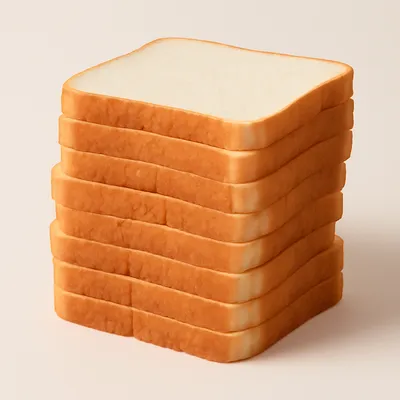
Take a thick slice of white bread, about 3 to 4 cm, and toast it until the surface is crisp and golden.
Watch outToast the thick slice until the surface is crisp and golden — a firm crust is what stands up to the melting butter and wet bean paste without going limp.
- 31 min
While the toast is hot, spread butter or margarine over it so it melts in.
Watch outButter the toast while it's still hot so the fat soaks in and carries salt through — that salt is what sharpens the sweetness of the bean paste.
- 41 min
Spoon the ogura paste generously over the buttered toast and spread it to the edges, or sandwich it between two slices.
- 51 min
Optionally finish with a little extra butter, a curl of whipped cream, or a halved boiled egg on the side.
- 61 min
Cut in half and serve at once, with coffee, while the toast is still crisp.
Archive tool suggestions — not reviewed
These legacy suggestions have not been evidence-reviewed and are not presented as required tools.


