Sooji halwa is the everyday Indian semolina pudding: coarse semolina (sooji/rava) roasted in ghee until golden and nutty, then cooked with hot sugar syrup or sweetened water until it swells into a soft, glossy, fluffy mass scented with cardamom and dotted with fried nuts and raisins. Quick and forgiving, it is made for breakfast, for festivals, and above all as temple prasad, where in its devotional form it is called sheera or kesari. The defining steps are the patient roast of the semolina and the careful pouring in of the liquid.




Sooji halwa is part of the wider halwa tradition of slow-cooked sweet pastes that entered India from the Arab and Persian world, adapted here to roasted semolina, ghee and sugar. It is deeply woven into Hindu and Sikh devotional practice: as kada prasad it is the sanctified offering distributed in gurdwaras, and as sheera or kesari (turmeric- or saffron-tinted) it is offered in temples and at pujas across India. As a humble, universal household and temple sweet it has no single inventor or founding date; its religious role and ease have made it one of the most commonly cooked sweets of the subcontinent.
A warm, soft, fluffy spoonful, pale gold to deep saffron, glossy with ghee and just holding its shape. It is light and granular on the tongue, each swollen semolina grain distinct yet tender, melting into a mild milky-buttery sweetness lifted by cardamom and the toasty flavour of the roast. Fried cashews and raisins give crunch and chew. It is comforting and gentle rather than heavy — the better the semolina is roasted, the deeper and more fragrant the nutty backbone.
Dry-roasting the semolina in ghee is the critical step: it toasts the starch and develops nutty, browned flavour while coating each grain in fat, which keeps the grains separate and prevents a gummy, pasty result. When hot liquid is added the pre-roasted grains gelatinize and swell rapidly, absorbing the water and tripling in volume; adding the liquid hot and in a steady stream, off or low heat, avoids lumps. Sugar is cooked in after the grain has swollen so the halwa stays fluffy, and the ghee continues to gloss and enrich it. A common ratio is roughly equal parts semolina, ghee, sugar and a larger measure of water.
Variations
Tinted with saffron or a pinch of turmeric and often a little extra ghee, it becomes kesari bath, the South Indian temple and tiffin version, sometimes with pineapple. As sheera it is the Maharashtrian and western Indian festive form, and as kada prasad the Sikh gurdwara offering uses equal parts semolina, ghee, sugar and water. Cooks vary the liquid between water, milk or a mix, adjust the nuts, and some add fruit or a saffron-rose scent; the roast level and ghee quantity define the richness.
On the Palate
Where Sooji Halwa sits in the Indian flavor cloud
Ingredients
Serves 4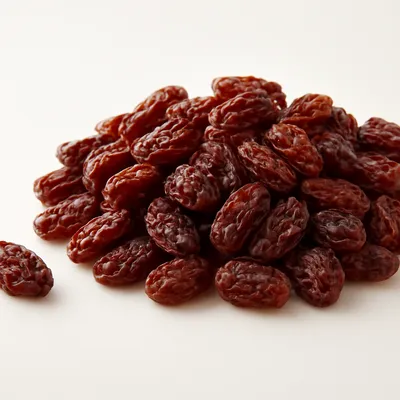
How it's made
6 steps · 10 min
- 110 min
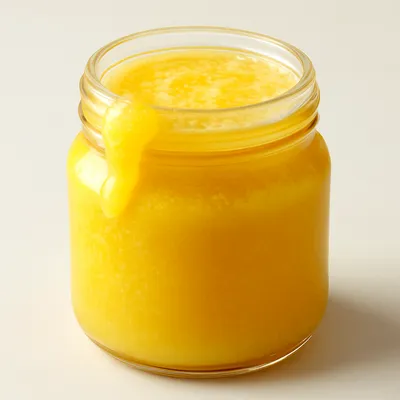
Heat ghee in a heavy pan and roast the semolina over medium-low heat, stirring constantly, until golden and fragrant.
Watch outRoast the semolina in ghee until golden and nutty before any liquid — toasting coats each grain in fat so it stays separate; skip it and the halwa turns gummy and pasty.
- 26 min
Separately bring water (or milk) to a boil with sugar to make a hot sweet liquid.
- 35 min
Fry cashews and raisins in a little ghee until golden and set most aside.
- 44 min
Lower the heat and carefully pour the hot liquid into the roasted semolina, stirring hard to avoid lumps.
Watch outPour the hot liquid into the roasted grain off or on low heat, stirring hard — cold liquid or a careless dump lumps it instantly; the pre-roasted grains swell and triple as they drink it in.
- 58 min
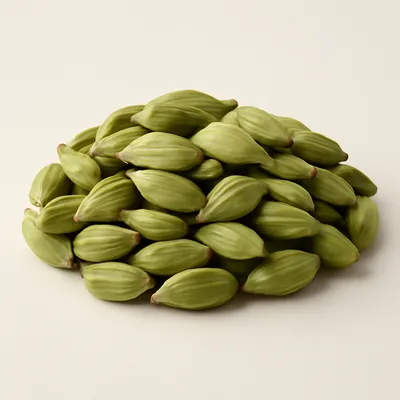
Cook, stirring, until the semolina absorbs the liquid, swells and pulls away from the pan; stir in cardamom.
- 62 min
Fold in the fried nuts and raisins and serve warm.
Archive tool suggestions — not reviewed
These legacy suggestions have not been evidence-reviewed and are not presented as required tools.