
Okayu is Japanese rice porridge, simmered slowly from raw rice and a generous volume of water until the grains swell and soften into a soothing, plain porridge. Unlike zosui, which reheats already-cooked rice in seasoned broth, okayu is cooked from scratch, usually in plain water or a light dashi, and kept mild — eaten plain, lightly salted, or topped simply with umeboshi (pickled plum), a raw or soft egg, scallion or nori. It is above all comfort and convalescent food, fed to the sick, the very young and the elderly. The seven-herb version, nanakusa-gayu, is eaten on 7 January to settle the stomach after the New Year feasting.


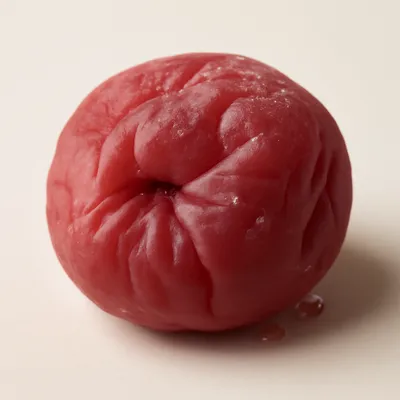


Rice porridge is ancient in Japan and across East Asia, eaten as plain sustenance, offering and sickbed food rather than as a dish with any single inventor. In Japan, okayu took on a particular role as gentle, restorative food — the standard thing to eat when ill or recovering, and a first food for infants. It is graded by how much water it contains, from the thick zen-gayu (全粥, roughly one part rice to five of water) through shichibu-gayu and gobu-gayu to the thin, almost liquid sanbu-gayu. The best-known ritual form is nanakusa-gayu, eaten on 7 January — the Jinjitsu seasonal festival — made with seven spring herbs to invite health and ease the digestion after New Year indulgence.
A bowl of soft, milky-white porridge, the grains swollen and just holding their shape in a loose, starchy liquid. Plain, it tastes of almost nothing — clean, warm, faintly sweet rice — which is the point: it is meant to be soothing and easy on the stomach, not bold. A single salty, sour umeboshi pressed into the centre is the classic seasoning, its sharp tartness cutting the blandness; a soft egg or a pinch of salt and scallion warms it up. Eaten hot in slow spoonfuls, it is plain on purpose, the food you want when you are unwell.
Okayu is a study in gelatinisation. Cooking raw rice in five to twenty times its volume of water, low and slow, lets the starch granules absorb water and swell, then burst and release amylose and amylopectin into the liquid, thickening it into a smooth, silky body around grains that have softened without dissolving entirely. Starting in cold water and never stirring hard keeps the grains intact and the porridge from turning gluey or scorching on the base. The higher the water ratio and the longer the simmer, the looser and more digestible the result — which is why the thinnest grades are given to those who can barely eat, the starch and warmth being gentle on a weak stomach.
Variations
Okayu is graded by thickness: thick zen-gayu down through gobu-gayu to thin sanbu-gayu and the almost grain-free omoyu (rice water) given to infants and the very ill. Toppings stay simple — umeboshi, a soft or raw egg stirred in, salted salmon, scallion, nori, sesame, or a little dashi for a savoury tamago-gayu. Imo-gayu adds sweet potato; cha-gayu, a speciality of Nara, simmers the rice in roasted green tea. The ritual nanakusa-gayu on 7 January carries the seven spring herbs. It differs from zosui, which is built on cooked rice and seasoned broth rather than simmered from raw grain.
On the Palate
Where Okayu sits in the Japanese flavor cloud
Ingredients
Serves 2How it's made
7 steps · 5 min
- 13 min
Rinse the short-grain rice until the water runs nearly clear, then drain.
- 22 min
Put the rice in a heavy pot with the chosen volume of cold water (about 1:5 for thick zen-gayu, more for a thinner porridge).
- 35 min
Bring slowly to a boil over medium heat, then immediately lower to the gentlest simmer.
Watch outBring it up slowly, then drop to the gentlest simmer — a hard boil bursts the grains and makes the porridge gluey or scorches the base.
- 435 min
Set the lid slightly ajar and simmer very gently for 30–40 minutes, stirring only occasionally and softly to keep the grains whole and stop them sticking.
Watch outStir only occasionally and softly — over-stirring smashes the grains, but the odd gentle stir keeps them whole and off the bottom.
- 53 min
Cook until the grains are swollen and soft and the liquid has thickened to a smooth porridge; add a little salt if desired.
- 61 min
If making tamago-gayu, stir a beaten egg through off the heat to set in soft ribbons.
- 71 min
Ladle into bowls and top simply — umeboshi, scallion, nori — and serve hot.
Archive tool suggestions — not reviewed
These legacy suggestions have not been evidence-reviewed and are not presented as required tools.


