
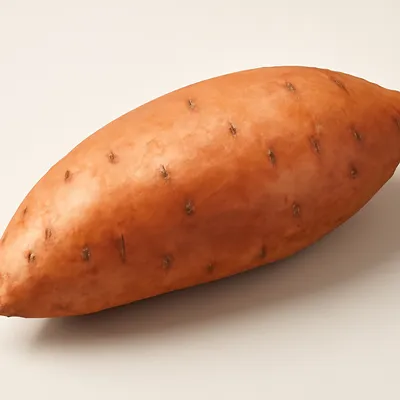
Kuri kinton is the glistening golden sweet that anchors the osechi-ryori boxes of the Japanese New Year: a smooth, sieved mash of satsumaimo sweet potato bound with sugar and mirin, studded with whole candied chestnuts (kuri no kanroni). The character 金団 reads as a golden dumpling or golden quilt, and the dish is set out as a wish for wealth, its color likened to gold nuggets and old koban coins. Traditional cooks deepen the yellow with kuchinashi (gardenia) pods so the mash takes on the saturated tone of bullion. A separate confection sharing the name 栗きんとん belongs to the Nakatsugawa and Ena districts of Gifu, where it is made of chestnut and sugar alone with no sweet potato at all.


The name kinton descends from a court confection introduced from China, and a chestnut-based 栗金団 appears in Japanese records from the Muromachi period, though the form then differed from today's. Chestnuts carried auspicious weight as kachiguri, the dried 'victory chestnut' prized in warrior households, which fixed kuri kinton among celebratory dishes; by the Edo period it was a standard of the festive table and entered the osechi repertoire eaten at the New Year. The satsumaimo-and-candied-chestnut version familiar now took shape around the Meiji era, when the bright, gold-evoking color was read as a charm for prosperity and money fortune. The unrelated Gifu confection traces to the post towns of the Nakatsugawa area on the Nakasendo highway, where chestnut sweets were refined for travelers and tea; Nakatsugawa is called the birthplace of that wagashi, which was commercialized in the Meiji period. The exact origin of the earliest kinton can no longer be traced with certainty.
The mash is dense and velvety, sweet potato giving it a starchy, almost custard-like body that clings to the spoon, with a clean sugar sweetness rounded by mirin. Against that smoothness the candied chestnuts land as firm, mealy nuggets, their own nutty richness and a faint syrup glaze breaking up each mouthful. It eats cool and rich, a small, concentrated sweet rather than a light one.
Sweet potato is high in starch, and gentle heat lets its amylase convert some of that starch to maltose, which is why a well-cooked satsumaimo tastes sweeter than a raw one; sieving the cooked flesh and beating in sugar and mirin gives the mash its glossy, cohesive sheet. The gold color comes from kuchinashi, the gardenia pod, whose pigment is crocin and crocetin, the same carotenoid that colors saffron, so a single split pod stains the starch a vivid yellow without altering flavor. The chestnuts are first simmered into kanroni, candied slowly in sugar syrup so the sweetness penetrates while the nut keeps its shape, sugar drawing moisture in and out until the flesh is preserved and translucent. Reducing the mash with sugar drives off water and raises the sugar concentration, tightening the texture and giving the finished kinton its keeping quality on the New Year table.
Variations
The defining split is between the osechi kinton and the Gifu confection. The osechi form is the sweet-potato mash with whole candied chestnuts and is the standard jubako item; some households leave out the gardenia and let the natural sweet-potato yellow stand, or fold in chestnut puree for a richer color. The Nakatsugawa and Ena wagashi of Gifu is an entirely different sweet: steamed chestnut mashed with only a little sugar, then twisted in a damp cloth into a small teardrop (chakin-shibori), served as an autumn higashi or namagashi when the new crop comes in. Outside these, mashed chestnuts are also used in kuri-kinton-style fillings for other wagashi and seasonal sweets.
On the Palate
Where Kuri Kinton sits in the Japanese flavor cloud
Ingredients
Serves 6
How it's made
6 steps · 35 min active + 15 min waiting
- 110 min
Scrub the sweet potato, peel thickly, cut into rounds, and soak in water to draw out starch and prevent browning.
- 218 min
Boil or steam the sweet potato with a split, lightly crushed gardenia pod tied in cheesecloth until very soft, then discard the pod.
- 36 min
Drain the sweet potato and push the hot flesh through a sieve to make a smooth, lump-free puree.
Watch outPush the hot flesh through a sieve while it's hot — sieving is what gives the mash its smooth, glossy, lump-free sheet.
- 412 min
Return the puree to the pan with sugar, mirin, a little of the chestnut syrup, and a pinch of salt, and stir over low heat until thick and glossy.
Watch outStir over low heat until thick and glossy — the mash should hold together in a cohesive sheet, not stay loose and wet.
- 54 min
Fold in the candied chestnuts whole and warm through gently so they keep their shape.
- 65 min
Let the kinton cool, then serve in small mounds, setting a whole chestnut on top of each portion.
Archive tool suggestions — not reviewed
These legacy suggestions have not been evidence-reviewed and are not presented as required tools.


