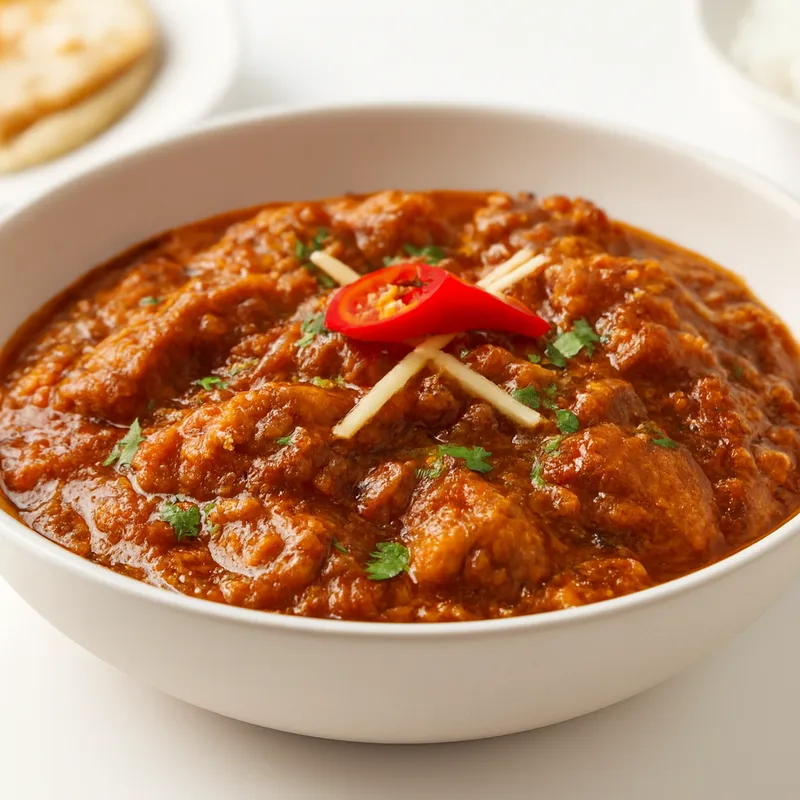
Assamese Pork with Bamboo Shoot, known locally as gahori mangxo aru khorisa, is an emblematic dish of Assam and the wider northeast of India, where 'gahori' is pork and 'khorisa' is fermented bamboo shoot. Fatty pork, often belly, is slow-cooked with grated bamboo shoot — fermented khorisa for a sour tang, or fresh shoot for a milder, greener note — along with ginger, garlic, onion and hot chillies. Little or no extra oil is added; the pork renders its own fat. The result is a dark, soft, intensely savoury and sour curry, eaten with plain rice.





The dish comes out of the tribal and rural cooking of Assam and neighbouring northeast Indian communities, where pork is a staple meat and bamboo grows abundantly; it is home and community food with no single recorded origin. Its signature element is khorisa, fermented grated bamboo shoot, a traditional preserve of the region, though fresh bamboo shoot (locally baanh gaj) is used in season. The cooking belongs to the wider northeast pattern of fermented bamboo with pork that also appears among neighbouring hill peoples, distinct from the dairy- and masala-rich curries of mainland India.
Tender, fall-apart pork with a good amount of soft rendered fat, coated in a thick, dark gravy. The dominant note is a deep, funky sourness from the fermented bamboo shoot, set against the richness of the pork and a strong hit of chilli heat. The bamboo adds a slight crunch and an earthy, almost pickled aroma. It is bold, fatty, sour and hot all at once, and needs plenty of plain rice to balance it.
Two processes carry the dish: fermentation and slow fat-rendering. Khorisa is made by packing grated tender bamboo shoot tightly and letting wild lactic-acid bacteria ferment it, which builds the sharp sour aroma and acidity it brings to the pot. In cooking, the pork is started in its own fat over low heat so the fat renders out and the meat braises gently in its juices, with the bamboo's acid helping to break down and tenderise the meat over a long, slow simmer. Ginger, garlic and chillies are cooked in to layer aroma and heat; because the bamboo and pork supply both acid and fat, the dish needs almost no added oil and little or no souring agent beyond the khorisa.
Variations
The biggest split is fermented versus fresh bamboo: khorisa gives a sour, pungent curry, while fresh baanh gaj gives a milder, greener one. Heat varies from moderate to fierce, with bhut jolokia (ghost chilli) used where a strong burn is wanted. Some cooks add a little khar (alkali) or potato to the pot, and lean cuts may be used in place of belly. Closely related northeast dishes pair the same fermented bamboo with chicken or duck, and neighbouring hill communities make their own versions of pork with bamboo shoot.
On the Palate
Where Assamese Pork with Bamboo Shoot sits in the Indian flavor cloud
Ingredients
Serves 4

How it's made
7 steps · 20 min
- 18 min
Cut pork, ideally with some belly fat, into bite-sized cubes and rub with salt and turmeric.
- 212 min
In a heavy pot over low heat, cook the pork in its own fat until it renders and browns lightly.
Watch outRender the fatty pork in its own fat over low heat until it browns lightly — this rendered fat is the cooking medium, so don't add extra oil.
- 36 min
Add sliced onion, ginger and garlic and saute until softened and fragrant.
- 43 min
Stir in grated fermented khorisa (or fresh bamboo shoot) and the chillies.
- 55 min
Add a little hot water, cover, and simmer gently so the pork braises and turns tender.
- 645 min
Cook until the meat is fall-apart soft and the gravy is dark and thick, about 40 to 50 minutes.
Watch outSimmer gently until the meat is fall-apart soft and the gravy goes dark and thick — the fermented bamboo's acid helps tenderise over the long cook.
- 72 min
Check seasoning, finish with fresh coriander, and serve hot with plain rice.
Archive tool suggestions — not reviewed
These legacy suggestions have not been evidence-reviewed and are not presented as required tools.