Memil-jeonbyeong is a Gangwon market snack: a thin, earthy-gray buckwheat crepe rolled around a seasoned filling of sour kimchi (or radish, scallion, and sometimes a little minced pork or squid), then pan-fried and sliced into bite-sized rolls. The wrapper is tender and faintly nutty rather than chewy, and the filling is tangy and savory. It is a classic of the Five-Day markets of buckwheat country — Bongpyeong, Jeongseon, and Pyeongchang — where it is griddled to order and eaten warm with a soy dipping sauce. Regionally it is also called chongtteok (총떡) or memil-chongtteok.




Memil-jeonbyeong comes from the buckwheat-growing highlands of Gangwon, where thin, rocky soil and a cool mountain climate made paddy rice difficult and pushed buckwheat, potatoes, and corn forward as the dryland staples. Buckwheat (Fagopyrum esculentum) matured fast on poor ground, so the region built a whole table around it — noodles, jelly, and griddle breads — and these crepe rolls became market and festival bunsik. Bongpyeong, the most famous buckwheat town, is the setting of Lee Hyo-seok's 1936 story 'When the Buckwheat Blooms,' and the Five-Day markets of Bongpyeong, Jeongseon, and Pyeongchang remain the dish's classic home, where vendors griddle them fresh.
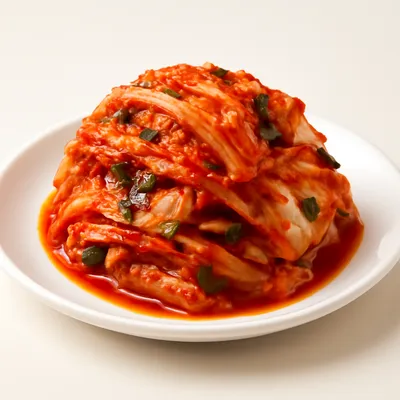
You bite through a thin, supple buckwheat wrapper — earthy-gray, faintly nutty, soft rather than the chewy snap of a wheat crepe — into a warm core of finely chopped sour kimchi seasoned with gochugaru and sesame oil. The pan-fried seam and edges carry a light crisp, the inside stays juicy and tangy, and the whole roll is cut crosswise into short bites and eaten warm, dipped in a thin soy-and-vinegar sauce.
Buckwheat has no gluten, so there is no kneaded dough to roll out — the batter has to be a thin, pourable crepe slurry. Buckwheat flour is whisked with water (cooks often cut in a little starch or wheat flour) until smooth and loose, then ladled onto a hot oiled griddle and spread into a roughly 15 cm round; with nothing to bind it, a thin even pour is what lets it set into a flexible sheet without tearing. The filling is cooked and seasoned ahead — crucially the kimchi is squeezed dry first, because excess liquid would steam the wrapper soft and split it during the roll. The seasoned filling is laid along one edge, rolled tight, and the finished roll is pan-fried seam-side down so the seam sets and the surface crisps. Buckwheat's roasty, slightly bitter character comes from compounds like its flavonoids (rutin) and the nutty notes developed as the thin crepe browns on the griddle.
Variations
The closest sibling is memil-buchimgae, a flat buckwheat pancake that is eaten open, not rolled — memil-jeonbyeong is the rolled, stuffed form of the same batter. Fillings vary by stall and region: sour kimchi is the everyday version, while the radish-and-cabbage filling seasoned with gochugaru (often meatless) is the classic chongtteok; some cooks add scallion, tofu, japchae, minced pork, or squid. Jeongseon and Bongpyeong markets are the best-known styles. The dish carries several regional names — chongtteok (총떡) and memil-chongtteok in Gangwon, and it is grouped with the broader Gangwon buckwheat table of memil-jeon and memil-makguksu.
On the Palate
Where Memil-jeonbyeong sits in the Korean flavor cloud
Ingredients
Serves 4

How it's made
7 steps · 35 min active + 5 min waiting
- 16 min
Make the batter: whisk buckwheat flour with water (adding a spoonful of starch or wheat flour if you want extra hold) and a pinch of salt into a thin, smooth, pourable slurry, then pass it through a sieve.
Watch outThe batter has to pour thin and smooth like cream — buckwheat has no gluten to bind it, so anything too thick won't spread into a flexible sheet and will tear.
- 26 min
Prepare the filling: squeeze the sour kimchi dry, chop it finely, and toss with gochugaru, sesame oil, and a little sugar; mince scallion (and optional pork or tofu) and add.
Watch outSqueeze the kimchi truly dry before chopping — leftover liquid will steam the wrapper soft from inside and split the roll, so wring it hard.
- 35 min
Cook the filling: stir-fry the seasoned kimchi mixture briefly over medium heat until hot and any extra moisture cooks off, then let it cool slightly.
- 48 min
Cook the crepes: heat a lightly oiled griddle over medium heat, ladle on batter and spread to a thin round about 15 cm across, and cook until the surface sets and the edges lift; do not flip-brown hard.
Watch outPull the crepe when the surface just sets and the edges lift — don't fry it hard or brown, or it turns brittle and cracks when you roll it.
- 54 min
Fill and roll: lay a line of filling along one edge of each crepe and roll it up tightly into a cylinder, seam-side down.
- 65 min
Pan-fry the seam: return the rolls to the oiled griddle seam-side down and fry, turning once, until the seam is set and the surface is lightly crisp and golden.
- 73 min
Slice and serve: cut each roll crosswise into bite-sized pieces and serve warm with a thin soy-and-vinegar dipping sauce.
Archive tool suggestions — not reviewed
These legacy suggestions have not been evidence-reviewed and are not presented as required tools.