
Eomuk-bokkeum is one of Korea's most familiar everyday side dishes: sheets or strips of fish cake (eomuk) cut into bite-size pieces and stir-fried with onion in a glossy soy-and-gochugaru glaze sweetened with sugar or corn syrup. The fish cake turns supple and faintly chewy while soaking up a savory, gently spicy sauce, finished with sesame oil and toasted sesame seeds. It can be made mild for children or hot with extra chili, and it holds for days in the refrigerator, which is why it became a staple of the Korean lunchbox. Served at room temperature alongside rice, it is comfort food in the plainest, most reliable sense.






Fish cake itself reached Korea largely through Japanese contact: after the 1876 Treaty of Ganghwa opened the ports, Japanese settlers brought kamaboko-style pressed fish paste, and the word odeng (from Japanese oden) entered everyday Korean speech. Korea did have an older relative — saengseon-sukpyeon, steamed minced fish bound with starch, sesame oil and soy, recorded in court banquet manuals such as the 1719 Jinyeon-uigwe — but the cheap, mass-produced fish cake that defines eomuk-bokkeum is a modern product. Stir-fried fish cake rose with the post-war era: by the 1960s eomuk was prized as a lunchbox side, the favorite of schoolchildren before sausage became common, and the sweet-spicy stir-fry settled into the standard banchan repertoire.
Soft, springy fish-cake strips with a faint resilient chew, slicked in a sweet-salty soy glaze that turns gently fiery on the back of the palate. Onion adds a soft sweetness, sesame oil a nutty perfume, and the toasted seeds a tiny crunch. Eaten cool, it is mellow, dense and deeply rice-friendly.
Fish cake is a set surimi gel — fish protein ground with salt so that the myofibrillar proteins unfold and cross-link into the bouncy network that gives it its chew; a quick stir-fry merely warms and softens that gel while letting it drink in sauce. The glaze is built on the Maillard browning of soy sugars and amino acids over high heat, plus the capsaicin and red pigments of gochugaru, while sugar or corn syrup reduces to a clingy, glossy coat that lacquers each piece. Adding the sesame oil and seeds off the heat protects their volatile, easily scorched aromatics, so the nutty top note stays bright.
Variations
The simplest version skips chili entirely for a soy-only ganjang-eomuk-bokkeum, popular for children's lunchboxes; the spicy form leans on gochugaru and sometimes a spoon of gochujang. Cooks add carrot, green pepper or scallion for color, garlic for depth, and a final drizzle of corn syrup or honey for shine. Celebrity chef Baek Jong-won's quick weeknight recipe popularized a fast pan-sauce method, and some households fold in the fish cake at the very end to keep it tender.
On the Palate
Where Eomuk-bokkeum sits in the Korean flavor cloud
Ingredients
Serves 4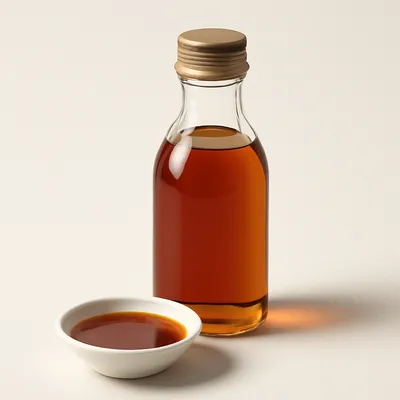


How it's made
8 steps · 15 min
- 13 min
Rinse 300 g sheet or flat fish cake briefly in warm water to wash off surface oil, pat dry, and cut into bite-size strips or triangles.
- 22 min
Thinly slice half an onion; mince 2 cloves garlic; cut 1 scallion into short lengths.
- 31 min
Whisk the sauce: 1.5 tbsp soy sauce, 1 tbsp sugar (or corn syrup), 1 tbsp gochugaru, a splash of water, and black pepper.
- 42 min
Heat 1 tbsp cooking oil over medium heat and saute the garlic and onion until the onion softens and turns translucent.
Watch outSweat the onion until soft and translucent before the fish cake goes in — this is the sweet aromatic base under the glaze.
- 52 min
Add the fish cake and stir-fry until heated through and lightly colored at the edges.
- 62 min
Pour in the sauce and toss over medium-high heat until it bubbles and reduces to a glossy glaze that coats every piece.
Watch outToss over medium-high until the sauce bubbles down to a glossy glaze coating every piece — pull it before it dries out and turns sticky-dull.
- 71 min
Add the scallion, drizzle 1 tsp sesame oil, and toss for 30 seconds.
Watch outAdd the sesame oil and seeds off the heat — their aroma scorches easily, so keep the nutty top note by finishing away from the flame.
- 81 min
Off the heat, scatter toasted sesame seeds and serve warm or at room temperature.


