
Fish-shaped wheat-batter cakes baked in hinged iron molds and stuffed with sweet red-bean paste — a Seoul winter street snack sold from charcoal- or gas-fired carts.





Bungeoppang arrived in Korea in the 1930s during the Japanese colonial period as a direct adaptation of Japanese taiyaki, and the name simply swaps tai (sea bream) for bungeo (crucian carp), the freshwater fish more familiar in Korean rivers. On adoption the batter was localized to be crispier and savory with slightly less sweetness and a smaller size; after the Korean War it spread as cheap winter street food and is now a fixture of Seoul's December-to-February cart season. Regional variants include slukppang (sleeve-folded) and ingeoppang (carp-shaped, larger and crispier); some carts now do cream cheese, pizza, or sweet-potato fillings.
Arrived in Korea in the 1930s as a direct adaptation of Japanese taiyaki — the name swaps tai (sea bream) for bungeo (crucian carp). The cast-iron mold has to sit at 180-200°C and you flip the closed iron 30 seconds after filling, or the top half stays raw.
Cradle one in your palm and the heat comes through the paper sleeve. Crust crackles thinly at the tail and dorsal fin where batter pooled; the belly is softer, almost cakey. First bite is wheat-and-butter sweetness; the second hits the warm red-bean paste at the centre — earthy, not cloying, with whole bean skins. A good bungeoppang has a clean fish silhouette and crisp fins; if the tail is pale or doughy, the iron wasn't hot enough. Eat the head first — it traps the most paste.
The cast-iron mold is the load-bearing tool: it has to be 180-200°C across both halves so batter sets the moment it touches metal, locking in the fish-scale relief. Flipping the closed iron 30 seconds after filling forces batter up into the top cavity — without the flip you get a half-cooked open-belly fish. The batter is leaner than taiyaki's (less butter, no honey), so it crisps faster and stays light; this is also why bungeoppang must be eaten hot, before residual steam softens the shell.
Variations
Classic red-bean is the canonical fill; slukppang folds it sleeve-style; ingeoppang is the carp-shaped version whose batter adds glutinous rice and oil, making it chewier (the prestige 'carp' name marketed it as higher-quality); modern Seoul carts run cream cheese, custard, pizza, sweet potato.
On the Palate
Where Bungeoppang sits in the Korean flavor cloud
Ingredients
Serves 6



How it's made
6 steps · 40 min active + 50 min waiting
- 170 min
Soak 200g dried red adzuki beans overnight; simmer with water to cover and a pinch of salt for 60 minutes until they crush between fingers. Drain, mash coarsely, then cook with 120g sugar over low heat for 10 minutes until the paste (pat) is thick enough to hold its shape on a spoon. Cool.
Watch outEnsure the beans are fully softened before mashing; undercooked beans will not blend smoothly.
- 25 min
Whisk batter: 200g cake flour, 1 tsp baking powder, 30g sugar, pinch salt, 1 egg, 280ml whole milk, 30g melted butter. Rest 20 minutes — surface should look glossy, no lumps.
Watch outIf the batter is too lumpy after whisking, it may not cook evenly.
- 35 min
Heat the bungeoppang iron over medium-low — both halves. Brush each cavity with a thin film of oil. The mold is ready when a drop of batter sizzles softly without browning instantly.
Watch outGet both halves of the iron evenly hot — drop a bead of batter and it should sizzle softly without browning on the spot.
- 42 min
Spoon batter to fill the bottom fish-cavity halfway. Drop a tablespoon of red-bean paste into the centre. Top with more batter to just cover. Close the iron and immediately flip it over so the batter spreads up into the top fish.
Watch outClose and flip the iron right after filling — that forces batter up into the top cavity, or you get a half-cooked open-belly fish.
- 54 min
Bake 2-3 minutes per side, flipping the iron halfway. Open: the cake should release with a light golden-brown crust, fish-scale lines visible, no raw seam at the belly.
Watch outOpen only when the crust is golden-brown, the scale lines are sharp, and the belly seam shows no raw batter.
- 61 min
Tip out onto a rack. Eat within 5 minutes — bungeoppang loses its crisp shell as it cools. Sold from carts in paper sleeves, 3-4 fish for the price of a coffee.
Archive tool suggestions — not reviewed
These legacy suggestions have not been evidence-reviewed and are not presented as required tools.
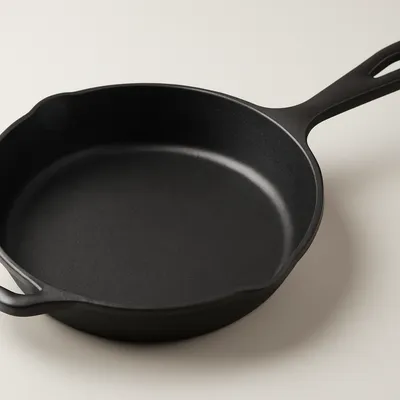
A heavy, single-piece cast iron pan, 25-30 cm across, weighing 1.5-2.5 kg. Once preheated, the thick mass holds 230°C+ even when a cold steak hits the surface — that's the secret to a deep crust. A well-seasoned skillet (multiple thin layers of polymerized oil baked into the iron) is essentially nonstick, gets better with use, and lasts a century. Lodge skillets from Tennessee have been in continuous production since 1896.
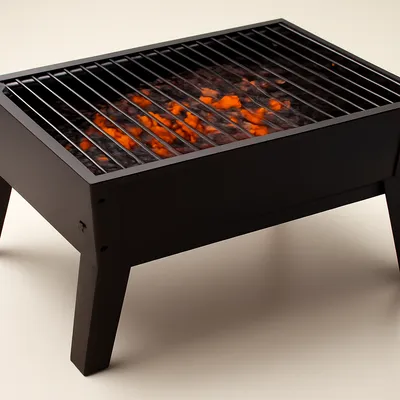
An open or hooded metal frame holding a bed of glowing charcoal embers, with a grate above. Charcoal burns at 700°C+ on the surface and emits short-wave infrared, which cooks proteins faster and with deeper Maillard browning than gas. Hardwood lump charcoal (oak, mesquite, fruitwood) lends its own smoke; cheap briquettes do not. Mastery is mostly heat zoning — direct over coals for searing, indirect off-coals for slow-roasting.


