
Dubu-jorim is one of the most common everyday banchan on a Korean table: thick slabs of firm tofu pan-fried until golden, then simmered in a soy-garlic sauce stained red with gochugaru until the liquid reduces to a glossy coat. The frying gives the surface a chewy, slightly crisp skin that holds up to braising, while the inside stays soft and soaks up the salty-spicy seasoning. A scattering of scallion and sesame finishes it. Cheap, fast and endlessly repeatable, it is a fixture of home cooking and lunchboxes rather than a restaurant showpiece.
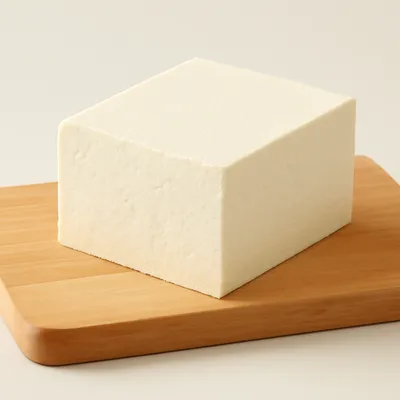




Dubu-jorim has no single inventor or dated origin — it is a plain product of two long-standing pillars of the Korean kitchen. Tofu (dubu) has been eaten on the peninsula for centuries, and jorim, the technique of simmering an ingredient in seasoned liquid until the sauce reduces and clings, is one of the basic everyday cooking methods alongside guk (soup) and namul (seasoned vegetables). Applying a soy-and-chili braise to fried tofu is simply the most economical way to turn a cheap, bland block into a seasoned, rice-friendly side, which is why versions of it appear in virtually every Korean home repertoire and in countless published recipes. It belongs to the category of mitbanchan, the standing side dishes kept on hand to round out a meal.
The first bite gives a little resistance from the fried skin, then yields to a soft, almost custardy interior. The flavor is squarely savory-salty from soy and garlic, with a warm, building chili heat from the gochugaru and just enough sugar to round it off. Sesame oil and toasted seeds add a nutty top note, and the reduced sauce clinging to each piece carries a concentrated, slightly caramelized depth.
Pan-frying drives off surface moisture and pushes the tofu's surface proteins and the soy sugars into the Maillard reaction around 140-170°C, building the browned, chewy skin and a savory crust that won't disintegrate in the braise. Pressing or blotting the tofu first removes water so it browns rather than steams, and a sprinkle of salt firms the exterior. In the simmer, the reducing sauce concentrates as water evaporates, and the salt and seasonings diffuse into the porous, water-rich tofu down a concentration gradient — which is why a brief rest in the warm sauce makes it taste more seasoned. The gochugaru's fat-soluble capsaicin and red pigments dissolve into the oil and sesame oil, spreading heat and color evenly through the glaze.
Variations
A milder soy-only version (ganjang dubu-jorim) skips the chili for a sweet-savory braise children eat happily. Many cooks add sliced onion, chili pepper, or a handful of enoki or other mushrooms to the sauce; some lay the tofu over a bed of onion so it steam-braises. A bolder home style tucks the fried tofu into a thicker gochujang-based sauce, and some add a splash of anchovy or kelp stock for depth instead of plain water. The same braise also works on pan-fried firm tofu cut into smaller cubes for lunchboxes.
On the Palate
Where Dubu-jorim sits in the Korean flavor cloud
Ingredients
Serves 4


How it's made
6 steps · 15 min
- 15 min
Cut firm tofu into thick slabs about a centimetre and a half wide, blot dry with paper towel and sprinkle lightly with salt.
Watch outBlot the tofu really dry and salt it — surface water steams instead of browning, so a wet slab never gets that golden chewy skin.
- 22 min
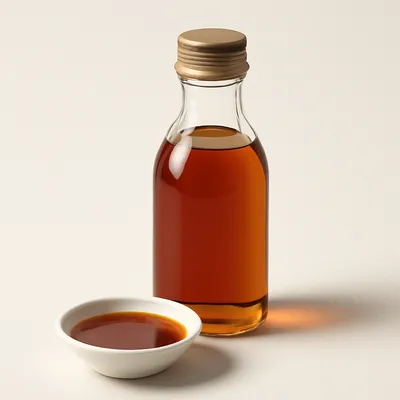
Make the sauce: stir together soy sauce, gochugaru, minced garlic, sugar, sesame oil and a little water.
- 36 min
Heat a generous film of oil in a pan and fry the tofu over medium-high until golden and lightly crisp on both sides.
Watch outFry over medium-high until both faces are golden and lightly crisp — that browned crust is what holds the tofu together in the braise instead of falling apart.
- 41 min
Spoon or pour the sauce evenly over the tofu and add a splash of water.
- 55 min
Simmer over medium-low, spooning sauce over the pieces and turning once, until the liquid reduces to a glossy coat.
Watch outSimmer, spooning sauce over, only until the liquid reduces to a glossy coat that clings — let it dry out and the seasoning turns harsh and salty.
- 61 min
Scatter with chopped scallion and toasted sesame seeds and serve warm or at room temperature.


