A round Chinese-style flaky pastry that shatters into countless leaves at the first bite, wrapping a layer of sweet red-bean paste around one whole salted duck-egg yolk. The dough is built from a water-and-oil skin laminated over a flour-and-lard fat dough, rolled and coiled to set the flakes. The top is brushed with egg-yolk wash and scattered with black sesame. Taiwan's signature Mid-Autumn gift pastry, with long queues at famous bakeries every autumn.

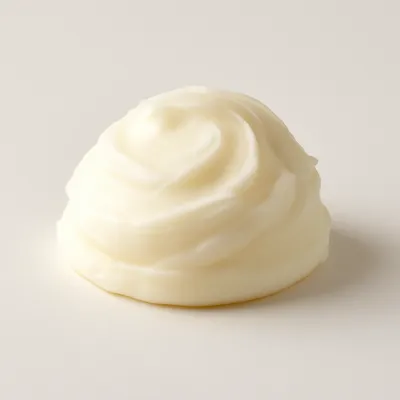


Salted egg yolk pastry belongs to the old family of Chinese laminated pastries — the same oil-skin-over-fat-dough lamination behind Suzhou-style fresh-pork mooncakes and wife cakes — but it took shape in Taiwan as an individual-size, Taiwanese-style oil-skin mooncake and became the island's defining Mid-Autumn gift pastry. A 1986 trade-magazine account credits its development in the 1980s to a third-generation baker at the century-old Baoquan bakery in Fengyuan, Taichung, blending Japanese wagashi technique with Taiwanese pastry tradition; that attribution rests on a single source and is best treated as one account rather than settled fact. Either way, the pastry is firmly tied to autumn: in the weeks before Mid-Autumn, demand surges and famous bakeries draw long queues, with boxes given as festival gifts. It differs structurally from the mooncake (4481): a Cantonese mooncake uses a thin, soft, syrup-based wrapper (jiang-pi) that stays dense and unflaky, whereas the egg-yolk pastry is a true flaky su-pi pastry that delaminates into crisp leaves. The salted yolk is usually misted with rice wine and pre-baked to drive off any fishy note and coax out its sandy, oil-beaded richness.
The shell is the whole point: bite in and it shatters, raining flaky crumbs, the leaves separating in your fingers. Past the crisp skin comes a smooth, fine red-bean paste, not too sweet, and at the center the salted yolk — dense and crumbly-sandy, beading with savory oil, its salt cutting clean across the sweetness. Each bite runs crisp-flaky, then soft-smooth, then sandy-rich, sweet and salty knotted together.
Three things make it work. (1) Lamination: a water-and-oil skin (flour, lard, a little sugar, water) is wrapped around a fat dough (flour kneaded with lard only), then rolled flat, coiled, rolled and coiled again. The two doughs differ in fat and water content, so they refuse to merge — repeated rolling stacks them into hundreds of alternating skin–fat layers. In the oven the water in the skin layers flashes to steam and pushes the layers apart, while the fat layers melt and waterproof them, setting the flakes crisp. (2) The salted yolk: a fresh duck-egg yolk is cured in salt, which salts-out and denatures the proteins that normally emulsify the yolk's roughly 30 percent fat into fine droplets; freed of their emulsifier the fat droplets coalesce, and with water loss the relative fat content climbs past 40 percent — this is the 'sanding' and 'oil-running' that give the cured yolk its crumbly, oily richness. (3) Rice wine misted on the yolk before a brief pre-bake (around 170–180°C, just until the surface beads oil) carries off the fishy volatiles. The assembled pastries bake at about 170°C until golden.
Variations
Black or red bean paste are the classics; lotus-seed paste, taro, mung-bean, and matcha fillings are common. Premium versions use a 'flowing' or whole double yolk, or a single oversized yolk. Some bakeries swap lard for butter for a richer aroma (purists prefer lard for crispness). The closely related lu-dou-bing (mung-bean cake) and 'wife cake' share the same su-pi lamination. The yolk may be left half-set for a moister center, and the skin can be tinted (matcha, charcoal, beetroot) for color.
On the Palate
Where Salted Egg Yolk Pastry sits in the Taiwanese flavor cloud
Ingredients
Serves 8

How it's made
10 steps · 1 hour 30 min
- 110 min
Mist the salted duck-egg yolks with rice wine and bake at about 170°C for 5–8 minutes, just until their surface beads oil; do not fully cook them. Let cool.
Watch outBake the salted yolks only until their surface beads oil, then stop — cook them through now and they turn dry and hard in the finished pastry.
- 215 min
Divide the red bean paste into portions and flatten each; wrap one yolk fully in paste and roll into a smooth ball. Chill while you make the dough.
- 330 min
For the water-oil skin, knead flour, lard, sugar and water into a smooth, supple dough; rest covered 20–30 minutes. For the fat dough, rub flour into lard until it clumps into a soft paste.
- 412 min
Divide both doughs into equal pieces. Wrap one fat-dough piece inside each water-oil-skin piece, pinch sealed seam-down, and rest 10 minutes.
- 517 min
Roll each ball flat into an oval, then coil it up from the short end into a cylinder. Rest 15 minutes covered to relax the gluten.
- 617 min
Roll each cylinder out long again and coil a second time; rest another 15 minutes. This double roll-and-coil builds the flaky layers.
Watch outRepeat the roll-and-coil twice, resting between — each pass stacks the skin and fat into the hundreds of layers that make it flake.
- 78 min
Press each coiled piece in the center, fold the ends to the middle, and roll into a round wrapper, thinner at the edges.
- 812 min
Wrap a bean-paste-and-yolk ball in each wrapper, gather and pinch the seam closed, and set seam-down on a lined tray.
- 94 min
Brush the tops with beaten egg yolk, let dry a minute, brush a second coat, then sprinkle with black sesame seeds.
- 1035 min
Bake at about 170°C for 30–35 minutes until deep golden and the layers visibly separate; cool on a rack before eating.
Watch outBake until deep golden and the layers visibly separate and puff — that lift means the trapped water flashed to steam and set the flakes crisp.
Archive tool suggestions — not reviewed
These legacy suggestions have not been evidence-reviewed and are not presented as required tools.

