A thick Bahian stew of sliced okra cooked down until its own mucilage binds everything into a glossy, viscous body, enriched with dried shrimp, dendê palm oil, onion and ground toasted cashews and peanuts, and fired with malagueta chili. It is at once an everyday Afro-Brazilian dish, a classic filling for acarajé, and a sacred food of Candomblé offered to the twin orixás Ibeji. Earthy, nutty and savory, it is usually eaten with rice, acaçá or alongside acarajé and vatapá. The dish came together in Bahia from indigenous and West African roots.





Caruru is one of the dishes born of Bahia's mix of indigenous and African cooking, the same Afro-Brazilian kitchen of Salvador that gave rise to acarajé, vatapá and moqueca. Tellingly, two separate words converged on the name: the edible amaranth greens that indigenous Tupi cooks stewed were already called caruru, from the Tupi 'kararu', while the dish as it stands descends from the Yoruba word 'kalalu' for an okra stew. The story is one of round trip — an indigenous greens stew that, after Africans adopted okra (a plant of African origin) and dendê, returned to Brazil transformed. In Candomblé it is sacred to the Ibeji, the child-twins, syncretized with the Catholic Saints Cosmas and Damian (Cosme e Damião); the 'caruru dos sete meninos' is offered each September, especially on the 27th, and by custom served first to seven boys. In 2024 the caruru de Cosme e Damião was recognized as intangible cultural heritage of the state of Bahia.
Spoon-coating and glossy, almost gelatinous from the okra — the texture is the whole point, ropy and clinging rather than soupy. Underneath sits a deep dendê-orange richness, the briny pop of dried shrimp, the toasted nuttiness of ground cashew and peanut, and a building malagueta heat. Earthy and savory, it is sopped up with rice or acaçá, or spooned warm into a split acarajé.
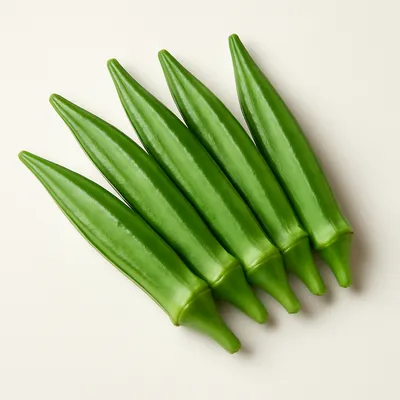
The body comes from okra mucilage — soluble polysaccharides and glycoproteins inside the pods that dissolve into a thick, ropy gel when the sliced okra is cut and heated in liquid, the same 'slime' cooks elsewhere fight but here is the goal. No flour or starch is needed; the okra thickens itself. Dendê, pressed from the African oil palm, carries the dish's color and savory-vegetal aroma from its carotenoids, while the ground toasted cashews and peanuts add body, fat and a roasted depth. Dried shrimp delivers concentrated glutamate-rich umami, and gentle simmering — not hard boiling — lets the gel set without breaking the okra to mush.
Variations
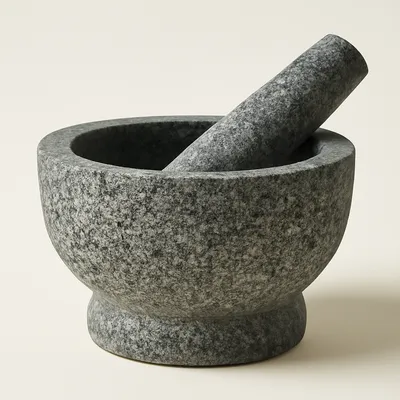
Recipes vary by household and terreiro: some lean on cashews, others on peanuts, many use both; ginger, coriander and additional malagueta are common, and amendoim or castanha-de-caju ground in a mortar deepen the body. As acarajé and abará filling it is paired with vatapá, vinagrete and chili. The ritual 'caruru dos sete meninos' for Cosme e Damião is the festive form, cooked in quantity and shared at the terreiro; a sweeter children's table of caruru, mungunzá and other treats often follows.
On the Palate
Where Caruru sits in the Brazilian flavor cloud
Ingredients
Serves 6


How it's made
6 steps · 45 min active + 25 min waiting
- 115 min
Soak the dried shrimp in warm water until softened, then drain; reserve some whole and grind or chop the rest.
- 28 min
Toast the cashews and peanuts, then pound or grind them coarsely.
- 38 min
Sweat the onion and garlic in dendê palm oil until soft, then stir in the chopped shrimp and ground nuts.
- 418 min
Add the sliced okra and a little water and simmer gently, stirring, until the okra releases its mucilage and the stew turns thick and glossy.
Watch outSimmer the sliced okra gently until it ropes and the stew turns thick and glossy — that mucilage is the thickener, so don't add flour and don't boil it hard.
- 56 min
Season with malagueta, ginger and salt, fold in the reserved whole shrimp, and simmer a few minutes more to set the body.
Watch outKeep it at a gentle simmer, never a hard boil — the low heat lets the flavors meld and the body set without the okra breaking down to slime-water.
- 63 min
Finish with a thread of fresh dendê and serve hot with rice or acaçá, or use warm as an acarajé filling.
Archive tool suggestions — not reviewed
These legacy suggestions have not been evidence-reviewed and are not presented as required tools.