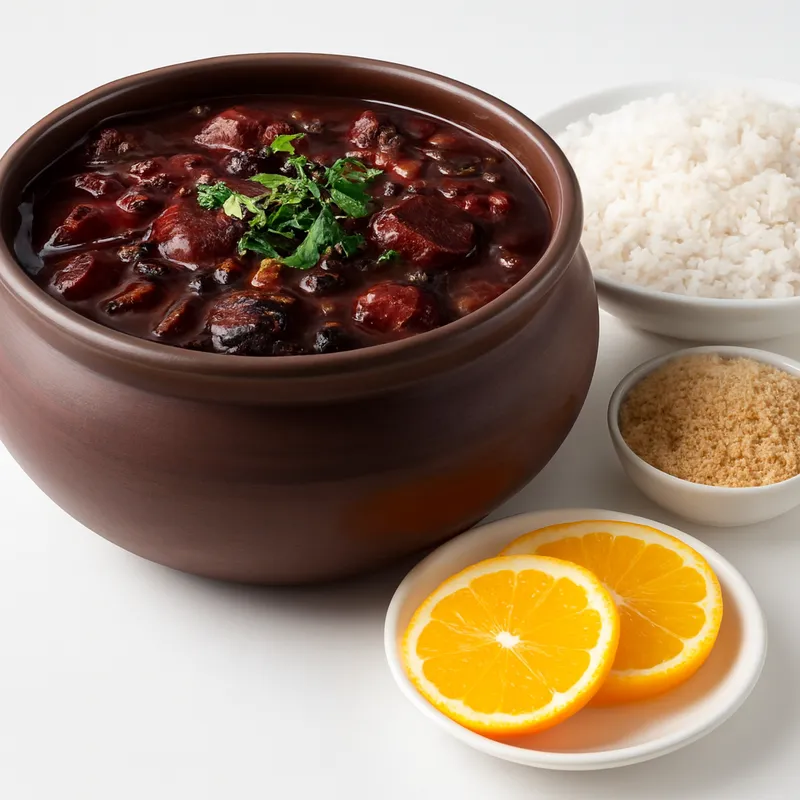
A one-pot rice braised with charque (sun-dried, salt-cured beef) that ranks among Rio Grande do Sul's three or four defining dishes. The name means 'ox-cart driver's rice' — it was the road food of the carreteiros who hauled goods across the pampas in ox-drawn carts, cooking from whatever kept without refrigeration: dried beef, lard, rice, an onion. Everything goes in one pan, the charque rendered down and the rice cooked in its fat and broth until the grains are loose and meaty. It is humble, salty, deeply savory campeiro cooking, still made every week in gaúcho homes.






The dish belongs to the carreteiros — the ox-cart teamsters who, from the 18th into the early 20th century, were the freight system of the Rio Grande do Sul interior, moving charque, hides, and goods across long stretches of pampas with no way to keep fresh meat. Charque (also called carne-seca or jabá) was the answer: beef salted and sun-dried into slabs that lasted for months, a curing technique tied to the region's 18th-century charqueadas, the salting plants of Pelotas that supplied dried beef across colonial Brazil. Cooking on the road meant one pot over a fire, so charque, rice, lard, and onion became a single braise. As the cart routes faded with the railways, the dish moved into the gaúcho home kitchen and stayed.
A loose, glistening pan of rice the color of toasted straw, shot through with shreds and chunks of pulled charque. The dried beef has been soaked to draw out salt, then fried in lard until the edges crisp, so it tastes concentrated and almost smoky-meaty rather than fresh. The rice grains are separate, coated in beef fat, slightly sticky at the bottom where a golden crust forms. Onion and garlic underpin it; some cooks fold in fried farofa or a chopped tomato. It is filling, salty-savory, and meant to be eaten on its own as the whole meal.
Charque carries far more salt than fresh meat, so the first job is dessalga — soaking the slabs in several changes of water, sometimes with a brief blanch, to pull the cure back to an edible level without washing out the beef flavor. Frying the rehydrated meat in lard does two things: it crisps the surface through the Maillard reaction for that concentrated savor, and it renders beef fat into the pan to cook the rice in. The rice is then toasted briefly in that fat before liquid goes in, which coats each grain in oil and keeps them loose rather than gluey. Cooked covered until the broth is absorbed, the bottom layer caramelizes into a thin crust prized as the best part.
Variations
The classic is charque, but carne-de-sol (a lighter, less-dried salt-cure from the Northeast) is common where charque is scarce. Some households make it with leftover churrasco trimmings — arroz de carreteiro com sobras de churrasco — turning Sunday's grilled beef into Monday's rice. Bacon, calabresa sausage, or paio may join the pot; tomato, bell pepper, and a finish of parsley and green onion are usual. A poached or fried egg on top is a common home touch.
On the Palate
Where Arroz de Carreteiro sits in the Brazilian flavor cloud
Ingredients
Serves 4
How it's made
7 steps · 35 min active + 15 min waiting
- 1180 min
Soak the charque in cold water for several hours, changing the water two or three times to draw out the salt; a quick blanch helps.
Watch outSoak the charque through several changes of water until it tastes edibly salty, not fierce — skip this and the finished rice is inedibly salty.
- 25 min
Drain and shred or cube the beef, removing any tough sinew.
- 36 min
Render lard or oil in a heavy pot and fry the beef until the edges crisp and brown.
Watch outFry the beef until the edges crisp and brown — that Maillard crust is where the dish's deep savor comes from, and it renders the fat you toast the rice in.
- 45 min
Add chopped onion and garlic and soften in the rendered fat; some cooks add chopped tomato and bell pepper here.
- 53 min
Stir in the rice and toast it briefly so every grain is coated in fat.
Watch outToast every grain of rice in the fat before the liquid goes in — that oil coat keeps the grains loose and separate instead of gluey.
- 622 min
Pour in hot water or broth, season carefully (the meat is already salty), cover, and simmer until the liquid is absorbed and the rice is tender.
- 74 min
Rest off the heat a few minutes, then fluff and finish with chopped parsley and green onion.
Archive tool suggestions — not reviewed
These legacy suggestions have not been evidence-reviewed and are not presented as required tools.