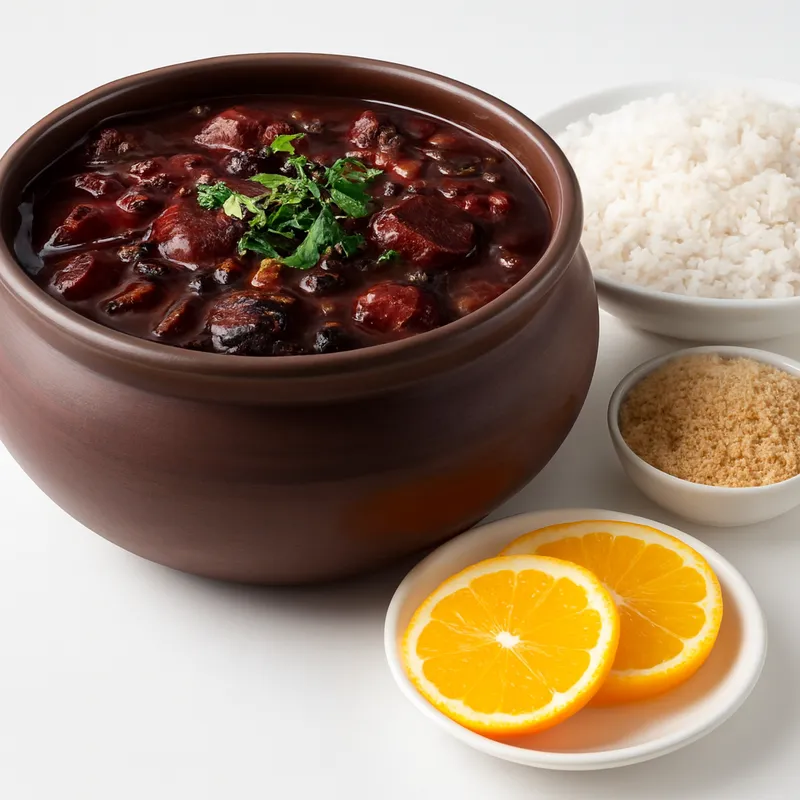






Origin myth says enslaved Africans on Brazilian sugar plantations made feijoada from the discarded cuts (ears, tails, trotters) their masters didn't eat. Food historians dispute this — bean-and-meat stews exist all over Iberia and beyond (fabada asturiana, cocido, the French cassoulet) and likely came over with Portuguese settlers. What's certain: feijoada was codified as Brazilian national dish during the 1930s under President Getúlio Vargas, who used food to project a unified national identity.
This hearty stew is a communal feast that tells the story of Brazil's diverse culinary landscape.
A clay pot of nearly-black bean stew — black turtle beans simmered with smoked pork (ear, tail, trotter, ribs, sausage). Ladled over white rice, with kale (couve) sautéed in garlic and oil, orange slices to cut the fat, farofa (toasted manioc flour) to absorb. A caipirinha to wash. Lunch on Wednesday or Saturday — too heavy to sleep on.
Black beans, not pinto or kidney, are non-negotiable — the dark color and earthy flavor base everything else. The pork must be smoked, multiple cuts; one type alone makes a flat soup. Soak the beans 12 hours, then simmer 4+ hours: shorter and the broth never goes thick. The orange slice on the side isn't garnish — it's chemistry. Citric acid breaks down the heavy fat in the mouth, which is why nobody in Brazil skips it.
Variations
Feijoada à brasileira (national); feijoada à transmontana (Portuguese ancestor, white beans + lighter meats); São Paulo adds linguiça calabresa; Minas Gerais favors paio sausage.
On the Palate
Where Feijoada sits in the Brazilian flavor cloud
Ingredients




How it's made
5 steps · 50 min active + 12 hours waiting
- 15 min
Rinse the beans thoroughly and soak them in water overnight. This helps them cook evenly and reduces cooking time.
- 210 min
In a large pot, sauté chopped onions and garlic in a splash of oil over medium heat until translucent and fragrant. Add sliced sausage, stirring occasionally until browned.
Watch outTake the onion and garlic to soft and fragrant, then let the sausage brown properly — those browned bits are the stew's first layer of flavor.
- 310 min
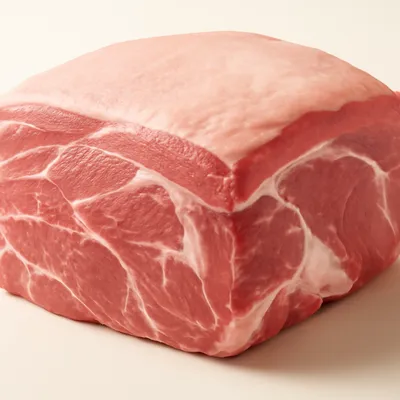
Add the soaked beans, beef, pork, and a bay leaf to the pot. Pour in enough water to cover the ingredients by about two inches. Bring to a boil, then reduce to a simmer.
- 420 min
Simmer the stew gently for 2-3 hours, stirring occasionally, until the beans are tender and the meats are cooked through. The stew should be thick and hearty.
Watch outKeep it at a lazy bubble, not a rolling boil; you're done when the beans just start to break and the liquid coats a spoon.
- 55 min
Serve with a side of rice and orange slices to cut through the richness of the stew.
Watch outServe it thick over rice with the orange alongside — the acid is what keeps the fatty stew from feeling heavy.
Archive tool suggestions — not reviewed
These legacy suggestions have not been evidence-reviewed and are not presented as required tools.
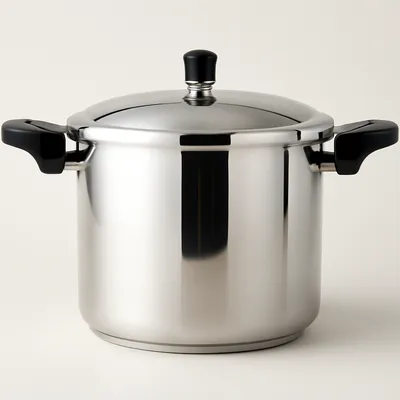
A sealed pot that lifts the boiling point of water from 100°C to ~120°C by trapping steam at 1 bar above ambient pressure. Tough cuts (oxtail, beef shank, dried beans) cook in 30 minutes instead of 4 hours; the higher heat denatures collagen faster than a long simmer. Modern electric versions (Instant Pot) automate the pressure cycle; old stovetop ones (Presto, Kuhn Rikon) hiss alarmingly but cost a fraction.

A round-bellied unglazed clay pot, 1.5-3 liters, with a domed lid and side handles, used for slow-cooking Chinese soups, claypot rice (煲仔饭), and stews. The clay's high porosity diffuses heat slowly so soups never come to a violent boil — flavor develops over 2-3 hours of low simmer. Cantonese claypot rice gets its prized crispy bottom (锅巴) from the same direct-flame stovetop heat that would crack a less robust pot.