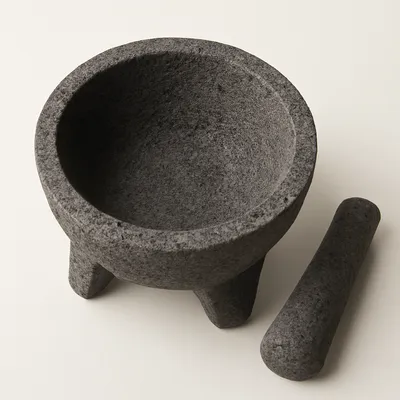
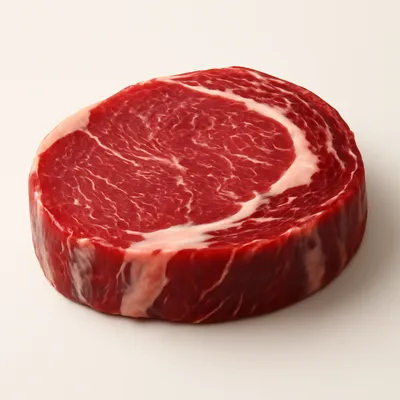
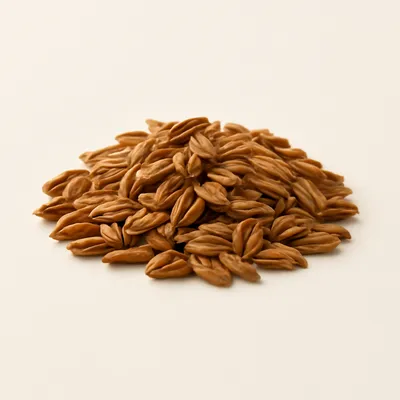
Pacholas are thin, oval beef (sometimes part pork) patties from the Bajío — the home and market kitchens of Guanajuato and Querétaro. What makes them is not the grind but the grindstone: the meat is worked on a metate together with soaked dried ancho and guajillo chiles, garlic, and cumin until it becomes a fine, deep-red paste, then pressed paper-thin with the metlapil and seared fast in lard or oil. A milk-soaked piece of bolillo or stale tortilla goes in as a binder. They are not hamburgers — the stone grinding and the chile are the whole point. The everyday plate sets two or three over rice and refried beans with an avocado-and-tomato salad and a spoonful of salsa.




Pacholas belong to the Bajío highlands — Guanajuato and Querétaro, and by extension Aguascalientes, Zacatecas, and San Luis Potosí — where they remain a home and market staple rather than a restaurant dish. Their precise origin is not documented; what is documented is the technique behind them. The metate (Nahuatl metlatl), a slab of low-porosity volcanic stone worked with a cylindrical hand-stone, has been the heart of the Mesoamerican kitchen for millennia, used to grind nixtamalized maize, cacao, and chiles long before the Spanish arrived. Beef and pork came with the colonial cattle and pig herds that the Bajío's ranches raised in quantity. Pacholas read as exactly that meeting: an indigenous grinding stone and chile-toasting habit applied to a European meat, the kind of thrifty, flavor-forward cooking that turned a little beef and a handful of dried chiles into a full plate.
A patty barely thicker than a coin, edges lacy and dark where the lard caught them, the cut face brick-red and dense from the chile worked all the way through the meat. It tastes of toasted ancho and guajillo before it tastes of beef — fruity, faintly bitter, warm with cumin and garlic — and the texture is fine and tight, almost springy, nothing like a loose burger crumb. Folded into a hot tortilla with refried beans, or set over rice with avocado and a wet spoon of salsa, two of them make a plate.
Grinding on the metate is the technical move. The volcanic slab and its hand-stone crush and smear rather than chop, shearing the meat fibers and rupturing the cell walls of the rehydrated chiles so their fat-soluble color and capsaicin coat every strand evenly — a deep-red, emulsified paste a blade grinder cannot reproduce. The dried ancho and guajillo are toasted and soaked first, which blooms their pigments and softens them for the stone. Bread or tortilla soaked in milk is the binder: its starch and the milk proteins hold water and bridge the meat so the very thin patty stays whole in the pan. Pressed to a couple of millimeters, the patty has almost all surface and little interior, so a fast, hot sear in lard drives the Maillard reaction across nearly the whole piece at once — the crust and the chile caramelize together, while the thinness keeps the cook time to under a minute a side.
Variations
The everyday version is all beef; many Bajío cooks cut in pork or a little bacon for fat and depth. Guajillo alone gives a milder, brighter patty; adding ancho deepens the color and the fruit. Some households season only with garlic, cumin, and pepper, others add oregano, a pinch of cinnamon, or cloves. Where there is no metate, cooks now grind in a molcajete or simply knead the chile paste into store-ground beef by hand — honest, if not the same fine texture. Plated, pacholas travel with white rice and refried beans, a tomato or potato sauce, or just a tomato-and-avocado salad and warm tortillas.
On the Palate
Where Pacholas sits in the Mexican flavor cloud
Ingredients
Serves 4

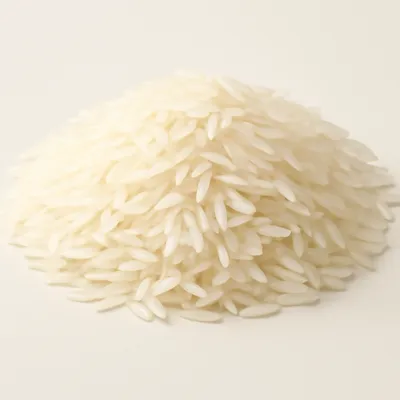
How it's made
8 steps · 45 min
- 118 min
Slit, seed, and devein 2 ancho and 2 guajillo chiles; toast them on a dry comal for 20-30 seconds a side until fragrant, then soak in hot water 15 minutes until soft.
Watch outToast the chiles just until fragrant, 20-30 seconds a side, then soak — burn them on the comal and the paste turns bitter.
- 210 min
Soak a piece of bolillo (or a stale corn tortilla) in 100 ml milk for 10 minutes until it falls apart.
- 36 min
On a metate (or in a molcajete), grind the drained chiles, garlic, cumin, and the soaked bread to a smooth, deep-red paste.
- 48 min
Add 500 g ground beef in batches and keep grinding and working the paste through it until the mixture is fine, even, and tight; season well with salt and pepper.
Watch outGrind and work the soaked bread through the meat until the mixture is fine, even and tight — that binder is what holds the paper-thin patty together in the pan.
- 510 min
Pull off a ball of the mixture and press it down the face of the metate with the hand-stone (or between two oiled sheets of plastic) into a thin oval 2-3 mm thick; repeat to form all the patties.
- 62 min
Heat a thin film of lard or oil in a heavy pan or comal until it shimmers.
- 76 min
Sear the pacholas in the hot fat about 45-60 seconds a side, until the edges crisp and the surface is deeply browned; do not overcook the thin patties.
Watch outSear the thin patties just 45-60 seconds a side until the edges crisp and brown — they're so thin they overcook and dry out in seconds.
- 83 min
Serve hot over rice with refried beans, an avocado-and-tomato salad, salsa, and warm tortillas.
Archive tool suggestions — not reviewed
These legacy suggestions have not been evidence-reviewed and are not presented as required tools.