
Crimped half-moon pastry pockets filled with a dry, mildly curried mince of chicken and potato, deep-fried until the shell is pale-gold and shatteringly short. The rope-twisted seal along the curved edge is the signature, and the filling is yellow-curry-scented, lightly sweet, and dry enough never to leak. Karipap is a ubiquitous Thai street and market snack sold from glass cases and bicycle carts, and it belongs to a wider Southeast Asian curry-puff family. Its pastry lineage runs back through the Portuguese pie to the Ayutthaya court.

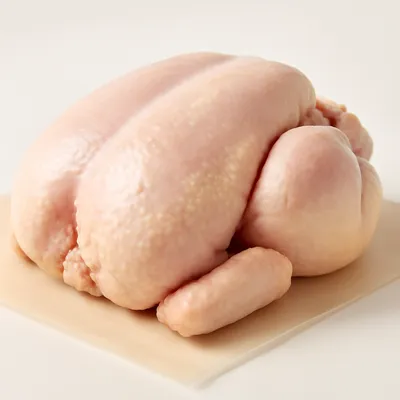
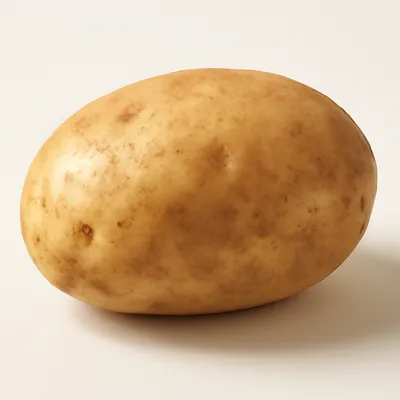


The curry puff's pastry is not native to Thailand: it descends from the Portuguese empada and pastel, the small filled pies that Portuguese traders and missionaries brought to Ayutthaya in the 16th and 17th centuries. By the reign of King Narai (1656-1688) a Luso-Asian community had formed around the Siamese capital, and Portuguese-style baked and fried pastries entered court cooking; the introduction of European pastry technique is widely credited to Maria Guyomar de Pinha, the half-Portuguese, half-Japanese-Bengali court cook of that era, though scholars debate how many specific items were truly hers. Thai kitchens filled the form with a local curry of chicken, potato, and onion seasoned with yellow curry powder, and the snack spread far beyond the palace. It is a genuine cousin of Malaysian karipap, Singaporean epok-epok, and the Anglo-Indian curry puff, all shaped by the same colonial-era crossing of Portuguese, Indian, and Malay influence.
First the shell: pale gold, thin, and short rather than flaky — it crumbles to fine crumbs, not big shards, almost like shortbread. Inside, a dry, soft mash of potato and minced chicken, warm with turmeric and curry powder, gently sweet, barely spicy. The crimped rope edge is thicker and gives a satisfying chew where the two crusts meet. Eaten warm from the case it is comforting and clean; the filling should hold together in a soft mound, never run.
Two things make a great karipap, and both are food-science. First, the filling is cooked completely dry and cooled: any free liquid or oil turns to steam in the fryer, bursts the seam, and floods the oil. Mashed potato is doing double duty as a binder, soaking up the curry's moisture so the mince stays cohesive. Second, the best shells use a short, almost spiral-laminated dough made by laminating a soft water-and-fat dough with a fat-rich one, then rolling and coiling it: this builds thin, distinct layers of fat that, in the heat of frying, melt and steam apart to leave the crust crisp and tender rather than tough. The seam is rope-crimped, not just pressed, because a folded-over twist seals far more reliably than a pinch and survives the violent bubbling of the oil. Frying is kept moderate — too hot browns the pale crust before the layers set; the puff is done when it floats and the surface is just blond.
Variations
Chicken-and-potato is the everyday filling; sardine or tuna versions are common at Muslim-Thai stalls, and a sweet version exists with a taro or mung-bean filling. Some cooks use a quick puff-style flaky dough, others the spiral short-crust; a few northern and home cooks bake rather than fry for a lighter shell. Across the region the same shape appears as Malaysian karipap, Singaporean epok-epok, and the Anglo-Indian curry puff, each with its own spicing.
On the Palate
Where Karipap sits in the Thai flavor cloud
Ingredients
Serves 6



How it's made
8 steps · 1 hour active + 30 min waiting
- 18 min
Make the filling: saute chopped onion and garlic, add minced chicken and brown, then stir in yellow curry powder and a little turmeric until fragrant.
- 212 min
Add small-diced parboiled potato, season with fish sauce and a pinch of sugar, and cook over low heat until completely dry; cool fully.
Watch outCook the filling until it's completely dry with no free liquid or oil pooling; any moisture left will flash to steam in the fryer, burst the seam and flood the oil.
- 315 min
Make a soft water-fat dough and a separate firmer fat-rich dough; rest both.
- 412 min
Wrap the fat dough inside the water dough, roll into a sheet, fold, roll again, then coil into a log to build spiral layers.
- 58 min
Slice the log, press each piece cut-side up, and roll into a thin round.
- 615 min
Place filling on one half, fold into a half-moon, and crimp the curved edge into a rope twist to seal.
- 712 min
Heat oil to about 150-160°C and fry the puffs gently, turning, until pale gold and crisp; do not let them brown deeply.
Watch outFry gently at 150 to 160 degrees only to pale gold; too hot and the spiral layers won't have time to puff and separate before the shell over-browns.
- 85 min
Drain on a rack and serve warm, optionally with sliced cucumber and pickled chili on the side.


