
Gajami-sikhae is the signature fermented relish of the Hamgyong coast: salt-cured yellow flounder layered with cooked millet, malt powder, gochugaru, garlic and ginger, then pressed and left to ripen. The malt saccharifies the grain's starch while lactic bacteria turn it sour, so the cured fish comes out hot, tangy and faintly sweet, with the small bones softened enough to eat. It is the banchan that defines the northeastern table and the most prized of the sikhae family. Refugees carried the recipe south after the Korean War, where it took root around Sokcho.

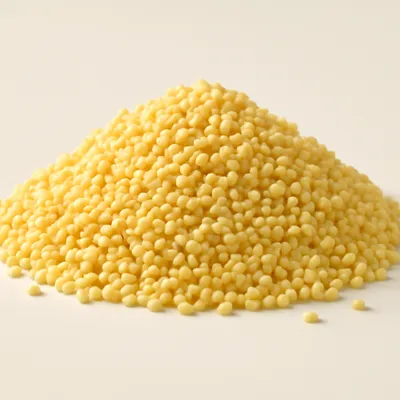




Sikhae — fish cured with grain and salt — belongs to an old East Asian preservation family also seen in the rice-fermented fish of mainland Southeast Asia, and Joseon-era texts record salted-grain fish relishes. The flounder version is documented as a Hamgyong regional specialty, built on two things the northeast had in abundance: clean East Sea flatfish and the hardy millet of the northern uplands. Traditional Hamgyong recipes keep millet as the grain of record, with malt powder the defining addition that sets gajami-sikhae apart from a plain salt-pickle. After the 1950–53 war, displaced northerners settling in Sokcho and the wider Gangwon coast kept making it, and there the southern habit of using rice or barley instead of millet spread.
Firm, translucent cubes of flounder that have lost their raw slip and turned chewy-tender, the soft bones giving way under the teeth. A bright, layered sourness arrives first, then the burn of gochugaru, then a slow malt sweetness, with garlic and ginger underneath and the millet adding a faint nutty graininess. It eats like a fierce, fishy cousin of kkakdugi — pure rice-thief.
This is a controlled lacto-fermentation. Salting the flounder first draws out water and sets the texture while suppressing spoilage organisms. The diastatic enzymes in malt powder break the millet's starch into sugars; those sugars feed lactic acid bacteria, which drop the pH and preserve the fish. The acid, plus a little enzymatic action, slowly softens even the fine bones. Gochugaru, garlic and ginger add antimicrobial cover and flavor, while the millet starch thickens everything into a clinging, savory paste around the fish.
Variations
The defining split is grain: Hamgyong tradition insists on millet, while Sokcho and the Gangwon coast commonly use cooked rice or barley. Some makers fold in slivered radish near the end for crunch and extra sweetness, or adjust gochugaru for a milder or fiercer heat. Beyond flounder, the same method yields sikhae from pollock, squid or sand lance, but the yellow-flounder version remains the benchmark.
On the Palate
Where Gajami-sikhae sits in the Korean flavor cloud
Salt-cure the flounder firmly first, then let the malted millet do its work at cool temperature — the malt's enzymes turn starch to sugar, feeding the lactic bacteria that sour and preserve the fish, and a too-warm ferment spoils instead of souring.
Ingredients
Serves 12
How it's made
7 steps · 1 hour 30 min
- 12880 min
Clean yellow flounder, removing head and innards; cut into bite-size pieces and salt-cure for about 48 hours, then drain and pat dry.
Watch outAfter curing, the flesh should feel firm and no longer wet — drain and pat it dry before it meets the seasoning.
- 230 min
Cook millet into a stiff, dry rice and let it cool to lukewarm.
- 310 min
Toast or ready the malt powder, then mix it through the cooled millet so the grain can saccharify.
- 410 min
Pound or mince garlic and ginger; combine with gochugaru to a coarse paste.
- 515 min
Toss the drained flounder with the seasoning paste, then fold in the malted millet until every piece is coated.
- 620 min
Pack tightly into a clean crock, press out air, cover and leave at cool room temperature to ferment for several days until pleasantly sour.
Watch outPack it tight and press every pocket of air out — trapped air invites spoilage instead of a clean sour ferment.
- 72880 min
Stir through slivered radish if using, then move to cold storage to mature for a day or two before serving.
Watch outIt's ready when it smells pleasantly sour, not sharp or off — then chill it to settle and mature.
Archive tool suggestions — not reviewed
These legacy suggestions have not been evidence-reviewed and are not presented as required tools.


