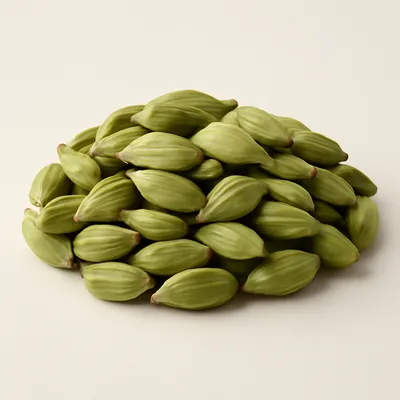
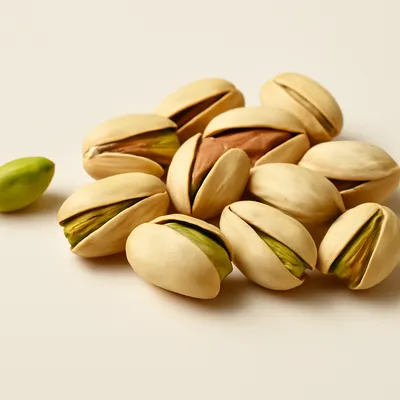
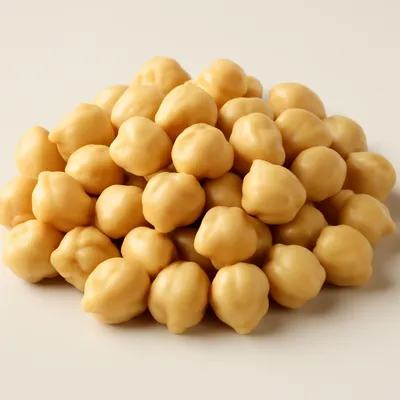
Nan-e nokhodchi is a clover-shaped Persian cookie made from roasted chickpea flour, fine sugar, oil and cardamom, finished with a few ground pistachios. It is famous for the way it melts: there is barely any structure to it, so it dissolves into a buttery, cardamom-scented powder the moment it touches the tongue. Cut with a four-petal cutter for good fortune, the small pale cookies are a fixture of the Nowruz sweet tray and of guest trays year-round. The flour is roasted before use, which is the secret to their nutty taste and sandy melt.

Nan-e nokhodchi is associated above all with the city of Qazvin in northwestern Iran, long known for the cookie as a local specialty, and from there it spread into the national Nowruz repertoire. Built on roasted chickpea flour rather than wheat, it belongs to a Persian family of legume- and nut-flour sweets prized because they keep well and carry a deep toasted flavor. The four-petal clover shape carries a wish for luck and prosperity, which suits its place on the Nowruz table, where sweet things are set out to greet the spring new year. Naturally free of wheat, eggs and dairy, it has long been a sweet that fits many tables.
Almost no resistance at all: the cookie powders the instant it is bitten and melts into a fine, sandy, buttery dust on the tongue. Gently sweet, deeply nutty from the roasted chickpea flour, with cardamom warm and clear through the middle. Ground pistachio on top adds a faint green nuttiness and a speck of color. So tender it must be lifted with care and can crumble between the fingers. Best with tea, which catches the powder and the cardamom.
Two things define nan-e nokhodchi. First, the chickpea flour is dry-roasted before mixing, which cooks out its raw bean taste and develops a deep toasted, nutty flavor through browning. Second, there is no gluten and usually no egg, so nothing forms a network to hold the dough together; fat and sugar simply coat the fine flour, and the cookie sets as a crumb so short it has no chew at all. The dough is rested cold to firm it for cutting, then baked very gently and pulled pale, since any browning past the roasted flour would turn the texture coarse and bitter.
Variations
The clover shape is traditional, though some cut rounds or other forms; ground pistachio is the usual topping. Cardamom is the defining spice, but the amount varies, and a little rosewater is sometimes worked in. Some recipes blend a small share of rice flour or powdered sugar for an even finer melt. Quality follows the chickpea flour and the care of the roast; commercial versions can taste flatter if the flour is under-roasted or the cardamom stinted.
On the Palate
Where Nan-e Nokhodchi sits in the Persian flavor cloud
Ingredients
Serves 30How it's made
8 steps · 35 min
- 112 min
Dry-roast the chickpea flour over low heat until fragrant, then cool and sift it.
Watch outRoast the chickpea flour only until it smells toasty and warms through — brown it and the cookie turns coarse and bitter.
- 25 min
Beat oil with powdered sugar and ground cardamom until smooth.
- 36 min
Work in the roasted chickpea flour to a soft, pliable dough.
- 490 min
Chill the dough until firm enough to roll and cut.
Watch outChill until the dough is firm enough to cut a clean clover edge — too soft and the fragile shapes tear as you lift them.
- 58 min
Roll out and cut into four-petal clover shapes.
- 64 min
Press a little ground pistachio onto the center of each cookie.
- 716 min
Bake very gently until set but still pale, never browned.
Watch outPull them the moment they're set but still pale — any color at all coarsens the melt-in-the-mouth crumb.
- 830 min
Cool completely undisturbed before lifting the fragile cookies.
Archive tool suggestions — not reviewed
These legacy suggestions have not been evidence-reviewed and are not presented as required tools.


