Eight plant-based treasures — lotus seeds, chestnuts, flower mushrooms, hair vegetable, bamboo shoots, tofu skin, straw mushrooms, and napa cabbage — steamed together in a superior pork-bone stock, each retaining individual texture while a shared umami broth unifies the bowl.


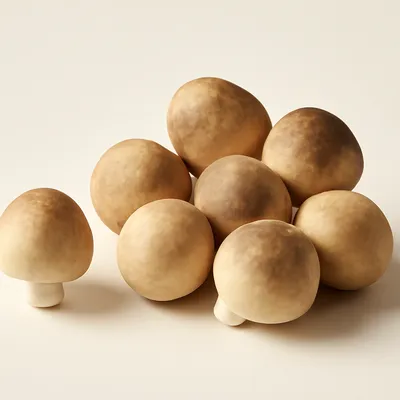



Teochew culinary literature places the origins of eight-treasure vegetarian dishes in the region's Buddhist temple kitchens, with references to similar preparations dating to the Tang-Song era. A widely recounted folk account describes a competition during the Kangxi reign (1661–1722) at Kaiyuan Temple in Chaozhou city, where monastery cooks competed to produce refined vegetarian fare. A chef from Yixi Biefeng Temple reportedly soaked a cloth in meat broth overnight and draped it across his shoulder during the competition, covertly introducing meat flavour into the stock — a story that exemplifies the Teochew principle of vegetarian dishes given a meat soul. The eight core ingredients — auspicious in number — have remained canonical across generations of Chaozhou banquets.
A bowl of restraint and abundance simultaneously: lotus seeds give floury pops, chestnuts melt into themselves, hair vegetable clings in dark slippery threads — all unified by a golden stock so deeply flavoured you forget again that there is no meat.
Each of the eight ingredients contributes a distinct texture from predictable physics: lotus seeds and chestnuts both carry high starch concentrations that gelatinise at 65–80°C, swelling to a floury, yielding pop. Hair vegetable (Nostoc flagelliforme, a cyanobacterium) binds liquid through its polysaccharide sheath, creating a characteristic silky slip. Flower mushrooms release glutamate on rehydration; combined with the glutamate-laden pork bone stock, they activate the umami taste receptors synergistically, amplifying savoriness far beyond what either component achieves alone. Steaming rather than boiling maintains a gentle 96–100°C zone that preserves each ingredient's structure and keeps the broth clear.
Variations
Expanded eleven-treasure version: some Chaozhou banquet halls add golden needle mushrooms, bean curd puffs, and gingko to the canonical eight. Fully vegan version: replaces pork bone broth with a deep shiitake-and-kombu stock, achieving comparable umami — the only version served at strict vegetarian temples. Braised clay-pot version: all eight ingredients braised together on the stovetop rather than steamed in a bowl, producing a softer, more unified texture.
On the Palate
Where Eight-Treasure Vegetable Stew sits in the Chinese flavor cloud
Ingredients
Serves 4


How it's made
7 steps · 1 hour 10 min
- 160 min
Soak lotus seeds, dried chestnuts, flower mushrooms, dried straw mushrooms, and hair vegetable separately in warm water for at least 60 minutes; squeeze moisture from mushrooms and reserve soaking liquid; pick and rinse hair vegetable thoroughly
Watch outReserve the strained mushroom soaking liquid — it's loaded with glutamate and, poured back with the pork stock, doubles the savouriness.
- 210 min
Trim the bitter green embryo from the centre of each lotus seed; halve fresh or reconstituted chestnuts
- 35 min
Blanch bamboo shoot slices in boiling water for 2 minutes to remove bitterness; drain and set aside; cut napa cabbage into large wedges
- 45 min
Arrange napa cabbage wedges and bamboo shoot slices in the base of a deep soup bowl
- 58 min
Stack chestnuts, lotus seeds, torn tofu skin ribbons, flower mushrooms, straw mushrooms, and bamboo shoots on top; crown with hair vegetable
- 63 min
Combine superior pork bone stock with strained mushroom soaking liquid; season with salt, light soy sauce, and white pepper; pour gently over the arranged bowl to nine-tenths full
- 735 min
Cover the bowl tightly with a plate; steam over high heat for 30–35 minutes; serve immediately in the steaming bowl
Watch outSteam over high heat thirty to thirty-five minutes so the ingredients meld in their own broth without churning; a boil would break the delicate stack apart.
Archive tool suggestions — not reviewed
These legacy suggestions have not been evidence-reviewed and are not presented as required tools.


