Tube rice pudding — glutinous rice packed into a small cup or bamboo tube over a base of braised pork, dried shrimp and shiitake, then steamed firm and turned out upside-down onto a plate so the savory topping sits on top. Finished with sweet haishan sauce, fried shallots and cilantro. A traditional Taiwanese rice snack, especially associated with Tainan and Qingshui.



Tube rice pudding is a long-standing Taiwanese rice dish whose name comes from the small container — the 'tong' (tube) — it is steamed in. Early vendors used sections of bamboo as moulds, giving the rice a faint bamboo fragrance; today small metal cups are more common. It belongs to the same family as Taiwan's 'oil rice', a glutinous-rice dish cooked with shallot oil, dried shrimp and shiitake that traditionally marks births and other celebrations. The tube format turns that festive rice into a portable single serving: the savory ingredients are laid in the bottom of the cup, the rice steamed on top, then the whole thing inverted so the topping crowns the mound. The town of Qingshui in Taichung and the city of Tainan are both famed for their versions.
The rice is firm and glossy, each grain distinct yet sticky, deeply scented with shallot oil. The braised pork and rehydrated shiitake on top are tender and savory, the dried shrimp giving a salty depth. Sweet haishan sauce slicks the mound, the fried shallots add crunch, and the cilantro lifts it. Heavier and chewier than plain rice — a small bowl that eats like a meal.
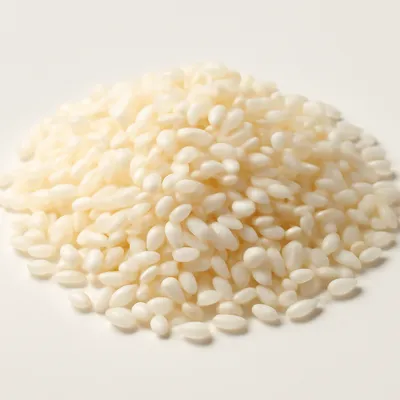
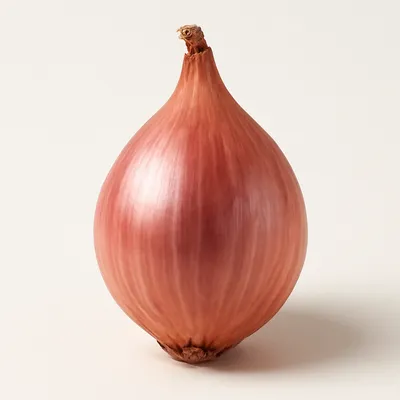
Glutinous rice is nearly all amylopectin, the branched starch that makes cooked grains sticky and chewy rather than fluffy. Soaking before steaming hydrates the grains so they cook evenly; steaming rather than boiling keeps them firm and intact instead of mushy. Packing the rice tightly into the tube compresses it into a cohesive cake that holds its shape when turned out. The savory base sits at the bottom during steaming so its rendered fat and braising juices seep up into the rice; inverting then puts that flavored layer on top. The aroma backbone is fried shallots — shallots browned slowly in oil develop deep Maillard flavor.
Variations
Tainan-style tube rice pudding is usually softer and wetter, drenched in sweet sauce; Qingshui-style is firmer and drier with more visible toppings. Common additions are a slice of braised pork, half a braised egg, sausage or a sprinkle of pork floss. Bamboo-tube moulds give a more traditional fragrance than metal cups; the oil-rice version is loose rather than moulded.
On the Palate
Where Tong Zai Mi Gao sits in the Taiwanese flavor cloud
Ingredients
Serves 4
How it's made
7 steps · 1 hour 30 min
- 1120 min
Soak glutinous rice in water for at least two hours, then drain.
- 215 min
Fry shallots slowly in oil until golden and fragrant to make shallot oil and crisp fried shallots.
- 330 min
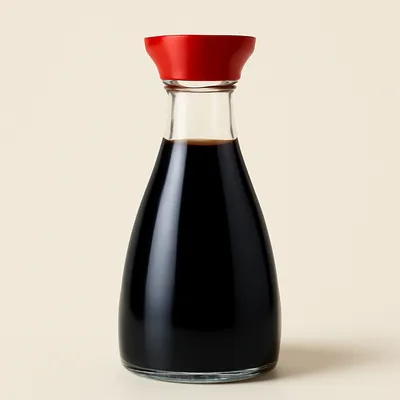
Braise diced pork with dried shrimp, rehydrated shiitake, soy sauce and five-spice until savory and tender.
- 45 min
Toss the soaked rice with shallot oil and a little of the braising liquid so each grain is coated.
Watch outToss the soaked rice with shallot oil and a little braising liquid until every grain is coated — this is where the rice takes on its savor before steaming.
- 58 min
Spoon a layer of the braised topping into the bottom of each small cup or bamboo tube, then pack the rice on top firmly.
Watch outPack the rice down firmly over the topping — loose rice won't hold together as a cake when you turn it out.
- 640 min
Steam the filled tubes over high heat until the rice is cooked through and firm, about 40 minutes.
Watch outSteam until the rice is cooked through and firm, about 40 minutes — undercooked it's chalky and won't unmold clean.
- 73 min
Invert each tube onto a plate so the topping faces up; brush with sweet haishan sauce and finish with fried shallots and cilantro.
Archive tool suggestions — not reviewed
These legacy suggestions have not been evidence-reviewed and are not presented as required tools.


