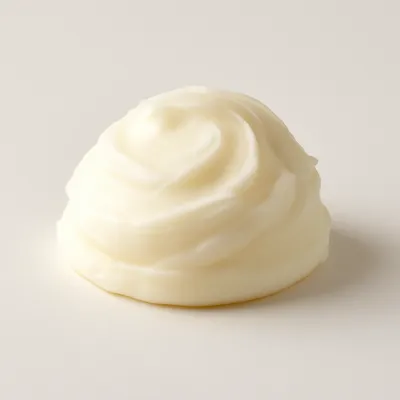
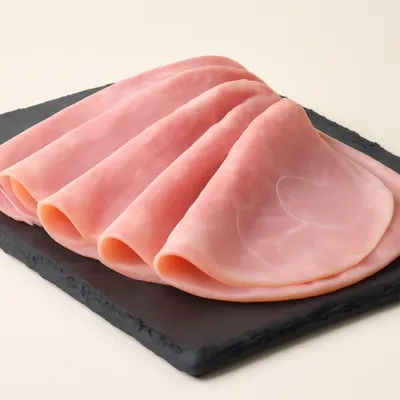
A showpiece of Teochew 工夫菜: a whole silver pomfret steamed until just yielding, its first steaming liquid discarded, then blanketed in an ivory white sauce built from chicken stock, fresh milk, lard, and cornstarch—barely thickened, glossy as lacquer, and finished with two parallel rows of pink ham. The dish rewards restraint over richness.


Silver pomfret (银鲳, Pampus argenteus)—known in Teochew as 白鲳—has been the prestige fish of Teochew coastal tables for centuries, prized for its flat, nearly boneless body, fine-grained flesh, and clean oceanic sweetness. The white-sauce preparation belongs to the upper tier of 工夫菜—banquet-grade dishes demanding exceptional technique—that distinguished Teochew formal cooking from everyday home fare. The word 工夫 (gōngfu) signals time, skill, and precision: just as Teochew gongfu tea demands an elaborate ceremony for a tiny cup, 工夫菜 demands meticulous work for apparently simple results. According to accounts within the Teochew culinary community, the classical whole-fish white-sauce technique gained wider professional recognition through cooking demonstrations held in the latter half of the twentieth century; later chefs refined the plating by portioning the fish for neater presentation. The white sauce itself—a light, European-influenced velouté adapted to southern Chinese palates—reflects the long engagement between Teochew coastal culture and maritime trade, through which techniques from Southeast Asian port cities filtered back into Guangdong kitchens.
The fish flakes in large, silky sheets that melt almost without chewing. The white sauce is so delicate it barely registers as separate from the fish—just a breath of cream and stock that draws out the pomfret's sweetness without competing with it. The ham provides a quiet savory counterpoint that anchors the dish.
Silver pomfret's relatively high collagen content in its connective tissue converts rapidly to gelatin at steam temperatures above 70 °C, producing large tender flakes with a moist, silky mouthfeel in just 10–12 minutes—any longer and the muscle fibers tighten and turn dry. The white sauce achieves opacity through two simultaneous physical mechanisms: fat droplets from the lard form an oil-in-water emulsion stabilized by gelatinized cornstarch (which thickens at 60–70 °C), producing Tyndall light scattering; and casein micelles from the milk contribute to the sauce's smooth body. The starch matrix prevents the casein from aggregating in the slightly acidic stock, averting curdling. Discarding the first steaming liquid is critical: it concentrates the fishy aldehydes and trimethylamine amines that condense out of the fish during the first minutes of steam, and removing it leaves the flesh tasting clean.
Variations
Some restaurants cut the pomfret into thick steaks before steaming so the sauce coats both sides evenly. A richer variant replaces fresh milk with evaporated milk for a more pronounced dairy note. Thin ginger slices placed under the fish during steaming further suppress residual fishiness. The same white-sauce technique is applied in other Teochew restaurants to garoupa and sea bass.
On the Palate
Where White-Sauce Pomfret sits in the Chinese flavor cloud
Ingredients
Serves 4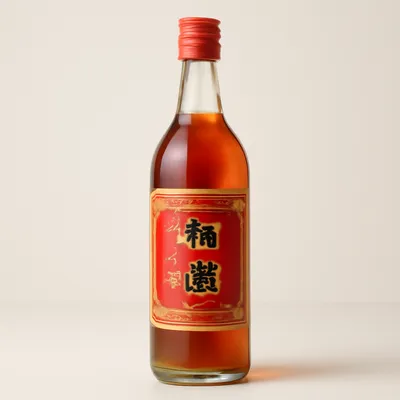


How it's made
7 steps · 20 min
- 110 min
Scale and gut a whole silver pomfret (about 600 g); rinse thoroughly, pat dry, and score the thickest part of the flesh on both sides with two diagonal cuts.
- 210 min
Rub the fish inside and out with 1 tsp salt and 1 tbsp Shaoxing wine; place three slices of fresh ginger under the fish and marinate for 10 minutes.
- 312 min
Place the fish on a heatproof plate in a steamer; steam over vigorously boiling water for exactly 12 minutes, then remove from heat.
Watch outSteam the pomfret exactly 12 minutes then stop — a few minutes longer and the flesh tightens and dries out.
- 42 min
Carefully tip away all liquid that has accumulated on the plate—this removes the fishy condensate; discard the ginger slices.
Watch outTip away all the liquid pooled on the plate — that condensate carries the fishy note and would thin the white sauce.
- 55 min
In a small saucepan, combine 100 ml chicken stock, 100 ml whole milk, 1 tbsp lard, and a pinch of salt; bring to a gentle simmer over low heat.
- 65 min
Mix 1.5 tsp cornstarch with 2 tbsp cold water; drizzle into the simmering sauce while stirring constantly until the sauce just coats the back of a spoon and turns opaque and glossy—do not over-thicken.
Watch outDrizzle the starch in until the sauce just coats the spoon and turns opaque-glossy — don't over-thicken, or it turns to paste.
- 73 min
Pour the white sauce evenly over the fish; arrange two parallel rows of thinly sliced cooked ham across the top and serve immediately.
Archive tool suggestions — not reviewed
These legacy suggestions have not been evidence-reviewed and are not presented as required tools.


