The Naxi call it màbǔ — the black kind stuffed with rice and pig blood, the white kind with egg white. Made at every New Year pig-slaughter in Lijiang households, steamed until set, then pan-fried crackling crisp. Horse caravans on the Tea-Horse Road carried it as iron ration; local lore holds it replenishes blood and stamina.




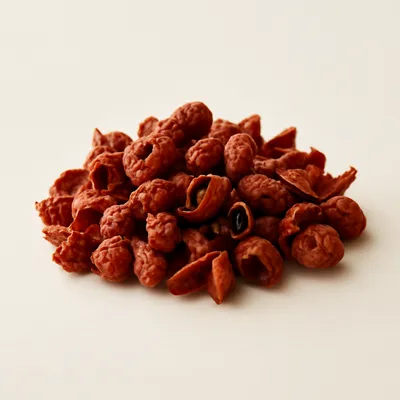
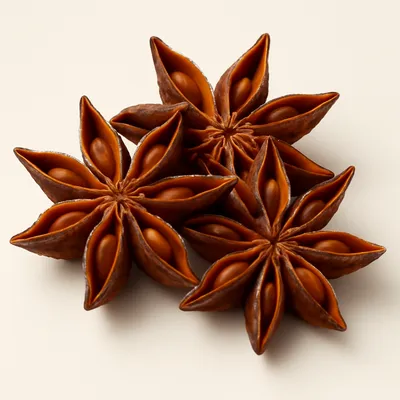
Rice sausage is so central to Naxi life that the pig-slaughter feast is considered incomplete without it. The Naxi, whose ancestors migrated south from the Tibetan Plateau along the Jinsha River, developed a comprehensive pig-slaughter cuisine; mi guanchang represents its most elegant expression of zero waste. Every winter at the lunar December pig-slaughter, virtually every Naxi household makes màbǔ to offer guests — and if a guest could not attend, a length of sausage and fresh pork would be sent the next day as a mark of respect. Two named variants exist: black màbǔ, made with fresh blood, and white màbǔ, made with egg white.
Slice a cold length and fry it: the outer rice-crust shatters first — darkly caramelised, oily-crisp — then the interior opens: warm, glutinous, the iron-rich depth of the blood quiet but present, star anise drifting through the richness like incense through a Dongba ceremony.
Semi-cooked glutinous rice continues absorbing moisture during steaming, swelling to fill the casing tightly and producing sliceable density. Pig blood proteins (hemoglobin and albumin) fully coagulate at 70–75 °C, locking the cross-section into a dense purple-black matrix. Pan-frying triggers a Maillard reaction on the outer rice layer: dry heat above 140 °C converts reducing sugars and amino acids into browning compounds that deliver the crisp shell and smoky aroma.
Variations
The white version (白麻补) substitutes egg white for blood, producing a pale, milder sausage. Some households mix in diced fat pork and galangal alongside the spices. A festival variant wraps the stuffed casing in banana leaves before steaming, adding a floral green fragrance.
On the Palate
Where Naxi Rice Blood Sausage sits in the Chinese flavor cloud
Ingredients
Serves 6

How it's made
7 steps · 40 min
- 115 min
Rinse pig large intestine with salt and rice vinegar inside and out; flush under running water until odour-free; tie off one end with kitchen twine.
- 2135 min
Soak 400 g glutinous rice in water 2 hours; drain; steam 15 minutes until half-cooked; spread on a tray to cool slightly.
- 35 min
Combine warm rice with 200 ml fresh pig blood, 1 tsp salt, 1 tsp five-spice powder, ½ tsp ground Sichuan pepper and 2 crushed star anise; mix thoroughly.
- 410 min
Funnel the rice-blood mixture into the prepared casing, packing tightly and evenly; leave 3 cm empty at the top; tie off the open end firmly.
- 52 min
Pierce the filled casing in several places with a toothpick to allow steam to escape; place in a steamer basket.
Watch outPrick the packed casing all over first — trapped steam will burst the skin mid-steam if it can't escape.
- 645 min
Steam over vigorous heat 40–45 minutes until the centre is fully set (internal temperature 75 °C); remove and cool completely.
- 78 min
Slice into 1 cm rounds; pan-fry in a lightly oiled skillet over medium-high heat 3–4 minutes per side until the crust is deeply browned and crackling crisp.
Watch outFry over medium-high until the rice crust is deep brown and crackling — that dry sear is the whole point; too gentle and it just steams grey.
Archive tool suggestions — not reviewed
These legacy suggestions have not been evidence-reviewed and are not presented as required tools.

