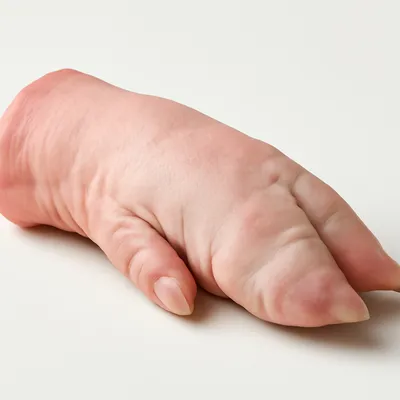
Everything a Boshan family owns at year-end goes into one earthenware pot — pork belly, mackerel, trotters, lotus root, kelp, tofu — layered and simmered overnight. Bones dissolve. The liquid sets by morning into a fragrant jelly.




Local Boshan district chronicles record a folk legend tracing the dish to the Northern Song, when the celebrated poet-official Su Shi (苏轼) passed through Yanshen (颜神镇, the ancient name of Boshan) while reassigned from Hangzhou to Mizhou. His sister Su Xiaomei observed kiln workers simmering scraps in clay pots near their kilns and refined the technique: layering proteins and vegetables in strict sequence with vinegar and soy sauce, simmering for hours. Locals named the dish 苏锅 in her honor; because 苏 and 酥 (tender) are homophones and because the long braising renders even bones edible, the name shifted to 酥锅. It was inscribed on the Shandong Provincial Intangible Cultural Heritage list, and every Boshan family makes its own version before the lunar new year — a tradition captured by the local saying: 穷也酥锅,富也酥锅 (poor or rich, everyone makes their pot).
Cold from the pot, the braising liquid is set to a quivering jelly that coats every mouthful with layered sweetness and acid. Warm, it breaks open in waves: the mackerel gives first, then the pork belly yields, then trotter collagen dissolves quietly on the tongue.
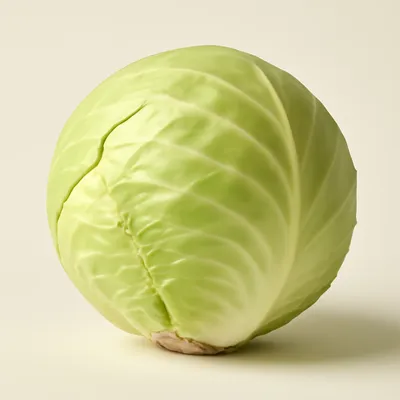
Rice vinegar lowers the pot's pH to approximately 4–5, accelerating collagen hydrolysis and dissolving calcium from fish bones into the broth. The 8–12 hour simmer at 85–90°C converts structural collagen to soluble gelatin, which solidifies on cooling. Cabbage layered on top acts as a moisture seal; its own pectin degrades during cooking, adding a natural sweetness and body to the final jelly. The Boshan black earthenware pot's low thermal conductivity distributes heat slowly and evenly, preventing scorching during the overnight cook.
Variations
No two Boshan families make the same pot. Wealthier households stack more pork and mackerel; modest versions emphasize tofu and vegetables. Some add hard-boiled eggs, chicken legs, or duck. The invariable core is pork belly, white cabbage, and rice vinegar. Commercial vacuum-packed versions now ship nationwide, though locals maintain that an overnight home pot is the only legitimate expression.
On the Palate
Where Boshan Layered Braised Pot sits in the Chinese flavor cloud
Ingredients
Serves 8


How it's made
7 steps · 45 min active + 10 hours 15 min waiting
- 120 min
Parboil pork belly and trotters to remove impurities; pan-fry mackerel sections until golden to maintain shape during the long braise; blanch lotus root slices in acidulated water; soak and cut kelp into finger lengths; press and slice firm tofu.
Watch outFry the mackerel sections hard until both sides are golden and firm-set before layering — a soft, unbrowned piece falls apart over the long overnight braise.
- 25 min
Place a bamboo rack or pork bones at the bottom of a large Boshan black earthenware pot to prevent scorching.
- 310 min
Layer ingredients in strict sequence: white cabbage leaves first, then lotus root, kelp, tofu, pork belly, mackerel, pork trotters; seal the top with a thick layer of cabbage leaves.
- 45 min
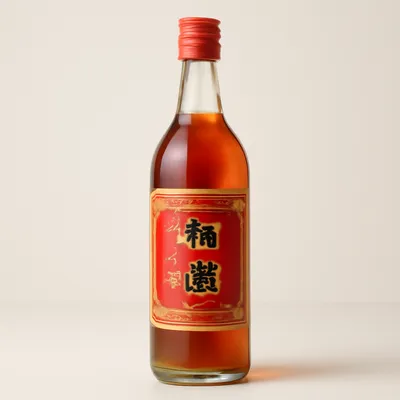
Mix soy sauce, rice vinegar, sugar, salt, and Shaoxing wine; pour in slowly from the pot's edge without disturbing the layers.
- 510 min
Bring to a vigorous boil over high heat for 10 minutes to open up the ingredients, then reduce to the lowest possible simmer; cover tightly.
Watch outGive it ten minutes of hard boil to open everything up, then drop to the barest thread of a simmer — if it keeps bubbling briskly overnight the delicate top layers break up and the pot scorches.
- 6600 min
Simmer undisturbed for 8–12 hours — traditionally overnight — without lifting the lid; the cabbage and collagen baste the pot internally.
- 730 min
Remove from heat; cool to room temperature until the braising liquid sets into a light jelly; serve cold in slabs or gently reheated.
Watch outDon't cut into it hot — let it cool all the way to room temperature so the collagen-rich liquid sets into a light jelly; slice too early and it just runs.
Archive tool suggestions — not reviewed
These legacy suggestions have not been evidence-reviewed and are not presented as required tools.



