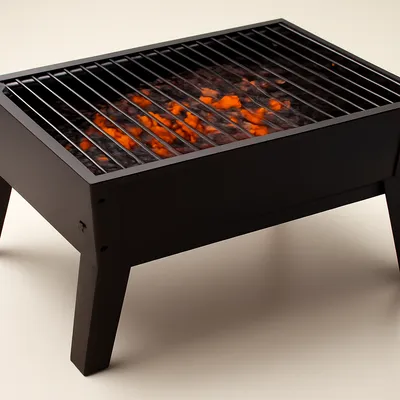
From Shiping County in Yunnan's Red River Prefecture: slabs of pale-gold tofu coagulated by naturally acidic underground well water—a local geochemistry that cannot be replicated anywhere else—laid over glowing charcoal until the surface blisters and turns golden while the interior stays cool and silky. Sold along the ancient city's streets by vendors who swing the blocks from a rack to demonstrate their improbable toughness, one of Yunnan's celebrated eighteen oddities.



Shiping County has produced tofu with its naturally acidic groundwater for over six hundred years, with documentation placing this craft in the Ming dynasty. The ancient city sits above a geological formation generating two distinct water types within a 0.75-square-kilometer area: sweet-water wells used for soaking soybeans and cooking soy milk, and acid-water wells serving as the coagulant—a technique locally formulated as 'sweet water soaks the bean, sour water sets the curd.' The acidic water contains a naturally occurring mixture of calcium sulfate, magnesium chloride, gluconic acids, and phosphates that together act as a multi-component coagulant of unusual gentleness. Attempts to transport the acidic water beyond Shiping have consistently failed to produce equivalent tofu, as the water's mineral profile reacts differently once separated from the local aquifer. In 2012, Shiping tofu received national geographic indication protection; in 2017, its traditional production methods were inscribed on Yunnan Province's fourth-batch intangible cultural heritage list.
Off the charcoal grill, the outer skin crackles lightly under the first bite—then gives way to a center that is cool-leaning, silky, and faintly sweet from the soybean itself. The charcoal adds barely a whisper of smoke. This is a dish about the purity of the bean and the peculiarity of the water: clean, mineral-edged, quietly remarkable.
Shiping's acidic well water functions as a multi-component coagulant acting simultaneously on soy protein by three mechanisms: calcium ions from calcium sulfate neutralize the electrostatic repulsion between protein molecules (primarily glycinin and beta-conglycinin), allowing them to aggregate; magnesium ions from magnesium chloride form ionic bridges between adjacent protein chains; gluconic acid gently lowers pH to near the protein isoelectric point (around pH 4.6), completing coagulation smoothly without graininess. This cooperative action creates a dense, fine-meshed gel with exceptionally high water retention—which is why Shiping tofu can be swung vigorously without tearing. On the charcoal grill, surface moisture evaporates rapidly; at approximately 140°C, Maillard browning between residual sugars and amino acids produces the characteristic gold color and nutty aroma, while internal steam keeps the core tender.
Variations
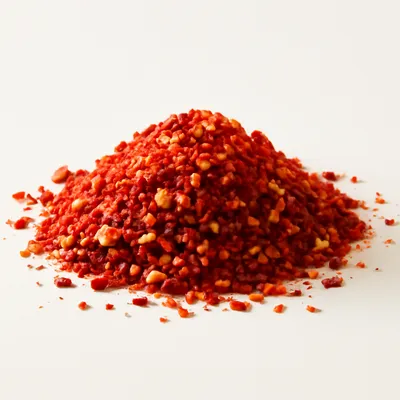
Fresh Shiping tofu can also be eaten raw with chili-salt dip, braised in a clay pot with local dried mushrooms, or sliced thin and stir-fried with cured ham and seasonal greens. The charcoal street-grill version remains the most iconic preparation. Neighboring Jianshui County produces a cousin tofu by a similar acidic-spring principle, yielding a more porous, nuttier result.
On the Palate
Where Shiping Grilled Tofu sits in the Chinese flavor cloud
Ingredients
Serves 4How it's made
7 steps · 30 min
- 1480 min
Soak dried soybeans in sweet well water overnight for at least eight hours; drain and rinse
- 220 min
Grind the soaked soybeans with fresh sweet water at a 1:8 ratio; strain through cheesecloth or a fine mesh bag to extract smooth soy milk
- 312 min
Bring soy milk to a full rolling boil in a heavy-bottomed pot, skimming foam; reduce heat and hold at a gentle simmer for two minutes
- 425 min
Remove from heat; cool soy milk to approximately 75–80°C; slowly drizzle acidic well water in a thin, steady stream while stirring gently, then stop and allow curds to form undisturbed for 15 minutes
Watch outCool the soymilk to about 75–80°C before drizzling the acidic water in slowly — too hot or poured fast and the curd sets coarse and grainy.
- 540 min
Ladle curds gently into a cloth-lined wooden mold; fold the cloth over the surface and press under a 2kg weight for 35–40 minutes until the block is firm
- 65 min
Unmold the tofu block; slice into pieces approximately 1cm thick; pat surfaces dry and allow to air for five minutes
- 710 min
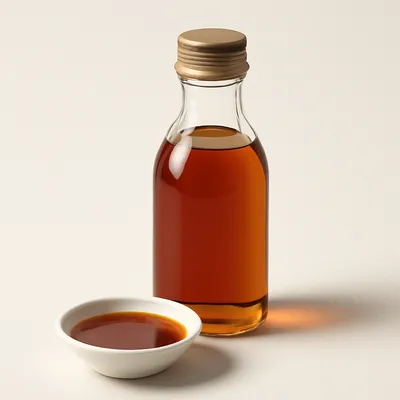
Arrange tofu slices on a wire rack over medium charcoal heat; grill four to five minutes per side until the surface is golden and lightly puffed; serve immediately with a dipping bowl of chili-soy sauce
Watch outGrill four to five minutes a side until golden and lightly puffed — that puff is steam lifting the crust, the sign it's ready.
Archive tool suggestions — not reviewed
These legacy suggestions have not been evidence-reviewed and are not presented as required tools.