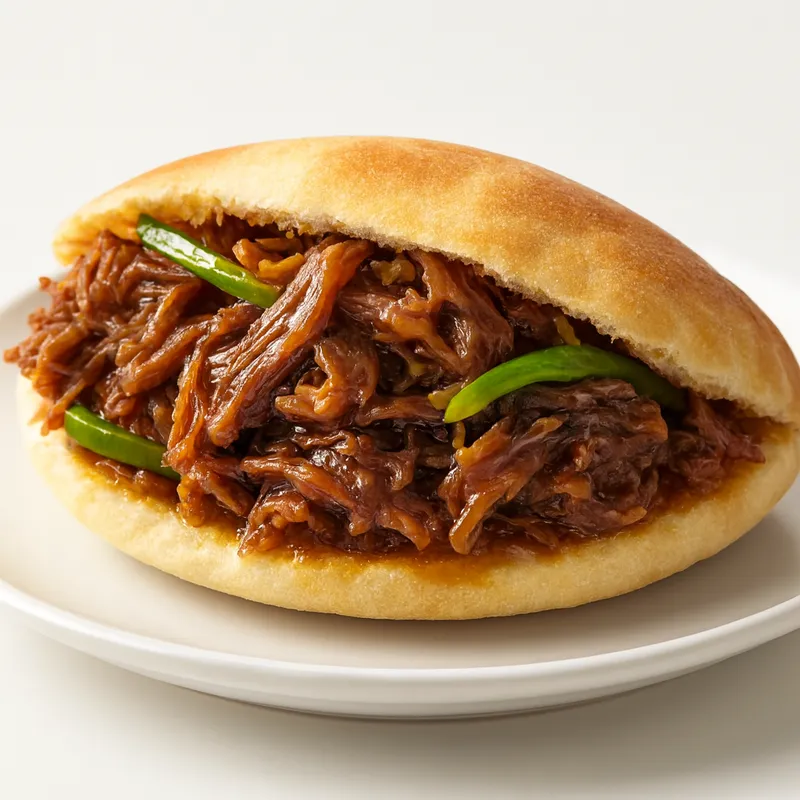
Tender pork intestines glazed in a complex, aromatic sauce with a layered sweet-sour-salty-bitter-spicy profile from rock sugar, vinegar, soy, white pepper, and warm spices (sand cardamom, cinnamon, nutmeg).



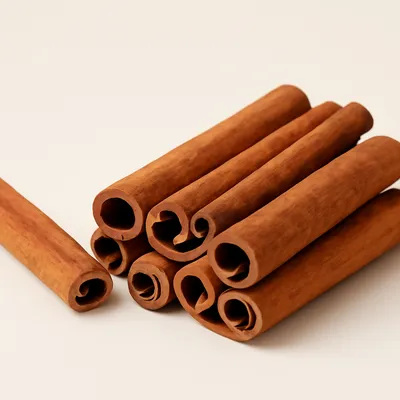
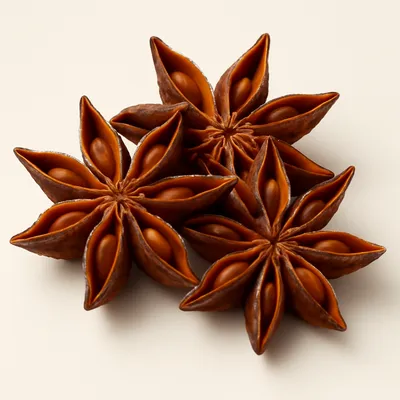
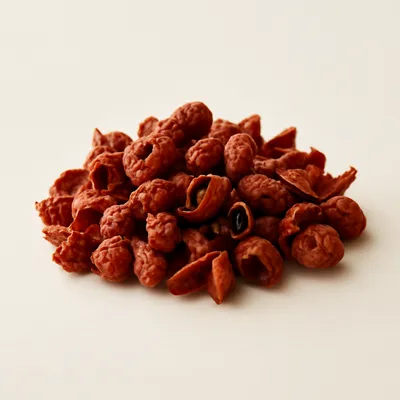
A Jinan dish from the late Qing era (1880s), credited to Jiuhualou restaurant. "Nine turns" refers both to the coiling shape and to the Daoist idea of "nine" as completion or perfection — the cook claimed nine flavors and nine processing steps. It is one of the technical benchmark dishes of Lu cuisine; competence is judged on this plate.
An 1880s Jinan dish from Jiuhualou restaurant — the cook claimed nine flavors and nine processing steps, citing Daoist 'nine as completion'. Five tastes (rock sugar, vinegar, soy, white pepper, clove-cinnamon) layered so each registers separately, not blended.
Coiled lengths of large intestine, dark brown and shining, cut into bite rings stacked on the plate. The bite carries five flavors layered: sweet (rock sugar), sour (vinegar), salty (soy), spicy (white pepper), bitter (a touch of sand cardamom, cinnamon, and nutmeg). The casing is firm but not rubbery; the inner lining is silky with rendered fat. Polarizing — you taste five things in one chew.
The intestine must be cleaned three times: outer wash, turn inside-out scrub with flour and salt, then blanch with vinegar. Cooking is in three stages: boil, deep-fry to set (re-fried two or three times because the nested casing won't cook through in one go), then braise in a complex sauce of sugar, vinegar, soy, plus ground white pepper, cinnamon, sand cardamom, and nutmeg. The five flavors are not blended — the cook layers them so each registers separately on the tongue.
Variations
Jinan original at Jiuhualou keeps the rock-sugar mahogany; Tianjin riffs add fermented bean curd to the braise; modern Beijing Lu-cuisine houses (聚丰德) shorten the casing to bite rings and lean sweet-sour over bitter.
On the Palate
Where Nine-Turn Pork Intestines sits in the Chinese flavor cloud
This dish is judged on the cleaning and the layered braise: scrub the casing inside-out three times, then build the sauce so sugar, vinegar, soy, and warm spice each register separately on the tongue rather than blurring into one.
Ingredients


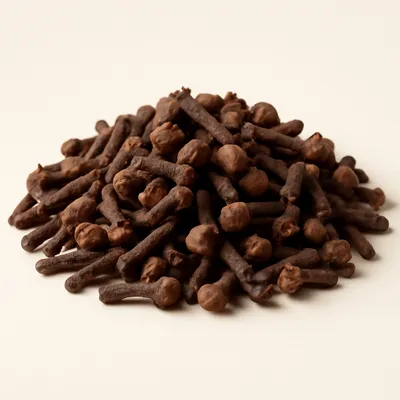


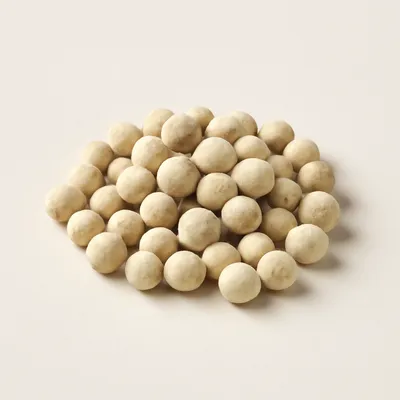



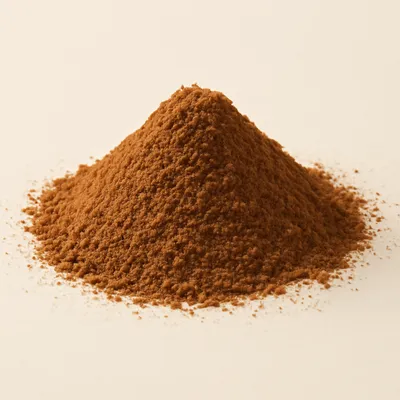

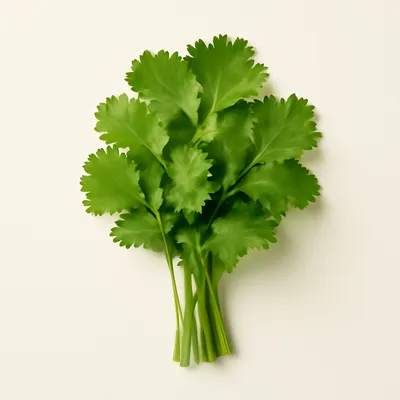
How it's made
5 steps · 26 min active + 15 min waiting
- 15 min
Rinse the pork intestines thoroughly under cold water, turning them inside out to remove any residue. Cut into 2-inch pieces and soak in a mixture of vinegar and water for 15 minutes to remove odors.
Watch outTurn the casing fully inside out and scrub with flour and salt until it no longer feels slimy — this pass decides whether the finished dish smells clean.
- 27 min
In a pot, bring water to a boil and blanch the intestines for 5 minutes. Drain and rinse under cold water to stop the cooking process.
Watch outBlanch until the scum stops rising, then shock in cold water so the casing firms up before frying.
- 32 min
In a wok, heat a tablespoon of vegetable oil over medium heat. Add sliced ginger, garlic, cinnamon, star anise, and Sichuan pepper. Stir until the spices are fragrant, about 2 minutes.
- 410 min
Add the blanched intestines to the wok along with soy sauce, vinegar, and sugar. Stir-fry for 10 minutes, allowing the sauce to reduce and coat the intestines evenly.
Watch outReduce the sauce until it turns glossy and clings — you want a shiny coat, not a wet puddle in the pan.
- 52 min
Taste and adjust seasoning if necessary, then serve hot, ensuring the intestines are tender and well-flavored.