A cool, trembling jelly made from wild stone flower seaweed (石花菜) harvested off Qingdao's Laoshan coast, dressed with garlic paste, vinegar, dried shrimp, and cucumber — refreshingly clean, mineral-scented, and as local as the Yellow Sea itself.




Stone flower seaweed (石花菜, Gelidium amansii) grows abundantly on the rocky reefs off Qingdao's Laoshan Mountain, where it has been hand-harvested by coastal families at low tide for generations. Local legend says that when Qin Shi Huang dispatched emissaries to Laoshan seeking an elixir of immortality, Taoist monks there served the imperial envoys a cooling jelly made from boiled stone flower seaweed, which earned the emperor's favor. Whether or not the legend holds, the tradition of sun-drying and boiling this seaweed into a refreshing gel is centuries old along the Qingdao coast. In 2012, the Laoshan District intangible cultural heritage office formally designated 石花菜海凉粉加工技艺 as a district-level intangible cultural heritage; in 2015 it was elevated to a Qingdao municipal heritage item.
The jelly wobbles in the bowl but gives way instantly to gentle pressure — less firm than silken tofu, more mineral and clean-tasting. The garlic-vinegar dressing charges every bite with brightness, while dried shrimp deliver small bursts of oceanic depth.
Stone flower seaweed is rich in agarose and agaropectin — sulfated galactan polysaccharides composed of alternating D-galactose and 3,6-anhydro-L-galactose units. When boiled in water, these polysaccharides leach from the cell walls and form a sol. On cooling below approximately 40°C, the agarose chains form double helices that aggregate into a thermoreversible gel network — the same chemistry as laboratory agar. Unlike animal gelatin, the agarose gel sets firmer and remains stable at room temperature. The finished jelly is fat-free, high in soluble dietary fiber, and extremely low in calories.
Variations
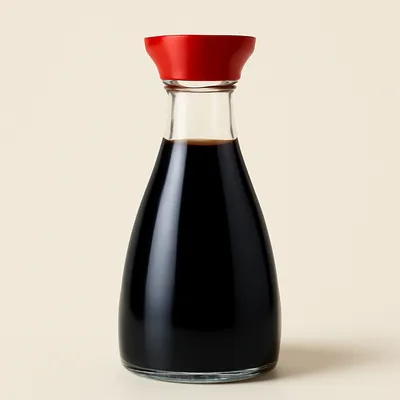
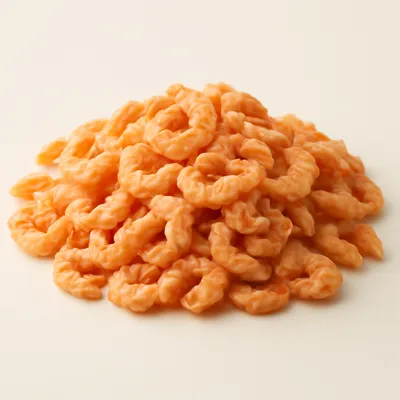
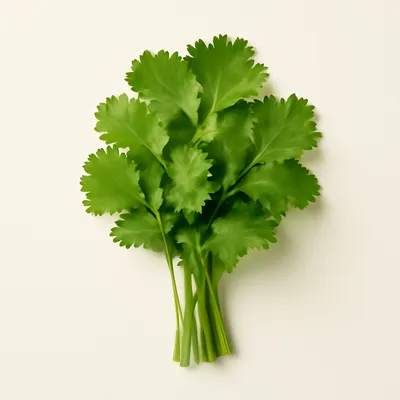
The classic Qingdao dressing uses garlic paste, rice vinegar, soy sauce, dried shrimp, cucumber strips, and cilantro. Some vendors add sesame oil or chili oil. Laoshan vendors occasionally use seaweed-infused soy sauce and toasted sesame seeds for more concentrated marine flavor. Indoor restaurant versions sometimes plate the jelly in strips as a composed salad alongside preserved egg or smashed cucumber.
On the Palate
Where Qingdao Seaweed Jelly sits in the Chinese flavor cloud
Ingredients
Serves 4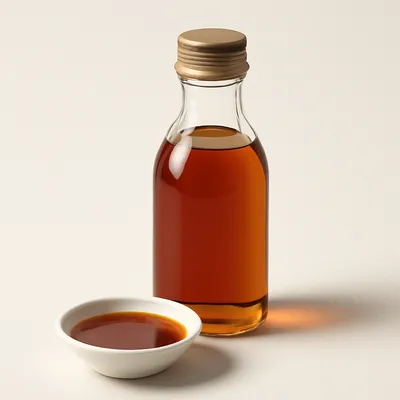
How it's made
7 steps · 20 min
- 110 min
Rinse dried stone flower seaweed thoroughly in cold water 2–3 times to remove sand; soak for 10 minutes until softened.
- 225 min
Place soaked seaweed and soaking water in a large pot; add 1.5 L additional water; bring to a boil over high heat, then reduce to medium-high and cook for 20–25 minutes, stirring occasionally, until the seaweed fully dissolves and the liquid turns thick and faintly golden.
Watch outCook until the seaweed fully dissolves and the liquid turns thick and faintly golden — if strands still show, the agar hasn't released and it won't set firm.
- 35 min
Strain the hot liquid through a fine-mesh sieve or cheesecloth into a wide container, pressing gently to extract all gel; discard the residue.
- 4240 min
Cool the strained liquid at room temperature for 20 minutes, then refrigerate for at least 3–4 hours until firmly set into a trembling, semi-transparent jelly.
Watch outChill until it trembles and springs back when pressed — a soupy, slack set means it needs longer in the cold.
- 55 min
Unmold and cut into slabs or strips about 1 cm thick; arrange in a serving bowl.
- 65 min
Combine garlic paste, rice vinegar, soy sauce, dried shrimp, and cucumber strips; taste and adjust seasoning.
- 73 min
Spoon the dressing generously over the jelly; garnish with fresh cilantro and a drizzle of sesame oil or chili oil; serve immediately.
Archive tool suggestions — not reviewed
These legacy suggestions have not been evidence-reviewed and are not presented as required tools.

