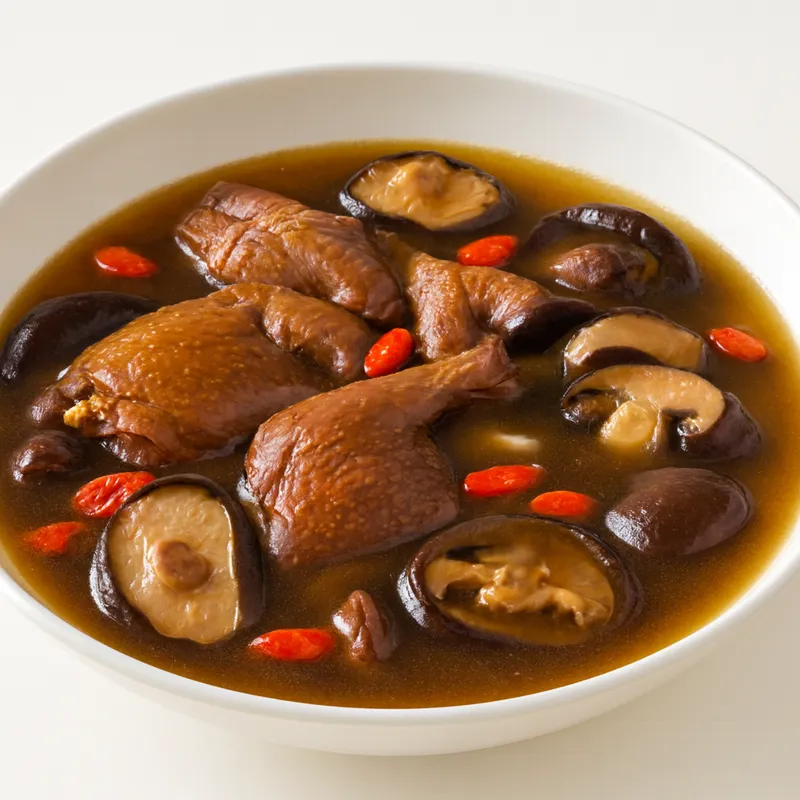
A classic Huizhou banquet stew built on a pictorial naming conceit: a whole hen stands in for the phoenix (feng), while pork stomach is cut into petal-like strips arranged as a peony (mudan) and ham slices form the flower's stamens. Hen and tripe are simmered together in one pot over a gentle charcoal fire with ginger and a little rock sugar until the broth turns thick and milky white. The bird is boned with the skin kept intact and set on one side of a large soup bowl, head facing center; the sliced stomach is fanned into a blossom on the other. The chicken comes out fall-apart tender and juicy, the tripe soft yet springy, the soup rich and savory. Beyond the banquet table it is also eaten in the Huizhou and lower-Yangtze region as a restorative tonic.





Phoenix-Stewed Peony is documented as a traditional Anhui (Huizhou) dish and a representative example of Hui cuisine's strength in slow stewing, but it has no verifiable inventor, date, or dynastic origin story. Its name is the key fact: it follows the pictorial-dish (xiangxing cai) convention common in Huizhou banquet cooking, in which a whole hen represents the auspicious phoenix and carved pork stomach is arranged into a peony, the king of flowers, with ham slices as stamens. The dish belongs to the banquet repertoire of the Huizhou and lower-Yangtze region, where it doubled as a postpartum and convalescent tonic.
First the broth: opaque, milky white, almost creamy on the tongue, deeply savory from chicken, tripe, and ham without tasting of any one of them. The hen pulls apart at a touch, the meat moist and loaded with juice, the kept-on skin silky. The peony petals of pork stomach are the textural counterpoint, soft and yielding but with a faint springy chew, carrying a clean, slightly mineral aroma. A whisper of sweetness from the rock sugar rounds the salt. A good version is glossy and white with clear tripe flavor; a poor one is thin and grey, with rubbery, off-smelling stomach.
The milky broth is an oil-in-water emulsion, not a sign of extra nutrition. Hen, tripe, and ham are all fat-rich; under a sustained rolling boil the fat is sheared into tiny droplets, while collagen-derived gelatin and phospholipids (lecithin) released from the tissues act as emulsifiers, coating the droplets so they stay suspended instead of pooling on top. The fine, dense suspension scatters light and reads as opaque white. Long, gentle stewing converts tough connective-tissue collagen into soluble gelatin, which is why the hen falls apart and the tripe turns tender. Salt is added only late: in acidic, alkaline, or salty conditions muscle proteins denature and tighten early, so salting too soon keeps the bird from going soft. The peony depends on knife work and on parboiling the stomach to about 40 percent done before stewing, so it firms enough to slice into clean 0.3 cm strips that hold a petal shape.
Variations
Within the same Huizhou banquet stewing family, compare Stewed Soft-Shell Turtle with Ham (huotui dun jiayu), where ham lends salt and depth to a gelatinous main, and Steamed Stone Frog or Yellow Mountain Stewed Pigeon as other slow-cooked tonic dishes. The grander multi-tier casserole Huizhou Yipin Guo (one-pot of layered meats and vegetables) shares the banquet-centerpiece role. Households simplify the dish by skipping the peony carving and serving hen and tripe cut up together, or swap the hen for an old laying hen for an even richer, more gelatinous broth.
On the Palate
Where Phoenix-Stewed Peony (Chicken and Tripe Stew) sits in the Chinese flavor cloud
Ingredients
Serves 6

How it's made
7 steps · 40 min
- 115 min
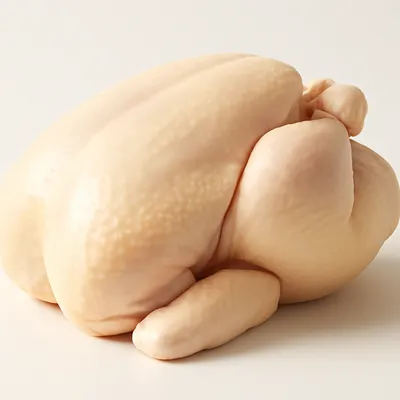
Clean the hen, opening it along the backbone and removing the innards and crop; rinse, bring to a boil in a pot of cold water, then lift out.
- 220 min
Scrub the pork stomach with a little vinegar and salt to remove mucus and odor, rinse clean, then parboil in a soup pot until about 40 percent done and drain.
- 35 min
Place the hen and whole stomach together in a clay pot (sand pot), add water to cover, bring to a vigorous boil over high heat, and skim off the foam.
Watch outKeep it at a vigorous rolling boil — that hard shear is what emulsifies the fat into the milky-white broth; a gentle simmer stays clear.
- 490 min
Turn the heat to low and stew gently until the hen is about 60 percent tender, then add salt, sliced ginger, rock sugar, and sliced ham and continue to stew.
Watch outSalt only late, once the hen is about 60 percent tender — added early, salt tightens the proteins and slows it turning tender.
- 520 min
When hen and stomach are about 90 percent tender, lift them out; bone the hen keeping the skin unbroken and set it on one side of a large soup bowl with the head facing the center.
Watch outBone the hen keeping the skin unbroken — the intact skin is what lets it be arranged whole for the peony presentation.
- 610 min
Cut the stomach into strips about 0.3 cm wide and fan them into a peony shape on the other side of the bowl, laying ham slices at the center as stamens.
- 72 min
Pour the hot milky broth over the arrangement and serve.
Archive tool suggestions — not reviewed
These legacy suggestions have not been evidence-reviewed and are not presented as required tools.