A Guangxi ritual-slaughter staple: fresh pig's blood folded into steaming glutinous rice and seasoned with grass-fruit powder and scallion oil, then packed into cleaned pork casing, steamed until firm, and sliced for pan-frying to a crackling mahogany crust. Known locally as zhūlóngpèng or zhūlóng gòng, it appears whenever a whole pig is butchered for a feast — every grain coated deep purple, every bite dense with sticky chew and iron warmth.





A butchering-day food rooted in Guangxi's multi-ethnic village life, where slaughtering a pig was a communal event and nothing was wasted. Zhuang, Yao, and Miao households each season the filling differently — peanuts, shiitake, five-spice — but the ritual of mixing blood with still-steaming glutinous rice on the day of slaughter is universal across the region. In 2024, Guangxi's Department of Commerce listed the pig blood glutinous rice sausage on the official register of Guicai (桂菜) named snacks, recognizing it as a representative specialty of the autonomous region.
The casing crisps to a shatter while the interior stays dense and pillowy — sticky-rice chew shot through with the earthy iron note of pig blood, brightened by scallion oil and the clean, camphor-edged warmth of grass-fruit. There is no gaminess, only a deep savouriness that recalls the cold morning of a village pig-kill.
Glutinous rice — composed of approximately 98 percent amylopectin — gelatinizes fully during steaming, forming a dense, cohesive gel matrix that holds the filling together without any binder. Pig blood proteins, chiefly hemoglobin and albumin, coagulate above 60°C and crosslink with the starch network, yielding the characteristic dark purple cross-section and springy yet yielding texture. The volatile eucalyptol in grass-fruit competitively occupies olfactory receptors, masking iron-derived off-aromas. Pan-frying dehydrates the outer casing rapidly; Maillard browning between pig-skin collagen hydrolysates and reducing sugars generates hundreds of aromatic compounds and the crackling golden shell.
Variations
Guiyang County style adds crushed peanuts and diced shiitake for texture contrast. Debao style uses five-spice powder instead of grass-fruit, yielding a more pungent, anise-forward aroma. Guilin street vendors sometimes lightly smoke the sausage over lychee wood before slicing. A white variant made by replacing pig blood with beaten egg white yields a pale ivory interior, prized for lighter eating.
On the Palate
Where Pig Blood Glutinous Rice Sausage sits in the Chinese flavor cloud
Ingredients
Serves 4

How it's made
7 steps · 30 min
- 1130 min
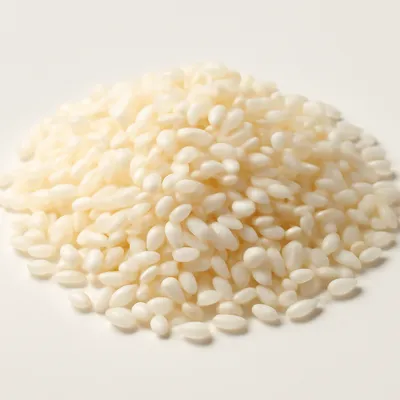
Soak glutinous rice in cold water for 2 hours; drain and steam over high heat for 25 minutes until just cooked through but still slightly firm. Transfer to a large bowl while still steaming-hot.
Watch outSteam the glutinous rice just cooked through but still with a little bite — steam it to mush now and the filling turns pasty, since it firms up again with the blood and second steam.
- 210 min
Turn pig intestines inside out; rub vigorously inside and out with coarse salt and a handful of cornstarch to remove mucus. Rinse thoroughly under cold running water, then soak in water mixed with a splash of rice vinegar for 10 minutes to eliminate any residual odor. Drain and set aside.
- 35 min
Pour fresh pig blood gradually into the hot steamed rice while stirring continuously with chopsticks, until every grain is coated and the mixture is uniformly deep purple. Add 1 tablespoon of melted lard and stir to combine.
Watch outPour the blood into the hot rice while stirring nonstop until every grain is coated an even deep purple — work it while the rice is steaming-hot so the colour and coat go on uniformly.
- 43 min
Season the blood-rice mixture with salt, grass-fruit powder (or five-spice powder), and finely chopped scallion. Stir thoroughly and taste for seasoning — it should be well-salted.
- 510 min
Tie one end of each intestine section tightly with kitchen string. Spoon the filling in loosely, filling only to 80 percent capacity to allow for expansion during steaming. Tie off the other end firmly.
Watch outFill the casing only about eighty percent — the rice swells as the blood sets and the starch cooks, and a tightly packed sausage will split in the steamer.
- 645 min
Arrange stuffed sausages in a steamer basket, coiled loosely without crowding. Steam over rapidly boiling water for 40 minutes. Remove; cool to room temperature, then refrigerate for at least 1 hour until fully set and easy to slice.
- 78 min
Slice into 1 cm rounds. Heat a thin film of lard in a flat-bottomed pan over medium heat; pan-fry the rounds 3–4 minutes per side until the casing is golden-brown and crisp and the cut faces are lightly browned. Serve immediately while the crust is still crackling.
Watch outPan-fry the slices until the casing is golden-crisp and the cut faces lightly browned — serve while the crust still crackles, that contrast is the point.
Archive tool suggestions — not reviewed
These legacy suggestions have not been evidence-reviewed and are not presented as required tools.


