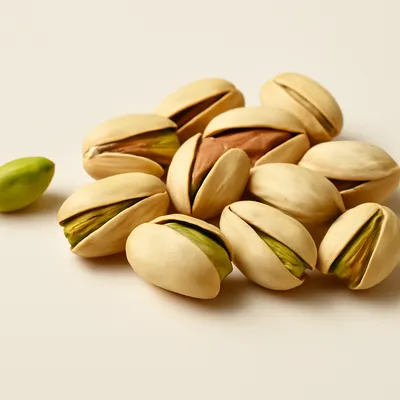
用粗麦粉加阿卡维(或莫扎瑞拉)奶酪加热揉成可拉伸的面皮,擀薄后卷入 ashta 凝奶油,切段,浇糖浆,撒开心果。名字 halawet el-jibn 意为「奶酪的甜美」,是叙利亚中部城市哈马(Hama)一八七〇年代的产物,后传入黎巴嫩。



Halawet el Jibn — 'sweetness of the cheese' — was created in the 1870s in Hama, Syria, by the Salloura family, sweets vendors in the city. It belongs to the Levantine stretched cheese-and-semolina tradition that also produced knafeh. The neighboring Syrian city of Homs also claims it as a specialty, and the two cities have a friendly rivalry over credit. From Syria it crossed into Lebanon and is now a standard of Beirut's patisseries and Lebanese weddings. It is constantly confused with knafeh, and structurally the two are opposites: knafeh uses shredded kataifi pastry or fine semolina over cheese (cheese is filling, pastry is structure); halawet el jibn kneads the cheese into the semolina dough that becomes the wrapper, with ashta cream inside.
The dough is faintly chewy and milky, yielding to a cool, luxurious wave of perfumed cream; the syrup adds a clean sweetness, the pistachios a sharp green bitterness. It is rich but surprisingly delicate.
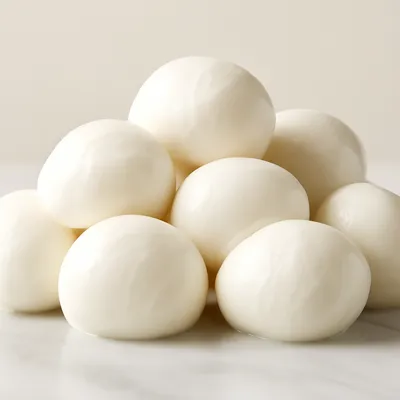
Heating mozzarella or akkawi cheese with semolina and water melts the casein network, which cross-links with gelatinized semolina starch as the mixture cooks into a pliable, stretchy dough — the same cheese-starch complex that underpins knafeh. Working the dough warm is essential: once the casein cools below its melt range, the dough loses stretch and cracks. The ashta filling must be cold when applied, or it softens the dough's starch matrix. Syrup is poured on at the last moment, because osmotic draw from the sugar would slowly shrink and toughen the dough if it sat.
Variations
A Hama-style version grinds pistachio directly into the dough for a green-flecked wrapper. Some fillings blend ashta with a whisper of mastic for a faint piney note. Rose petal jam is the classic crown alongside the pistachio.
On the Palate
Where Halawet el Jibn (Lebanese) sits in the Lebanese flavor cloud
Ingredients
Serves 8
How it's made
6 steps · 40 min
- 18 min
In a saucepan combine 1 cup semolina, 1 cup water, 1 tbsp sugar and 1 tbsp glucose; add 250 g shredded mozzarella; cook over medium heat, stirring hard, until it forms a smooth stretchy ball that pulls away from the pan, about 5 minutes.
Watch outCook the cheese-semolina until it forms one smooth, stretchy ball that peels away from the pan — pull it too early and the dough tears instead of stretching.
- 24 min
Turn the hot dough onto an oiled surface; knead briefly with oiled hands until smooth and elastic; divide in two.
- 36 min
Roll each half between two sheets of parchment as thin as possible into a large rectangle, about 1 mm thick; let cool until just warm.
Watch outRoll and fill while the dough is still warm — once it cools below stretchy it cracks; the ashta must be cold or it softens the sheet.
- 45 min
Make or chill the ashta (see Znoud el Sit step 1); spread a 2 cm stripe of cold ashta along one long edge of each dough sheet.
- 56 min
Roll the dough up around the ashta into a neat log; trim the ends; cut each log into 4-5 cm pieces.
- 68 min
For the syrup: dissolve 1.5 cups sugar in 1 cup water with 1 tsp lemon juice; simmer 8 minutes; off heat add 1 tsp each rose water and orange blossom water; cool. Arrange the pieces on a plate, pour syrup over, shower with crushed pistachios and a dot of rose petal jam; serve.
Watch outPour the syrup on only at the last moment before serving — let the pieces sit soaked and the sugar draws water out and toughens the dough.
Archive tool suggestions — not reviewed
These legacy suggestions have not been evidence-reviewed and are not presented as required tools.

