A deeply spiced Tunisian okra stew simmered with lamb, harissa, and the aromatic tabel spice blend in a tomato broth — a specialty associated with La Marsa on the Gulf of Tunis, where the okra's natural mucilage creates the dish's signature viscous body without any added thickener.




Gnaouia belongs to the Maghrebi family of bamia (okra stew) found from Libya to Morocco, but the Tunisian version carries a name rooted in the Gnawa — called Ignawen in Berber — the communities of sub-Saharan African descent who spread throughout the Maghreb via trans-Saharan trade routes. Okra (Abelmoschus esculentus) originated in tropical Africa and entered North Africa along these same corridors; the Andalusian botanist Abu al-Abbas al-Nabati described it under cultivation in Ayyubid Egypt around 1216, and it appears in medieval Arab agronomical writing shortly after. In Tunisia, the dish became especially associated with the coastal town of La Marsa north of Tunis, which historically hosted diverse populations including communities of Gnawa descent. The classical preparation calls for kid goat meat; modern households substitute chicken, lamb, or veal according to season and occasion.
A thick, lightly viscous stew with heat from harissa and earth from tabel — the okra dissolves into the sauce while chunks of lamb emerge tender from the broth; eaten with bread, each tear soaks through the spiced silk.
Okra cell walls contain arabinogalactans and pectic polysaccharides (primarily galacturonic acid polymers) that rupture during cooking and dissolve into the surrounding liquid, creating viscosity without added starch or flour — this is the dish's defining texture. Full polysaccharide release occurs above 70℃ with sustained heat. The harissa adds capsaicin and carotenoid pigments; tabel's caraway contributes carvone and thymol, while coriander seed provides linalool — together forming the aromatic signature. Tomato paste fried in oil undergoes Maillard browning that concentrates umami glutamates and deepens color. Long simmering converts lamb collagen to gelatin at 85–90℃ over 50+ minutes, adding a secondary richness to the broth.
Variations
The La Marsa classic uses kid goat; urban versions substitute chicken or veal. Some cooks add dried preserved meat (gueddid) for smoky depth. A Tunisian Jewish variation omits the meat entirely, making a vegetarian okra stew enriched with extra olive oil. Algerian versions of a similar dish use different spicing without tabel.
On the Palate
Where Marqet Gnaouia sits in the Tunisian flavor cloud
Ingredients
Serves 4

How it's made
7 steps · 20 min
- 15 min
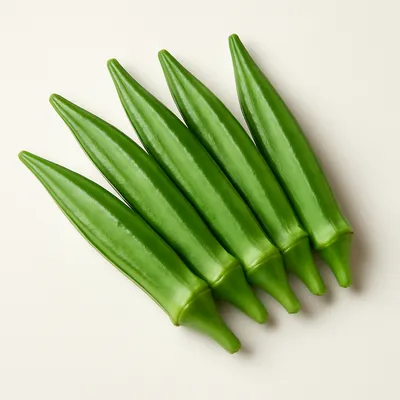
Wash okra and trim the stems without cutting into the pods; pat dry thoroughly — excess moisture on the okra can cause excessive sliminess.
Watch outPat the okra bone-dry and trim without cutting into the pods — surface water and cut pods make the stew turn ropy and slimy.
- 211 min
Heat olive oil in a wide, heavy pot over medium-high; add diced onion and cook 3 minutes until softened, then add lamb pieces and sear until browned on all sides, about 8 minutes.
- 32 min
Add tomato paste, harissa, and tabel spice; stir and fry for 2 minutes until the paste darkens and the spices bloom.
- 430 min
Season with salt; pour in 600 ml water. Bring to a boil, reduce heat, cover and simmer for 30 minutes until lamb is nearly tender.
- 53 min
Add the whole trimmed okra pods to the stew; stir very gently once to submerge them without breaking the pods.
- 620 min
Cook uncovered over medium-low heat for 20 minutes, stirring only occasionally, until the okra is completely soft and the sauce has thickened to a lightly viscous consistency.
Watch outSimmer gently and stir only now and then — the okra's own pulp thickens the sauce to a light gloss, but rough stirring smashes the pods and turns it gluey.
- 72 min
Adjust seasoning with salt and additional harissa to taste; serve in deep bowls with flatbread.
Archive tool suggestions — not reviewed
These legacy suggestions have not been evidence-reviewed and are not presented as required tools.