A sweet-savory lamb stew braised with quince, cinnamon, and saffron — the canonical dish of Tunisia's marqa hlou (sweet stew) tradition, made each autumn when quince ripens and especially after Aid el-Kebir when fresh lamb is abundant.




Marqa hlou (sweet stew) is a distinct category of Tunisian cooking that blends meat with fruit, sugar, and warm spice — a tradition rooted in medieval Arabic-Andalusian court cooking, where sweet-savory combinations appeared in influential cookbooks of the 13th century. Andalusian exiles who settled in Tunisian coastal cities from the 15th to 17th centuries carried this repertoire with them, where it merged with Ottoman-era palace cuisine. Marqet Sfarjel belongs to the quince-and-lamb pairing documented across Maghrebi tagine cooking; in Tunisia its seasonal logic is precise: Aid el-Kebir brings freshly slaughtered lamb while the autumn quince market peaks simultaneously, making this stew a near-obligatory post-holiday dish in many households.
Sweet, warming, and deeply fragrant — lamb yields to quince's gentle tartness as caramelized sugar threads through a saffron-gold broth, with cinnamon's warmth lingering on the palate.
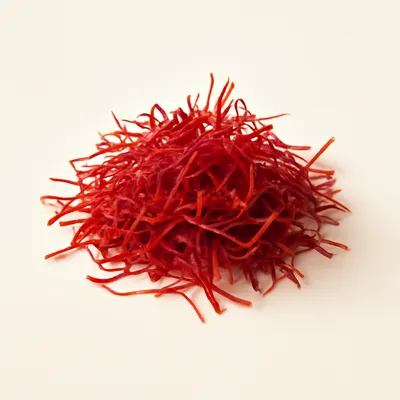
Browning the lamb in hot oil generates Maillard compounds that anchor the broth's depth. Saffron's crocin dissolves readily above 60℃, staining the sauce golden while safranal delivers its characteristic medicinal warmth. Quince contains high pectin and tannins: the tannins produce initial astringency that long braising progressively hydrolyzes, while pectin partially dissolves into the sauce, adding body without starch. Sugar added late caramelizes at the pan margins under reduction heat (above 160℃ at the surface), producing aldehyde-based aromatic compounds that layer complexity over the savory base. Cinnamon's cinnamaldehyde is fat-soluble and binds into the lamb fat during braising, reinforcing aroma in every bite.
Variations
Some families add prunes alongside quince for extra sweetness and acidity. A couscous-based version layers the stew over steamed semolina. Chicken replaces lamb in lighter household versions. Apples or pears may substitute quince when it is out of season.
On the Palate
Where Marqet Sfarjel sits in the Tunisian flavor cloud
Ingredients
Serves 4


How it's made
7 steps · 20 min
- 18 min
Season lamb chunks generously with salt and black pepper. Heat olive oil in a heavy-bottomed pot over medium-high and sear the lamb in batches, about 8 minutes total, until golden on all sides; remove and set aside.
Watch outSear the lamb in batches to a real golden-brown crust — crowd the pot and it steams grey, losing the Maillard depth that anchors the sauce.
- 26 min
Dissolve saffron threads in 3 tablespoons of warm water for 5 minutes; add to the pot along with tomato paste and a cinnamon stick, stirring over medium heat for 1 minute.
- 340 min
Return the lamb to the pot; add enough water to just cover the meat (about 500 ml). Bring to a boil, then reduce to a low simmer, cover, and cook for 40 minutes.
- 410 min
While the lamb simmers, peel and quarter the quinces, removing the cores; place the pieces immediately in cold water with a squeeze of lemon juice to prevent browning.
- 520 min
Add the quince quarters and sugar to the pot; stir gently to combine, then cook uncovered over medium-low heat for 20 minutes until the quince is completely tender.
- 610 min
Raise the heat to medium and reduce the sauce for 8–10 minutes, stirring occasionally, until it turns amber-gold and coats a spoon; adjust seasoning with salt.
Watch outReduce until the sauce turns amber-gold and coats a spoon — the quince pectin is thickening it naturally; stop early and it stays thin.
- 72 min
Remove the cinnamon stick; serve hot in a deep dish with crusty bread or flatbread on the side.
Archive tool suggestions — not reviewed
These legacy suggestions have not been evidence-reviewed and are not presented as required tools.


