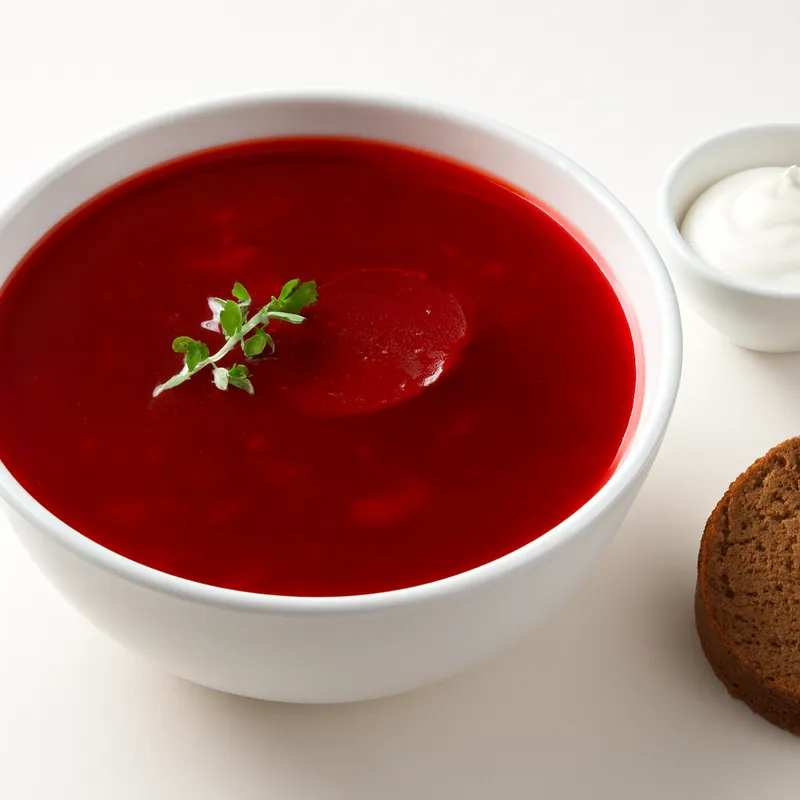
Sweet and earthy with a robust, slightly nutty flavor, beetroot boasts a tender yet firm texture. Its deep crimson hue adds a striking visual element to any dish, highlighting its culinary versatility.
Where it comes from
Beetroot has ancient roots, originally cultivated by the Romans and Greeks, who valued it for both its flavor and medicinal properties.
In the kitchen
Whether roasted, pickled, or juiced, beetroot enriches salads, smoothies, and entrees with its unique taste and vibrant color.
Across cuisines
Beetroot is the red heart of Ukrainian borshch — grated or julienned, sweated with vinegar and a knob of fat to preserve color, then slow-simmered into the broth alongside cabbage and potato. The technique of pre-cooking with acid (the kvashena method) is what keeps the soup deep crimson rather than browning to mud.
Grated, boiled, fermented — the base of šaltibarščiai cold soup and dark-red borščiai winter soups.
Boiled and diced into rosolje (Estonian beet salad) with herring and apple — the Christmas cold-table standard.
Nutrition (per 100g)
AI-estimated; model and run unavailable.