A Tunisian enriched semolina-and-flour bread, golden-tinted with turmeric and scented with nigella seeds, brushed with egg wash before baking to produce a glossy amber crust. Prepared at home and in bakeries alike, it is especially beloved during Ramadan.




Khobz mbesses is a North African enriched semolina bread rooted in the everyday bread-baking traditions of Tunisia and Algeria. The name derives from the Arabic root bss, meaning "to knead thoroughly," describing the baker's foundational act. The bread is made across the Maghreb in countless family variations — some enriched with honey, almonds or date filling — and is strongly associated with Ramadan in Tunisia, where bakeries and home kitchens produce it in large quantities throughout the fasting month.
The crust yields with a gentle crackle, revealing a tender, slightly chewy crumb faintly warm from turmeric; nigella seeds release a faint oregano-onion note against the nutty backbone of semolina.
Semolina's coarse durum particles absorb moisture more slowly than all-purpose flour, giving the crumb its characteristic dense chew; olive oil coats gluten strands, interrupting partial network formation to keep the texture tender. At 200°C, egg-wash proteins denature and react with surface sugars via the Maillard reaction, producing a glossy amber shell. Turmeric's fat-soluble curcumin distributes evenly through the oil-enriched dough, giving the crumb a uniform golden color from core to crust. Nigella seeds contain volatile thymoquinone compounds that release aromatic notes under high heat without turning bitter.
Variations
Some families prepare a sweet version with honey, almond topping, and date filling. The Algerian variant of the same name is a semolina cake enriched with eggs and almonds, closer in character to a pastry than bread. Some bakers substitute butter for olive oil for a richer, more brioche-like result. An overnight poolish starter version develops deeper fermentation flavor.
On the Palate
Where Khobz Mbesses sits in the Tunisian flavor cloud
Ingredients
Serves 8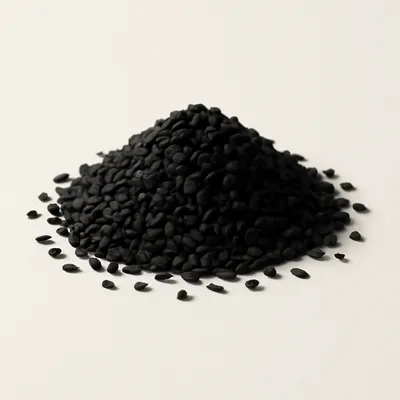



How it's made
7 steps · 30 min
- 110 min
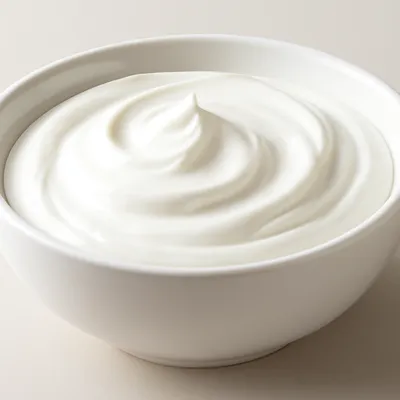
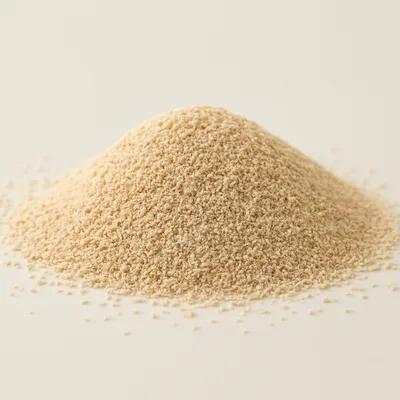
Dissolve yeast and sugar in 100ml warm water; rest 10 minutes until frothy and active.
Watch outWait until the yeast froths up before mixing — flat, inactive yeast means a dense loaf that won't rise; if it doesn't foam, start over.
- 25 min
Combine flour, fine semolina, salt and turmeric in a large bowl; create a well in the center.
- 35 min
Pour yogurt, olive oil, yeast mixture and remaining warm water into the well; mix to a rough dough.
- 4130 min
Knead on a lightly floured surface for 10–12 minutes until smooth and supple; cover and proof 2 hours.
- 565 min
Divide dough into three equal strands, braid, place on a lined baking tray, and proof for a further 1 hour.
- 65 min
Brush the surface with an egg-and-milk wash; scatter nigella, sesame and fennel seeds over the top.
- 730 min
Bake in a preheated oven at 200°C for 28–32 minutes until deep golden and hollow-sounding when tapped.
Watch outBake until deep golden and the base sounds hollow when tapped — a dull thud means it's still doughy in the middle.
Archive tool suggestions — not reviewed
These legacy suggestions have not been evidence-reviewed and are not presented as required tools.


