Small oval deep-fried leavened buns — crisp outside, pillow-soft within — split and filled with harissa, tuna, boiled potato, hard-boiled egg, and black olives. Born in the Judeo-Tunisian community of La Goulette and now Tunisia's most beloved street snack, ranked among CNN's 25 best sandwiches in the world.





Oral tradition traces fricasse to a Tunisian-Jewish household in La Goulette, a port suburb of Tunis, no later than the 19th century. According to the most widely circulated account, a Jewish grandmother had prepared sweet fried pastries for expected guests; when the guests cancelled, she repurposed the beignets with pantry staples — salted fish, potatoes, olives and harissa — rather than rolling them in sugar. The improvised snack spread immediately among family and neighbors and proliferated across the country. The name is a portmanteau of the French words for "fried" and "split," naming the two defining gestures. Multiple sources confirm the dish's Judeo-Tunisian origins and its subsequent adoption across all Tunisian communities; diaspora communities in France and Israel carry the tradition internationally.
The first bite cracks through a shatteringly thin golden crust into a tender, yielding interior that soaks up olive oil and harissa; pockets of potato provide starchy counterweight to the briny tuna and saline olives.
Hot oil at 170–180°C rapidly dehydrates the outer 2–3mm of the dough: water flashing to steam leaves a porous but rigid shell formed via the Maillard reaction on the gluten-starch matrix. Simultaneously, steam pressure from heated moisture inside the dough expands the gluten network, producing the hollow pocket that accommodates the filling. The yeast-leavened open crumb is highly absorbent, drawing olive oil and harissa brine deep into the interior for a coherent, juicy bite.
Variations
Some versions add slata méchouia as a filling layer for smoky depth. Capers and preserved lemon are popular additions in coastal areas. A sweet version of the same fried dough dipped in honey or powdered sugar serves as a dessert fritter. Premium stalls may use fresh chili paste in place of harissa.
On the Palate
Where Fricasse Tunisien sits in the Tunisian flavor cloud
Ingredients
Serves 8


How it's made
7 steps · 30 min
- 110 min
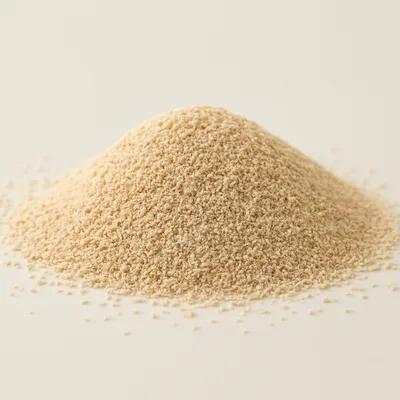
Dissolve yeast in warm water; combine with flour, egg, olive oil and salt to form a soft dough. Knead 8–10 minutes.
- 290 min
Cover and let dough rise at room temperature for 90 minutes until doubled in volume.
- 340 min
Roll dough to 1.5cm thickness; cut into oval shapes roughly 10cm long. Rest 35 minutes.
- 45 min
Heat vegetable oil to 170–180°C; test with a small piece — it should rise slowly and turn golden in 3–4 minutes.
Watch outGet the oil to 170–180°C — a test scrap should rise slowly and gild in three-to-four minutes; cool oil makes greasy dough that won't puff hollow.
- 515 min
Deep-fry the ovals in batches, 2–3 minutes per side, until uniformly golden. Drain on paper towels.
Watch outFry until uniformly golden and the pocket puffs hollow — that steam-blown cavity is what holds the filling.
- 610 min
Dice boiled potatoes and hard-boiled eggs; mix with drained tuna, sliced olives and chopped parsley.
- 710 min
Split each fricasse three-quarters through, spread harissa inside, fill generously, and serve immediately.
Archive tool suggestions — not reviewed
These legacy suggestions have not been evidence-reviewed and are not presented as required tools.

