Whole fish steaks simmered in a fierce, garlic-laden tomato sauce spiked with harissa, sweet paprika, caraway and chili — a Tunisian-Jewish Friday night staple whose name derives from the Arabic word for 'hot'. Skin and bones remain to enrich the sauce; the fish is cooked through in under 15 minutes.




Chraime is rooted in the Judeo-Maghrebi kitchen, shared across Tunisian, Algerian and Libyan Jewish communities. The name derives from the Arabic for 'hot', pointing to North African Arab spice vocabulary adopted wholesale into Jewish cooking. The dish serves as the centerpiece of the Erev Shabbat fish course — in Sephardi tradition the fish precedes the meat — and also appears at Rosh Hashanah and Passover. Libyan-Jewish immigrants carried the dish to Israel from the 1950s onward, where it circulates under the Libyan-inflected pronunciation 'hraimi' and has become popular far beyond its originating community. My Jewish Learning records it as a classic of Tunisian cuisine that has become, in Israel, a Mizrahi replacement for gefilte fish.
Fiery, tomatoey and deeply garlicky — the fish is firm yet yielding, its juices folded into a sauce that bites with harissa heat and carries the faintly anise-like warmth of caraway. Lemon and cilantro lift the whole thing at the end.
Building the sauce over high heat blooms paprika's fat-soluble carotenoids and caraway's terpenes — carvone and limonene — in olive oil, creating an aromatic base impossible to replicate by adding spices later. Tomato paste, reduced briefly, develops Maillard compounds that deepen umami and colour. Fish proteins — primarily myosin — begin denaturing at 50–60°C while actin sets fully above 70°C; simmering steaks in liquid at a gentle bubble keeps the centre just within the tender zone. Skin and bone collagen dissolves partially into the sauce during the brief cook, adding gloss and body.
Variations
The Libyan version (hraimi) typically uses more chili and less tomato, producing a redder, oilier sauce. Some Tunisian families add a whole preserved lemon to the pot. Caraway can be replaced with cumin in other regional styles. Any firm fish works — red snapper, grouper, tilapia, mullet or carp; carp is the preferred fish in Israel. A Passover variation omits any wheat-flour thickener and relies on reduction alone.
On the Palate
Where Chraime sits in the Tunisian flavor cloud
Ingredients
Serves 4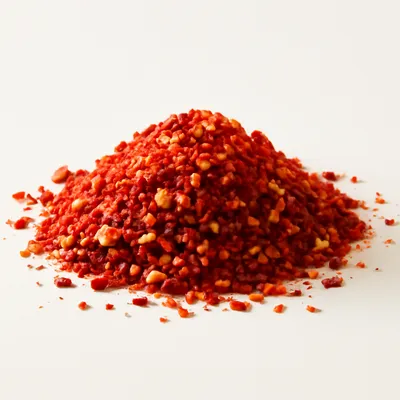


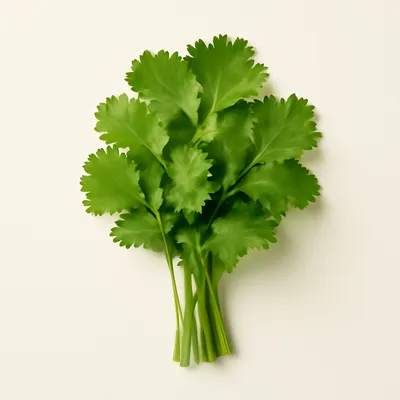
How it's made
7 steps · 10 min
- 12 min
Pat fish steaks dry and season lightly with salt. Heat olive oil in a wide, heavy pan over medium-high heat.
- 21 min
Add garlic and sauté for 30 seconds until fragrant but not coloured.
- 31 min
Add paprika, caraway seeds and chili flakes; stir constantly for 30 seconds to bloom the spices in the oil.
- 42 min
Add tomato paste and stir vigorously for 1–2 minutes until it darkens slightly and smells caramelized.
Watch outFry the tomato paste hard one to two minutes until it darkens and smells caramelized — this deepens the sauce; underdone it stays raw and sour.
- 52 min
Pour in 200 ml water (or light fish stock) to form a loose sauce. Add harissa to taste, a pinch of white pepper and salt. Stir well and bring to a steady simmer.
- 613 min
Lower fish steaks gently into the sauce. Spoon sauce over the top. Simmer uncovered for 10–15 minutes, turning fish once halfway through, until flesh is just opaque to the bone.
Watch outSimmer the fish uncovered just till the flesh turns opaque to the bone, ten to fifteen minutes, turning once — a soft bubble keeps it moist; a rolling boil dries it out.
- 72 min
Remove from heat. Squeeze fresh lemon over and scatter cilantro leaves. Serve directly from the pan with bread.
Archive tool suggestions — not reviewed
These legacy suggestions have not been evidence-reviewed and are not presented as required tools.

