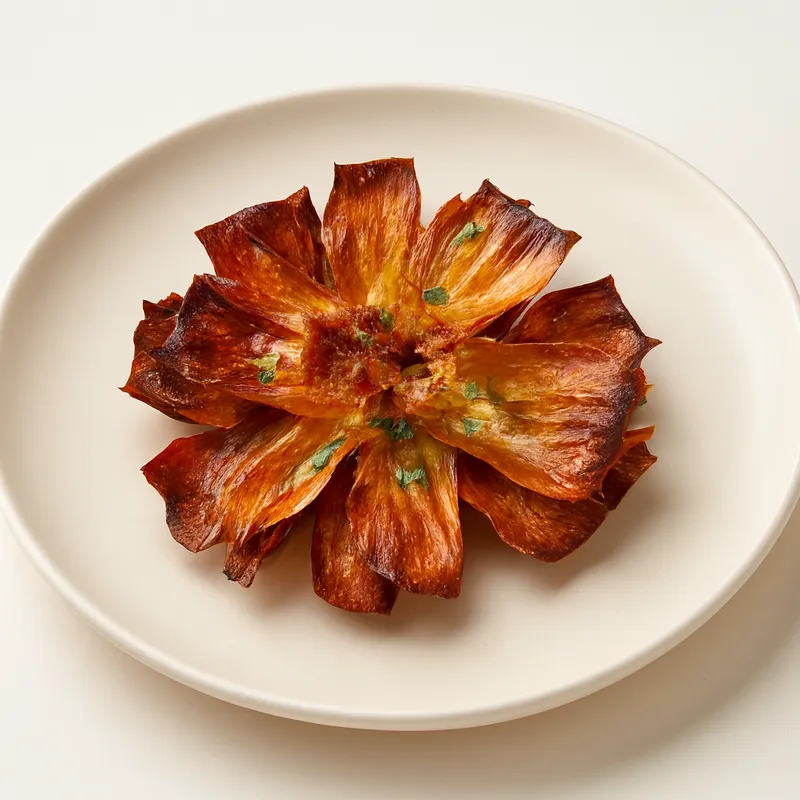
A disc of puff pastry (10–12 cm) enclosing a molten core of béchamel, diced tomato and mozzarella, egg-washed and baked until crisp and golden outside and flowing within. The emblematic da passeggio savoury of Lecce, found in every Salento bakery and bar alongside the pasticciotto, and listed in Italy's national register of traditional agri-food products (P.A.T.).

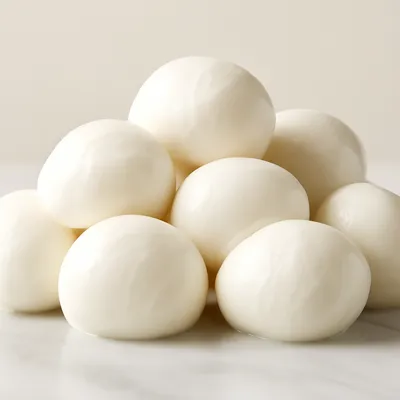




The rustico's precise origin is undocumented — the Italian Wikipedia entry states plainly that its origins are unknown. Two schools of thought exist: one places it in late-18th or early-19th century Lecce, linked to French vol-au-vent pastries arriving via Napoleonic-era contacts; the other dates it to the 20th century as a baked puff-pastry evolution of the local fried panzerotto. Its reliance on béchamel ties it to no earlier than the 17th–18th century introduction of that sauce to Italian court cuisine. The rustico was added to Italy's national register of traditional agri-food products (P.A.T.) in the early 21st century.
Crisp, shattering puff pastry gives way instantly to a molten core of béchamel and mozzarella that stretches and pools; the tomato's acidity cuts through the cream, and black pepper and nutmeg assert themselves in the finish.
Puff pastry's alternating butter and dough layers release steam at 180–200°C, forcing each laminate open and creating hundreds of airy strata. Béchamel (a butter-flour roux finished with milk) gelatinizes during baking, stabilizing the filling into a cohesive cream. Mozzarella's casein networks melt and stretch; the sealed pastry shell traps steam from the filling, keeping the interior molten while the exterior undergoes Maillard browning.
Variations
Northern Salento versions are larger and airier; southern versions thinner with béchamel sometimes omitted; a spinach-and-ricotta filling appears as a vegetarian variant in modern bakeries.
On the Palate
Where Rustico Leccese sits in the Italian flavor cloud
Ingredients
Serves 6

How it's made
7 steps · 40 min active + 1 hour waiting
- 115 min
Make béchamel: melt butter, whisk in flour and cook 1–2 minutes; gradually add warm milk, whisking smooth; season with salt, nutmeg and pepper. Cool completely.
- 230 min
Drain tomatoes thoroughly; dice mozzarella and pat dry on paper towels for at least 30 minutes.
Watch outDrain the tomatoes and pat the mozzarella dry a good half hour — excess water inside makes the puff pastry go soggy and stops it crisping; a dry filling is what keeps the shell flaky.
- 310 min
Unroll puff pastry and cut 24 discs using a 12 cm round cutter (12 bases, 12 tops).
- 45 min
Place a base disc on a lined baking sheet; spoon béchamel, a few pieces of mozzarella and a spoonful of drained tomato in the centre.
- 55 min
Top with a second pastry disc, pressing and crimping the edges firmly with a fork to seal.
Watch outCrimp the two discs firmly with a fork to seal — a good seal traps the steam that keeps the inside molten while the outside browns; a loose edge weeps filling and won't puff.
- 630 min
Brush tops with beaten egg; refrigerate the assembled pastries for 30 minutes.
- 725 min
Bake at 200°C (static oven) for 20–25 minutes until puffed and deep golden. Serve warm.
Watch outBake at 200°C twenty to twenty-five minutes until puffed and deep golden — high heat drives the steam that opens the pastry into hundreds of layers.
Archive tool suggestions — not reviewed
These legacy suggestions have not been evidence-reviewed and are not presented as required tools.