A spiced pork-and-rind forcemeat stuffed into the boned skin of a pig's front trotter — the signature festive salume of Modena, simmered for several hours until the gelatinous skin melts into the meat, then sliced and served with lentils at New Year or mashed potato at Christmas.




Local tradition places the invention of zampone in the siege of Mirandola (19 December 1510 – 20 January 1511), when papal forces under Julius II della Rovere surrounded the city. According to the founding legend, a court cook of the Pico della Mirandola household, unwilling to surrender the pigs to the enemy, ground the meat with spices and stuffed it into boned front trotters — simultaneously creating both zampone and cotechino. The historian Alberto Grandi (University of Parma) has questioned the medieval dating, noting that large-scale grinding required industrial conditions absent before the 20th century. The earliest written reference appears in Vincenzo Tanara's 1667 Bolognese agronomical treatise, which describes 'Zampetti alla modenese.' The composer Rossini was a documented admirer, ordering zamponi in writing from the Bellentani workshop. The European Union granted IGP status in 1999.
Sliced to reveal a mosaic of pink meat flecked with ivory fat, the flesh yields with gentle pressure — dense but not rubbery — and leaves a long, warmly spiced finish of nutmeg and coriander softened by rendered pork fat. The surrounding skin, rendered almost translucent, delivers a yielding, silky gel.
The trotter skin is rich in type I and III collagen, which begins hydrolysing to gelatin above 70 °C during the long simmer; this gelatin migrates into the surrounding forcemeat, binding the mass and producing the characteristic glossy, slightly sticky cross-section. The high rind content means the forcemeat sets firmly on cooling — a natural self-basting effect. Spices such as nutmeg, coriander and cloves release fat-soluble volatiles into the surrounding pork fat, amplifying aromatic persistence. The low simmer (around 85–90 °C, never a rolling boil) prevents the outer skin from splitting, preserving the trotter's structural integrity throughout the 4–6-hour cook.
Variations
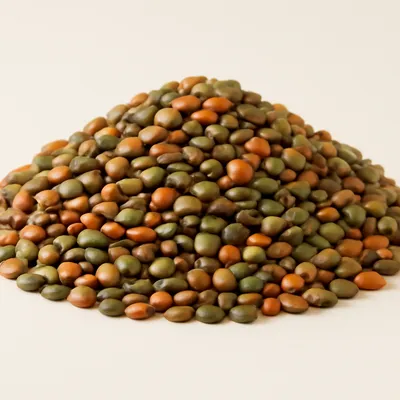
Cotechino di Modena IGP — the twin product stuffed into natural or artificial sausage casing rather than the trotter skin, leaner in flavour; pre-cooked vacuum-packed zampone, requiring only 20–35 minutes in hot water; served with stewed lentils (the canonical New Year pairing, thought to bring prosperity), mashed potato, braised spinach, or friggione (the Bolognese slow-cooked tomato-onion conserve).
On the Palate
Where Zampone di Modena sits in the Italian flavor cloud
Ingredients
Serves 6

How it's made
7 steps · 30 min
- 1720 min
Soak the fresh zampone in cold water for 12 hours; drain, then prick the skin in 6–8 places with a wooden toothpick to allow steam to escape without bursting the casing.
Watch outPrick the skin in a few spots before it goes in — trapped steam will burst the casing during the long simmer if it can't escape.
- 230 min
Place the zampone flat in a pot large enough to hold it fully submerged; cover with cold water; bring very slowly to a bare simmer — around 85–90 °C, producing wisps of steam but no rolling boil.
Watch outBring it up painfully slowly to just wisps of steam — a rolling boil splits the skin and the forcemeat leaks out.
- 3300 min
Maintain a gentle simmer for 4–6 hours for a fresh piece weighing about 1 kg, turning once halfway; replenish with hot water to keep the trotter fully covered throughout.
- 440 min
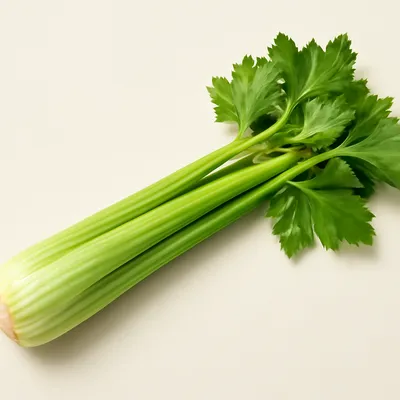
While the zampone cooks, sauté finely diced onion, carrot and celery in olive oil with a bay leaf; add lentils and enough water to cover by 4 cm; simmer 25–30 minutes until tender; finish with salt and a few drops of aged balsamic vinegar.
- 515 min
Test doneness by pressing the thickest part of the skin — it should give easily and feel uniformly soft; the internal temperature should reach 72 °C. Remove carefully and rest on a board for 10 minutes.
Watch outPress the thickest part of the skin — it should give softly and evenly; a firm spot means the center isn't done.
- 610 min
Cut away the twine with scissors; peel back the skin at one end; slice across in rounds of 1.5 cm using a sharp knife.
- 75 min
Spoon lentils onto warm plates and lay two or three slices of zampone alongside; drizzle with a few drops of aged balsamic vinegar from Modena or Reggio Emilia and serve immediately.
Archive tool suggestions — not reviewed
These legacy suggestions have not been evidence-reviewed and are not presented as required tools.



