A round Salentine bread baked to an all-crust, near-crumbless shell, then split and stuffed with seasonal fillings — grilled vegetables, arugula, tuna, cheese, or cured meats. The olive-studded uliata variant, with olives pressed into the raw dough, is eaten during the Immacolata vigil fast.




Rooted in the flatbread traditions of Salento in southern Puglia, the puccia takes its name from Latin "buccellatum" — the round hardtack of Roman legionaries. Its modern filled form is documented as the invention of Giovanni Caccetta of Trepuzzi, who in the 1970s discovered that scraps of over-fermented bread dough, rolled thin and pushed into a blazing oven, puffed into hollow, all-crust shells ideal for stuffing. By 1982, a dedicated shop named La Puccia had opened in Lecce, spreading the street-food format throughout Salento.
The thin shell shatters at first bite — dry and cracker-crisp — giving way to an almost hollow interior before the juices and oils of the filling take over; the bread itself contributes texture almost more than flavour.
A blend of tipo 00 flour and rimacinata semolina gives a dough with lower moisture absorption; thin sheeting before baking means that in a very hot oven (230–250°C) steam rapidly inflates the dough before the crust sets and dries. The result is a shell with almost no crumb — pure Maillard-browned crust surrounding an air pocket ready for filling.
Variations
Uliata — olives pressed into the raw dough, the traditional fasting bread of the Immacolata vigil, celebrated annually at Caprarica di Lecce; Taranto 'vampa' style baked on a flame-heated hearth with semolina dough and ricotta forte; Gallipoli version with tuna, capers and anchovy.
On the Palate
Where Puccia Salentina sits in the Italian flavor cloud
Ingredients
Serves 4
How it's made
7 steps · 30 min active + 2 hours 40 min waiting
- 110 min
Mix tipo 00 and semolina flours; dissolve yeast in warm water, combine and knead 10 minutes until smooth.
- 2150 min
Cover the dough and let it rise at room temperature for 2–3 hours until doubled in size.
Watch outLet the dough rise until fully doubled before rolling — under-proofed, it won't puff into the hollow pocket that defines the puccia.
- 310 min
Divide into portions of about 150 g each; roll each out thin to a 20 cm round.
- 49 min
Place rounds on a preheated baking stone or heavy tray; bake at 240°C (fan) for 7–9 minutes until puffed and golden.
Watch outBake very hot at 240°C so steam inflates the thin dough before the crust sets — a cooler oven sets the crust first and it bakes flat and dense.
- 52 min
Transfer to a rack; let cool 2 minutes — the shell will crisp further as it cools.
- 61 min
Slice horizontally through the side to open the pocket.
- 73 min
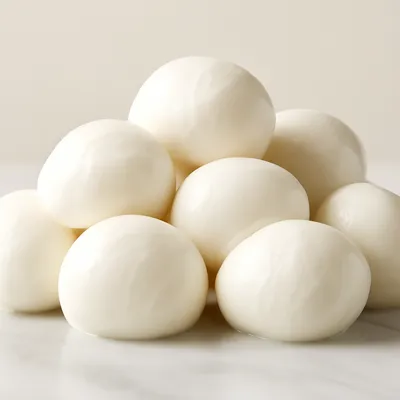
Fill generously with arugula, sliced tomatoes, drained mozzarella, and any preferred toppings.
Archive tool suggestions — not reviewed
These legacy suggestions have not been evidence-reviewed and are not presented as required tools.


