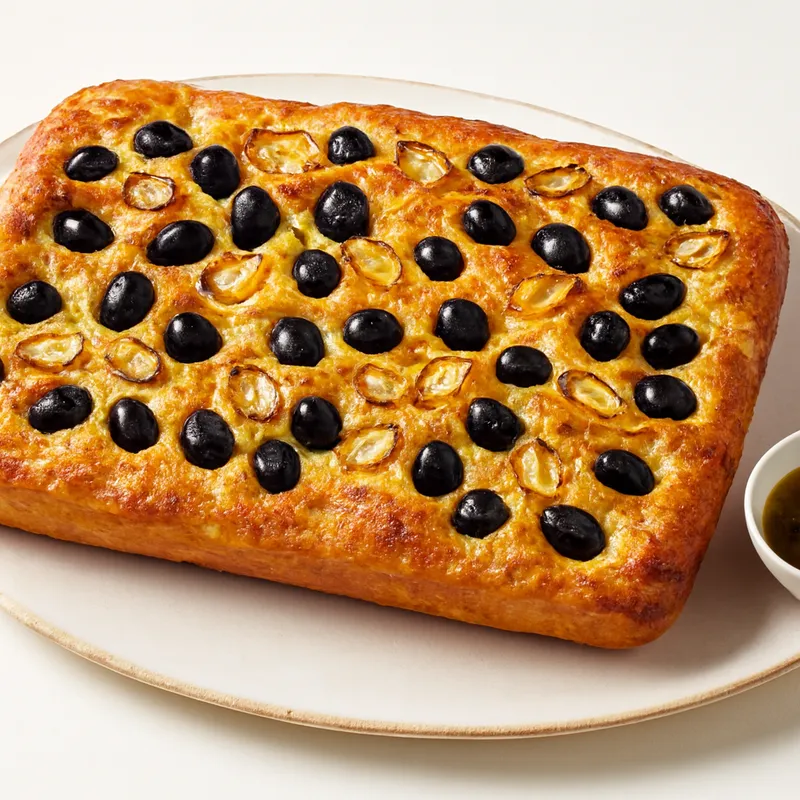
The savoury Abruzzese Easter pastry — a thin egg dough enriched with olive oil and white wine, wrapped around a filling of grated aged cheeses bound with eggs, sealed into small ravioli-like parcels with a crimped edge and baked golden. Pecorino and parmigiano carry the filling, lifted with black pepper and nutmeg, and in the L'Aquila area with saffron. The savoury fiadone is a recognised Prodotto Agroalimentare Tradizionale of Abruzzo and a fixture of the region's coastal Easter table.




Fiadone (plural fiadoni) is the rustico pasquale par excellence of Abruzzo — the savoury cheese pastry baked above all for Easter, though it is now eaten year-round. Within the region a sweet version exists inland, while the savoury cheese one is associated with the coast and the Chieti province; the L'Aquila variant is scented with saffron. The savoury 'Fiadone salato' is listed on Abruzzo's official register of Prodotti Agroalimentari Tradizionali, separately from the sweet 'Fiadone dolce di Gessopalena.' It should not be confused with the Corsican fiadone, an entirely sweet brocciu cheesecake, nor with the sweet Molisan and Trentino versions.
The crust is thin and short, crisp at the crimped edges where the egg wash browned, yielding where it meets the filling. Inside, the cheese has set into a savoury, faintly springy custard — sharp and salty from the pecorino, rounded by the parmigiano, warmed by pepper and nutmeg, with the saffron versions glowing faintly gold and floral. A little rigatino, the cured pork worked into some fillings, lends a thread of meatiness. Eaten warm, it is rich, salty and deeply satisfying.
The dough is enriched with oil and white wine rather than water alone: the fat shortens it for a tender, crisp bite, while the wine's acidity and alcohol relax the gluten and help it roll paper-thin. The filling is essentially a baked cheese custard — the eggs coagulate on heating and set the grated cheese into a sliceable, springy mass rather than letting it pool and weep as melted cheese alone would. Sealing the edges tightly traps the steam so the parcels puff slightly, and the egg wash drives browning on the crust.
Variations
The classic form is small individual ravioli or half-moon parcels with a fork-crimped edge, though some households bake a single large sealed pie. The cheese mix varies — pecorino romano and Abruzzese pecorino with parmigiano are standard, while scamorza, provola or ricotta appear in family versions. Saffron marks the L'Aquila style. A separate sweet fiadone, made inland, fills a similar dough with sweetened cheese, raisins or candied fruit.
On the Palate
Where Fiadoni Abruzzesi sits in the Italian flavor cloud
Ingredients
Serves 6
How it's made
6 steps · 50 min
- 120 min
Make the dough: work flour with eggs, olive oil, white wine and a pinch of salt into a smooth, firm pastry; wrap and rest 1 hour.
- 215 min
Prepare the filling: grate the pecorino and parmigiano, beat in eggs, season with black pepper and nutmeg (and saffron, if using), to a thick paste.
- 310 min
Roll the rested dough out thin and cut into rounds or squares.
- 415 min
Place a spoon of filling on each, fold over, and seal the edges firmly, crimping them with a fork.
Watch outSeal the edges tightly and crimp — trapping the steam is what puffs the parcels; a loose seal lets it escape and the filling weep.
- 55 min
Brush the tops with beaten egg and pierce a small vent in each.
- 625 min
Bake at 180 degrees Celsius for about 25 minutes until puffed and golden; serve warm.
Watch outBake until puffed and golden — the egg in the filling coagulates and sets the cheese into a sliceable, springy mass rather than an oily pool.
Archive tool suggestions — not reviewed
These legacy suggestions have not been evidence-reviewed and are not presented as required tools.