A composite Bengali confection: a small spongy roshogolla soaked in thickened sweetened milk encased within a pressed sandesh shell of khoya — its spherical form and name both drawn from the Kadamba flower, linking it to Bengal's Gaudiya Vaishnava devotional tradition.



Kheer kadam has no traceable written inventor; culinary historians of Bengal describe its origins as entirely oral, entangled in the devotional traditions of Gaudiya Vaishnavism. The most widely repeated tradition places its creation in Malda, western Bengal, where local confectioners fashioned a round milk sweet to honor the 15th-century saint Chaitanya Mahaprabhu on his passage through the town of Ramkeli; the round shape was made to resemble the Kadamba flower (Neolamarckia cadamba), a tree under which Chaitanya was said to have rested. The original Malda and Murshidabad preparations consisted of a plain roshogolla encased in khoya and rolled in roasted poppy seeds, reflecting the prominence of poppy seeds in the Nawabi kitchen of the period. By the late 19th century, Kolkata's competitive sweet-shop culture — centered on houses such as K.C. Das, Balaram Mullick, and Banchharam's — refined the composite into its modern form, with a sandesh shell and the interior roshogolla soaked first in thickened sweetened milk.
A yielding sandesh shell dissolves under the slightest pressure, releasing a rush of sweet milky juice from the roshogolla core; the contrast between the firm-yet-crumbly exterior and the pillowy, syrup-saturated interior is the defining pleasure of this sweet.
The roshogolla core is formed by simmering smooth chhena balls in dilute sugar syrup at a vigorous boil; steam pressure from within expands the protein network outward, creating a spongy, porous interior that absorbs syrup as it cools — a process requiring thorough kneading to ensure a homogeneous casein matrix free of gritty particles. The sandesh outer shell relies on an opposite process: khoya is gently dry-fried with sugar until Maillard products concentrate and residual moisture drops, yielding a pliable, semi-dry dough at around 45–50 °C — the critical window for moulding without cracking. Encasing the cold, well-drained roshogolla in warm sandesh seals its moisture inside; as the shell cools and firms, the two thermodynamically distinct layers set into the composite structure with no binder required.
Variations
The original Malda-Murshidabad version (roshkadam) rolls the khoya shell in roasted poppy seeds, a preparation now found mainly at a handful of Murshidabad stores; modern Kolkata shops use finely grated khoya, desiccated coconut, or tiny sugar pearls for the outer coating. Some preparations serve the assembled sweet in chilled rabri (further reduced sweetened milk). Size ranges from marble-small bite-sized pieces to the generous walnut-sized versions at Kolkata heritage houses.
On the Palate
Where Kheer Kadam sits in the Indian flavor cloud
Ingredients
Serves 4
How it's made
8 steps · 40 min
- 125 min
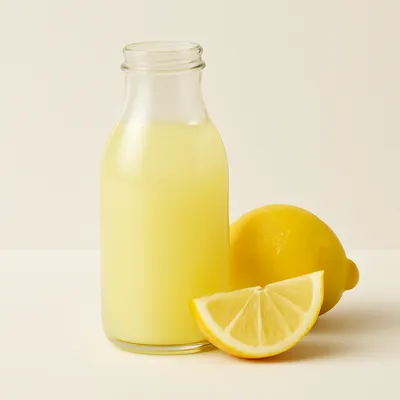
Heat 1 L whole milk to near-boil, curdle with 2 tbsp lemon juice, drain through muslin, rinse with cold water, and press under a weight for 20 minutes until the chhena is firm and dry.
- 28 min
Knead the chhena vigorously for 8 minutes until completely smooth; roll into 8 marble-sized balls (about 10 g each) with no surface cracks.
Watch outKnead the chhena until completely smooth with no cracks on the balls — any grit or seam and the roshogolla tears apart in the boiling syrup.
- 325 min
Dissolve 200 g sugar in 600 ml water in a wide, lidded pan and bring to a vigorous boil; add the chhena balls, cover tightly, and cook at a rolling boil for 20 minutes — the balls will swell to nearly double. Transfer to a rack and cool completely.
- 440 min
In a heavy pan, heat 500 ml full-cream milk with 50 g sugar over medium heat, stirring often, until reduced by two-thirds to a thick, creamy rabri; cool to room temperature, then submerge the cooled roshogollas and soak for 30 minutes.
- 512 min
Make the sandesh shell: stir 200 g crumbled khoya with 40 g powdered sugar in a non-stick pan over low heat for 8–10 minutes, scraping continuously, until the mixture pulls from the sides and becomes a smooth, pliable, non-sticky dough; remove from heat and cool to about 45 °C.
Watch outCook the khoya-sugar dough until it pulls from the pan and turns pliable, then cool to about 45 degrees — too hot to mold cleanly, too cold and the shell cracks.
- 63 min
Lift each roshogolla from the rabri and blot lightly with kitchen paper.
- 710 min
Flatten a 25 g portion of warm sandesh dough into a disc; place a roshogolla at the center and fold the sandesh up and around it, pressing firmly to seal; roll between your palms into a smooth sphere.
- 825 min
Roll each ball in finely grated khoya or desiccated coconut; arrange on a tray and refrigerate for 20 minutes to set before serving.
Archive tool suggestions — not reviewed
These legacy suggestions have not been evidence-reviewed and are not presented as required tools.


