
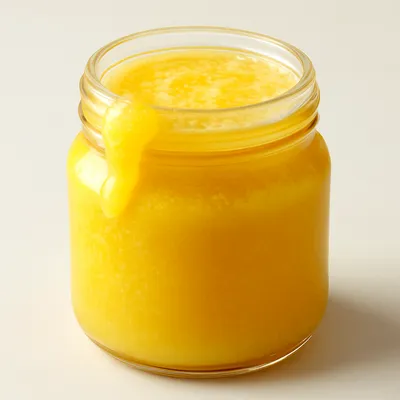
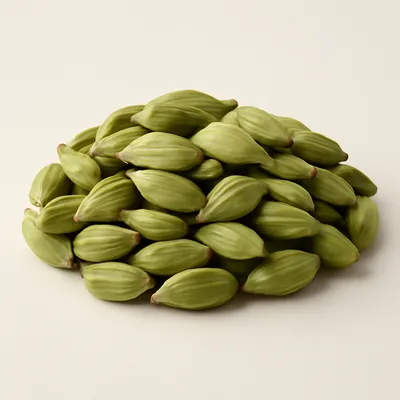
Mysore Pak is the signature sweet of Karnataka in southern India, a rich fudge made from just three core ingredients: gram flour (besan), sugar and a generous amount of ghee, often scented with cardamom. Sugar is cooked to a syrup, roasted gram flour is beaten in, and hot ghee is poured in steadily until the mass turns golden and aerated, then it is set in a tray and cut into blocks. Depending on the ghee ratio and technique it ranges from a dense, dense-crumbed fudge to a light, porous, melt-in-the-mouth version riddled with fine pores. In Kannada 'paka' refers to cooked sugar syrup, the heart of the technique.



Mysore Pak is documented as a creation of the Mysore palace kitchens during the reign of Krishna Raja Wadiyar IV (ruled 1902–1940), credited to a palace cook named Kakasura Madappa, who is said to have improvised it from gram flour, sugar and ghee. Encouraged by the royal household, Madappa is recorded as later opening Guru Sweet Mart near the Devaraja Market in Mysore, where his descendants continue to sell it. Beyond the palace attribution the early record is thin, but the sweet is firmly identified with Mysore and has become a benchmark mithai across Karnataka and the wider south, standard at weddings and festivals.
A warm-golden block that, in the porous style, is honeycombed with fine pores and almost weightless; in the dense style it is a tight, smooth, butter-yellow slab. It yields at once on the tongue and dissolves into ghee and toasted gram, with no chew at all — the lighter version shatters faintly, the denser one turns silky. The taste is roundly sweet, deeply buttery, with the nutty warmth of roasted besan and a lift of cardamom, and a faint clean bitterness from the gram. Eaten at room temperature, fresh, in small squares.
Mysore Pak is built on the sugar stage and on ghee aeration. The sugar syrup is cooked to a precise point — between thread and soft-ball stage, roughly 115–120°C — which fixes how firm the final fudge sets. Roasting the gram flour first deepens its flavour and removes raw starchiness, and the besan is beaten into the syrup without lumps. The defining move is pouring in hot ghee a little at a time while stirring hard: the fat coats and separates the gram-flour particles, and as moisture from the syrup escapes as steam through the ghee-laced batter it foams and leaves behind a network of fine pores — the more ghee, the more porous and meltingly light the result; less ghee gives a denser, harder block. Timing is unforgiving — pour too late and the sugar crystallizes grainy, too early and it never sets — so the mixture is spread into a greased tray and cut while still warm, firming as it cools.
Variations
The two principal styles are the traditional dense Mysore Pak — firm, smooth and brick-like, made with relatively less ghee — and the soft, porous 'ghee Mysore Pak' that crumbles and melts, made with much more ghee (and sometimes a little oil). Guru Sweet Mart in Mysore is held up as the original benchmark. Cardamom is the usual perfume; modern variants add saffron, or substitute or supplement the gram flour with other flours, and shops sell chocolate and other flavoured takes. It belongs to the broad family of besan- and ghee-based Indian sweets that includes besan barfi and besan halwa.
On the Palate
Where Mysore Pak sits in the Indian flavor cloud
Ingredients
Serves 8How it's made
7 steps · 15 min
- 18 min
Roast the gram flour in a dry pan over low heat until fragrant and a shade darker, then sift it to remove lumps and set aside.
- 23 min
Heat plenty of ghee in a separate pan and keep it hot, ready to pour, throughout the cooking.
- 310 min
In a heavy pan, cook the sugar with a little water, stirring, until the syrup reaches a thread-to-soft-ball stage, roughly 115–120°C.
Watch outCook the sugar syrup to a thread-to-soft-ball stage, 115-120C — this exact point fixes how firm the final fudge sets.
- 43 min
Lower the heat and whisk the roasted gram flour into the syrup steadily so no lumps form.
- 56 min
Begin pouring in the hot ghee a ladle at a time while stirring vigorously; the mixture will absorb the ghee, foam, froth and lighten as it cooks.
Watch outPour in the hot ghee a ladle at a time, stirring hard — the fat foaming through is what leaves the fine porous crumb; dump it in and you lose the texture.
- 64 min
Continue until the batter turns golden, porous and starts leaving the sides of the pan and the ghee just begins to separate at the edges.
Watch outStop when it turns golden and porous, pulls from the pan sides, and ghee just begins to separate at the edges — that's the set point.
- 76 min
Pour at once into a greased tray, level the top, and cut into squares or diamonds while still warm; let it cool and firm before lifting out the pieces.
Archive tool suggestions — not reviewed
These legacy suggestions have not been evidence-reviewed and are not presented as required tools.


