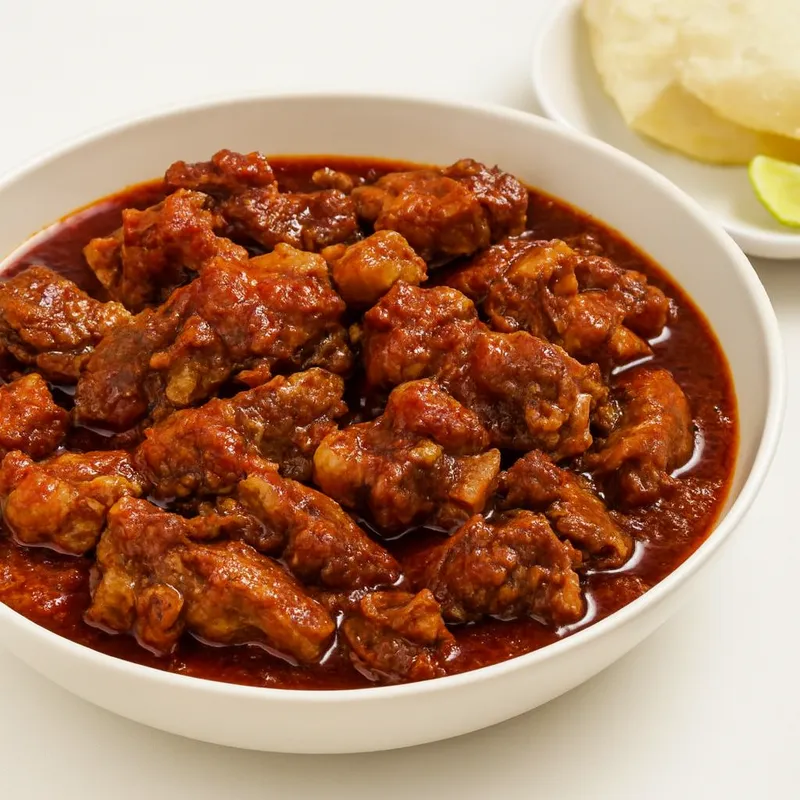
A slow-cooked, semi-dry Andhra chicken preparation in which bone-in pieces are simmered with onions, tomato, and a freshly ground, dry-roasted spice-and-coconut masala until the paste thickly coats the meat. Iguru denotes a thick-cooked consistency distinct from the wetter kura and the drier vepudu.



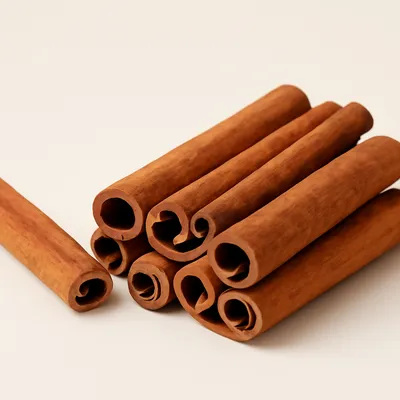
Kodi iguru is an Andhra home preparation whose Telugu name describes its texture: kodi is chicken, and iguru (from the verb for 'to mash' or 'thicken') means a thick-cooked, semi-dry dish — distinct from kodi kura (a wetter gravy curry) and kodi vepudu (a dry fry). It is one example of the Andhra habit of distinguishing cooking finishes with separate words, each implying its own masala and water ratio. The defining move of an iguru is the dry-roasted masala: whole spices — coriander, cumin, cinnamon, clove, and sometimes black pepper — are roasted dry until fragrant and ground, often with grated or dry coconut (copra), into a paste that thickens the gravy as it cooks down. The technique predates the chili and is shared across much of Telugu non-vegetarian cooking; the chicken form is everyday home food, prized for the way the concentrated paste clings to the bone.
Tender chicken sheathed in a thick, dark, roasted masala paste — warm with clove and cinnamon, hot with chili, with a faint sweet thread of coconut underneath.
The iguru texture comes from two thickeners working together. The dry-roasted, ground coconut-and-spice paste is rich in oil from the coconut and in starch from the spices; as it simmers, the starch gelatinizes and the oil separates, both signals the masala is cooked. Meanwhile the onions, slow-fried first, have already caramelized and begun to break into a soft mass that dissolves into the gravy, sweetening it and giving body. Adding the chicken only after the masala base is cooked, then simmering covered so the meat releases its own juices, keeps the pieces moist while those juices are re-absorbed into the now-concentrated paste. The finished dish is taken only to the point where the oil has visibly separated and the masala coats each piece heavily — past that, it would tip into vepudu (dry-fry) territory.
Variations
A coastal version uses more fresh coconut and less dry spice; a Rayalaseema version is drier and fierier with guntur red chili, and a festive gongura form folds in sorrel leaves for a sour edge.
On the Palate
Where Kodi Iguru sits in the Indian flavor cloud
Ingredients
Serves 4
How it's made
6 steps · 20 min
- 16 min
Dry-roast coriander, cumin, cinnamon, clove, and grated coconut until fragrant, then grind to a paste with a little water.
- 26 min
Heat oil and temper whole spices, then add sliced onions and fry until deeply golden.
- 35 min
Add ginger-garlic paste and chopped tomato and cook until the tomatoes melt.
- 44 min
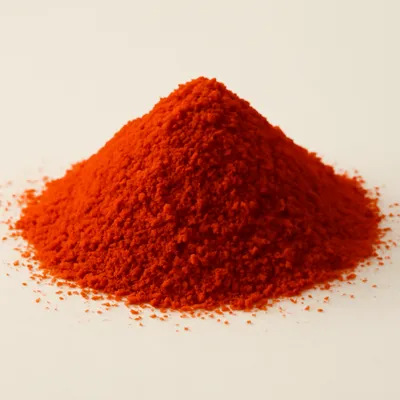
Add chili powder, turmeric, and salt, then the chicken pieces, stirring to coat them in the masala.
- 512 min
Cover and simmer until the chicken is cooked through and releases its juices.
Watch outSimmer the chicken covered until it releases its own juices — those juices braise the meat moist; add the coconut paste before this and it won't cook through evenly.
- 610 min
Uncover, add the ground coconut-spice paste, and cook until the gravy thickens to a coating consistency and the oil separates.
Watch outCook after the coconut paste goes in until the gravy thickens and the oil separates — that split is the sign the masala's fully cooked and clinging.
Archive tool suggestions — not reviewed
These legacy suggestions have not been evidence-reviewed and are not presented as required tools.