The grandest centerpiece of the Awadhi-Nawabi feast: a whole leg of lamb (raan), double-marinated — first in a papaya tenderizer, then in a yogurt-and-spice paste — and slow-roasted until the outside is dark and lacquered and the meat falls from the bone. Served whole and garnished with silver leaf, it is the dish of royal display.
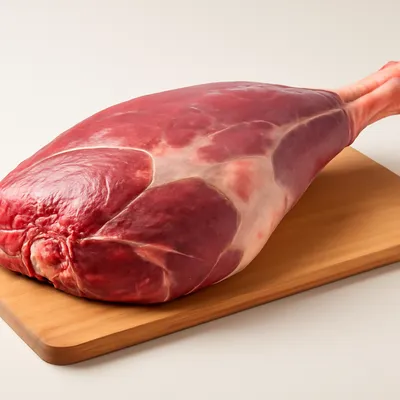
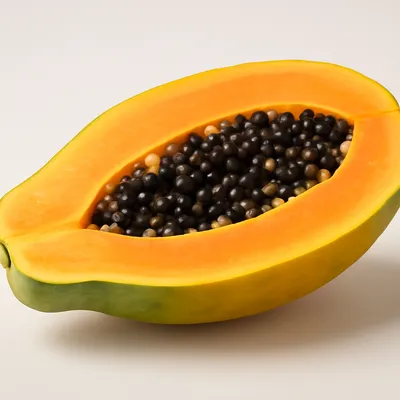




Nawabi raan (raan musallam, sikandari raan) is the grand whole-leg preparation of the Awadhi and Mughlai royal kitchens, served at the most ceremonial feasts of Lucknow's Nawabs and the Mughal emperors before them. The name states its core: raan means a leg of mutton or lamb, and musallam, from an Arabic root meaning 'whole' or 'complete,' denotes a dish cooked intact rather than cut — the same word that gives murgh musallam, the whole chicken of the same tradition. The preparation's lineage runs from the Mughal imperial kitchens into the bawarchis (cooks) of the Nawabs of Awadh, who refined it into its most luxurious form. Its signature is the double marinade: a first marinade of raw papaya paste (whose papain enzyme tenderizes the dense leg muscle) and a second, longer marinade of hung yogurt, ginger-garlic, roasted gram flour, and a rich blend of spices and aromatics — mace, green cardamom, saffron — finished with kewra and rose water. The leg is then slow-roasted, traditionally in a tandoor or sealed lagan (heavy pot) by the dum method, until the surface is dark and lacquered and the interior is falling-apart tender. The theatrical whole presentation, often under silver leaf (vark), is the dish's point — a marker of royal hospitality.
Lacquered, deeply spiced crust giving way to meat so tender it yields to a spoon; the warm hum of saffron and mace, with a floral lift of kewra at the end.
Three mechanisms build the dish. First, the papain in the raw papaya paste selectively breaks down the muscle fibers and connective tissue of the dense leg, hydrolyzing proteins that a marinade alone could not reach, which is why the first marinade is applied and washed off before the second — leaving the enzyme long enough to tenderize but not so long as to turn the meat mealy. Second, the hung yogurt of the second marinade contributes both lactic acid (which further denatures surface proteins and helps the spice paste adhere) and a sticky matrix (the roasted gram flour thickens the paste so it clings through the long cook). Third, the slow, covered roast in moist heat gelatinizes the leg's collagen at around 70–80°C over hours, turning a tough cut tender; a final period of dry heat, with the lid off or in a hot tandoor, then dehydrates and Maillard-browns the surface into the dark, lacquered crust. The yogurt-and-ghee basting during the roast rebuilds the glaze layer by layer.
Variations
Sikandari raan is named (by folk etymology) for Sikandar (Alexander) or Sikandar Lodi; a stuffed raan fills the leg with keema or nuts, and the tandoor form has a smokier crust than the dum-pot form.
On the Palate
Where Nawabi Raan sits in the Indian flavor cloud
Ingredients
Serves 6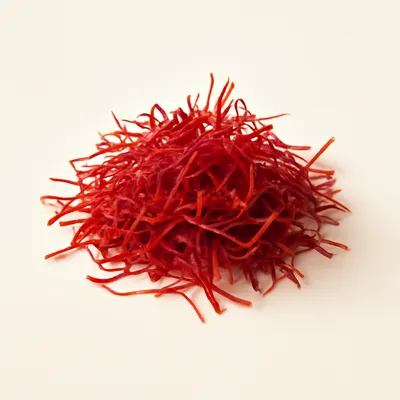

How it's made
6 steps · 30 min
- 18 min
Trim a whole leg of lamb and slit it in a few places to let the marinade penetrate.
- 210 min
Apply a first marinade of raw papaya paste, ginger-garlic, lemon juice, and salt; rest 1–2 hours, then wipe off.
Watch outLeave the raw-papaya marinade on only 1–2 hours, then wipe it off — the papain tenderizes the dense leg, but left too long it turns the meat mealy.
- 38 min
Apply a second marinade of hung yogurt, roasted gram flour, ginger-garlic, spices (mace, cardamom, saffron, chili), ghee, and salt; refrigerate overnight.
- 490 min
Place the leg in a heavy lagan or roasting pan with a little ghee and water; seal with a dough lid and cook by dum in a slow oven for 1.5–2 hours.
Watch outSeal the pan with a dough lid before the slow dum — the trapped steam is what cooks the thick leg through evenly; a broken seal dries it out.
- 520 min
Uncover, raise the heat, and baste with yogurt and ghee until the surface is dark, lacquered, and blistered.
Watch outUncover, raise the heat and baste until the surface is dark, lacquered and blistered — that glazed crust is the finish; leave it pale and it looks and tastes unfinished.
- 65 min
Rest briefly, then present whole, garnished with fried onion, mint, chaat masala, and silver leaf.
Archive tool suggestions — not reviewed
These legacy suggestions have not been evidence-reviewed and are not presented as required tools.