
Osaka invention from the late 19th century. The name 'kitsune' (fox) comes from Inari, the Shinto rice deity whose fox messengers were said to favor aburaage as an offering at shrines. The Osaka version uses light, kombu-forward dashi (not the dark soy broth Tokyo prefers) so the sweet pouch reads against a clean savory base — same dish in Tokyo is darker, saltier.
Late-19th-century Osaka invention — the fox-name comes from Inari, the Shinto rice deity whose fox messengers were said to favor aburaage. Blanching the pouch first to strip oil is the step home cooks skip; the broth turns greasy without it.
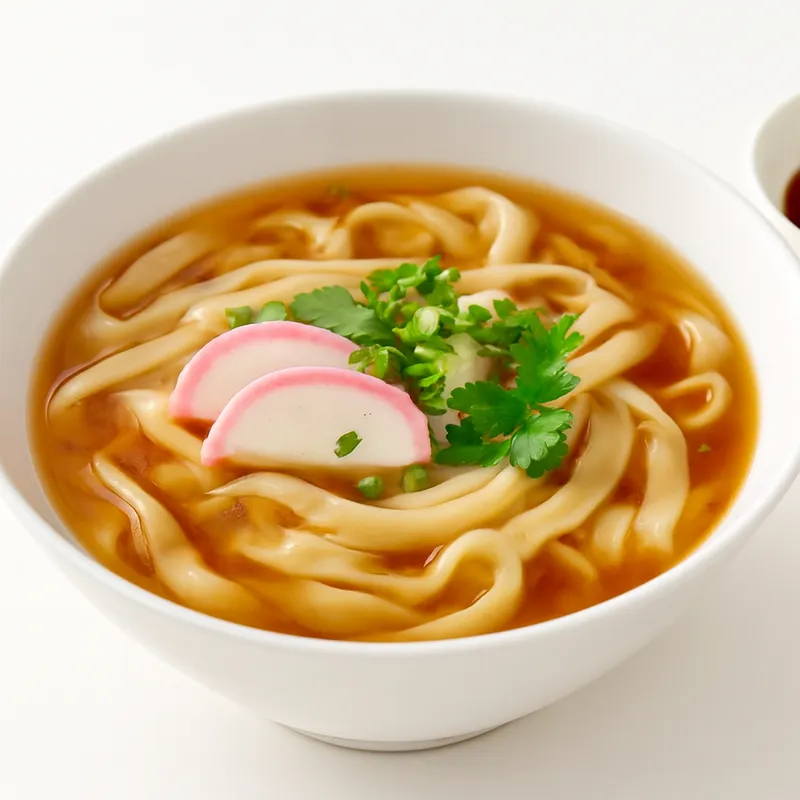
Fat white udon in a clear, pale-amber dashi broth, topped with one or two sheets of aburaage — deep-fried tofu pouches simmered in soy, mirin, and sugar until they're sweet and saturated. Scallion goes on at the end. The pouch leaks sweet broth into the soup as you bite it; the noodles should be soft but still spring back.
The aburaage is the work — pouches must be blanched first to strip surface oil (or the broth turns greasy), then simmered in dashi, soy, mirin and sugar until they suck up liquid and go heavy. Skipping the blanch is the most common home mistake. The udon broth itself is shockingly simple: kombu, light bonito, usukuchi soy, mirin — restraint is the point.
Variations
In Tokyo, aburaage on udon is also called 'kitsune' (just in a darker, saltier broth) — the real naming quirk is on soba: Osaka's 'tanuki' (aburaage on soba) is Tokyo's 'kitsune soba', while Tokyo's 'tanuki' means soba/udon topped with tenkasu (tempura crumbs), which Osaka calls 'haikara'; Kyoto's kitsune adds an extra fold of yuba; Kyushu versions toss in beni-shoga.
On the Palate
Where Kitsune Udon sits in the Japanese flavor cloud
Ingredients


How it's made
5 steps · 20 min
- 12 min
Cook udon noodles until just tender, then rinse under cold water and drain.
Watch outCook the udon just tender, then shock it under cold water and rinse off the surface starch until the strands feel slick and springy — that cold rinse is what gives them the bounce.
- 22 min
Prepare dashi broth and season with soy sauce and mirin.
- 315 min
Simmer aburaage in a mixture of soy sauce, sugar, and dashi until sweet and flavorful.
Watch outBlanch the aburaage first to strip its frying oil, then simmer until the pouches go heavy and sag with soaked-up broth — skip the blanch and the whole bowl turns greasy; a dry, unsoaked pouch means it hasn't simmered long enough.
- 45 min
Reheat the noodles in the broth until hot.
- 52 min
Serve in bowls, topped with aburaage and garnished with sliced green onion.
Archive tool suggestions — not reviewed
These legacy suggestions have not been evidence-reviewed and are not presented as required tools.