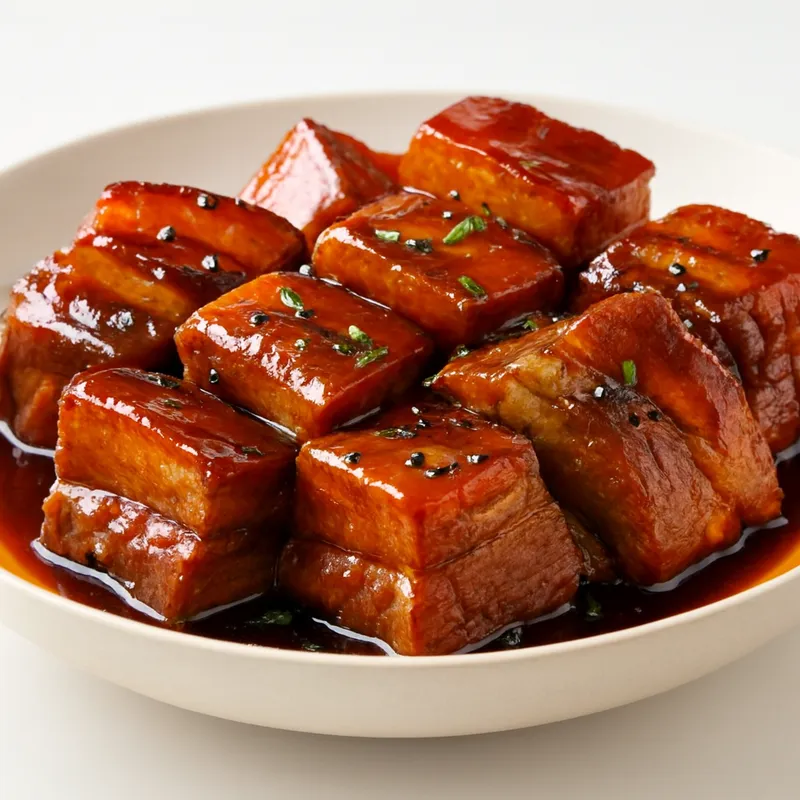




Tebichi is a cornerstone of Okinawan nuchigusui (food-as-medicine) cooking, dating back centuries in Ryukyuan farmhouse kitchens. Pork — introduced from China around the 14th century — became the defining Okinawan protein, and trotters were the cheap, collagen-rich cut prized for postpartum recovery and elderly diet. The dish is now standard at Okinawan home tables and izakaya, especially in winter.
Pork trotters braised with daikon, kombu, ginger, awamori, brown sugar, shoyu — a cornerstone of Okinawan nuchigusui (food-as-medicine) cooking. Two-stage cook is non-negotiable: hard-boil-and-rinse first, then 2-3 hour simmer.
Pork trotters braised until the skin is almost translucent, the cartilage soft enough to bite through. Daikon and kombu in the same pot soak up the gelatinous broth; ginger cuts the fat. Eat with a spoon — the broth is half soup, half sauce — and don't try to be neat. Lips will get sticky from the collagen. That's the point.
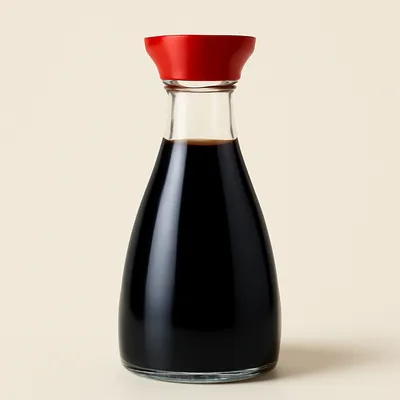
The trotters need a two-stage cook: first a hard boil and rinse to strip surface scum and gamey notes, then 2–3 hours simmering with daikon, kombu, ginger, awamori, brown sugar, and shoyu. Skipping the rinse leaves the broth muddy. Awamori does what sake can't here — its higher proof penetrates the connective tissue. The kombu isn't garnish; its glutamate is what makes the broth read savory rather than just sweet.
Variations
Naha's Yotsutake is the standard izakaya version; Ashibiuna serves it in a clear soup format closer to ashitebichi; younger Naha shops cube the trotter and crisp it briefly before plating; Korean jokbal is the closest regional cousin in technique.
On the Palate
Where Tebichi sits in the Japanese flavor cloud
Ingredients


How it's made
5 steps · 4 hours
- 140 min
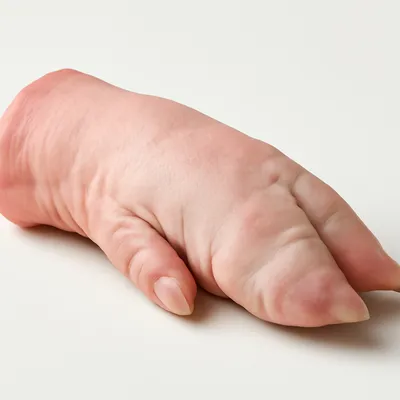
Clean the pork trotters thoroughly and blanch in boiling water.
Watch outGive the trotters a hard boil and a good rinse first to strip the surface scum and gamey edge — skip it and the broth comes out cloudy.
- 224 min
In a pot, combine trotters with water, kombu, soy sauce, brown sugar, and awamori.
- 3120 min
Add sliced daikon and ginger, then simmer until the trotters are tender.
Watch outSimmer two to three hours until the skin goes translucent and jiggly and the meat slips off the bone — the awamori is doing the work here, driving into the tendon in a way sake can't.
- 440 min
Adjust seasoning to taste with more soy sauce and sugar if needed.
- 516 min
Serve hot, garnished with sliced green onions.
Archive tool suggestions — not reviewed
These legacy suggestions have not been evidence-reviewed and are not presented as required tools.