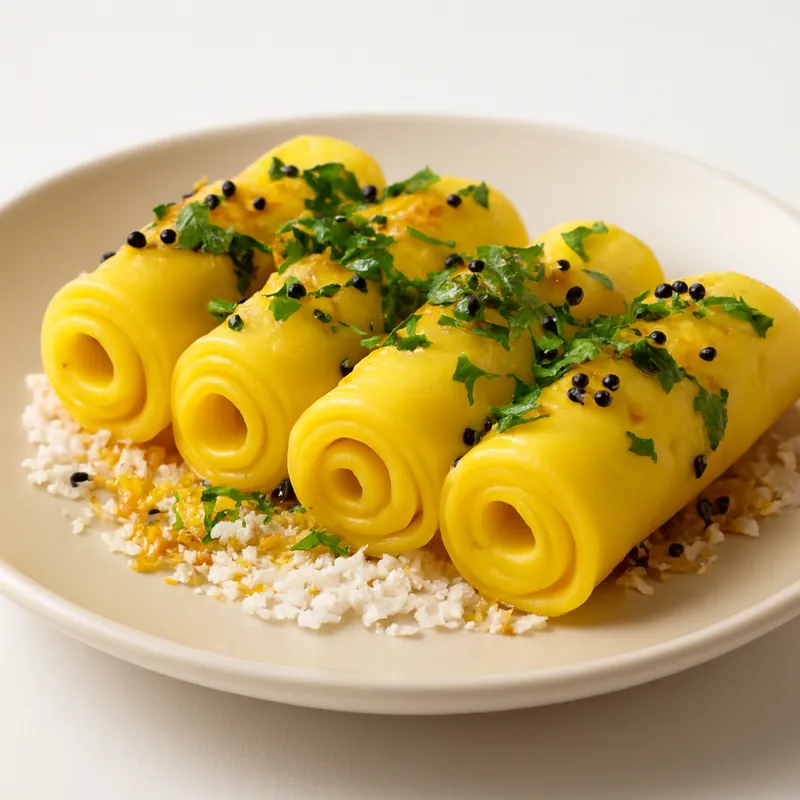
Colocasia leaves wrapped with a tangy and sweet chickpea flour mixture, spiced with tamarind, jaggery, and green chili, then steamed and tempered with sesame and mustard seeds.
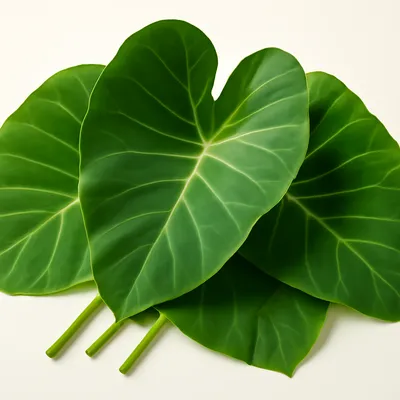

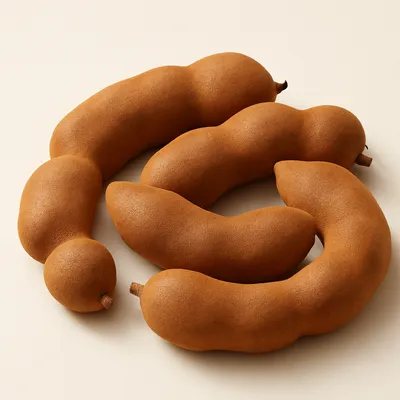



Western Indian — claimed by both Gujarat (where it's patra) and Maharashtra (alu vadi) — and the technique dates at least to medieval Jain kitchens, since the dish is fully vegetarian, root-free in some lineages, and uses leaves that grow in monsoon kitchen gardens. The colocasia plant itself is native to South Asia and was cultivated for its leaves long before its corm became common.
Western Indian — claimed by Gujarat (patra) and Maharashtra (alu vadi). Tamarind in the chickpea paste does double duty: flavor plus chemistry — its acid breaks down calcium-oxalate raphides in colocasia leaves that otherwise prick the throat.
A sliced spiral roll: dark green colocasia leaf wound around a tan chickpea-and-tamarind paste, steamed first and then pan-fried in mustard-and-sesame seed tempering. Sweet-sour-spicy in one bite — jaggery, tamarind, green chili. Crisp at the edges from the second cooking, soft inside. Eaten with tea. The leaf must be fully cooked or the throat itches; raw colocasia has calcium-oxalate crystals.
Tamarind in the chickpea paste is doing two jobs: flavor, and chemistry. Colocasia leaves contain calcium oxalate raphides that prick the throat — tamarind acid breaks them down during the steam, neutralizing the irritant. Skip the tamarind and even fully-steamed patra makes the throat scratchy. This is also why the paste must touch every part of the leaf, not just the center.
Variations
Gujarati patra runs sweeter with jaggery; Maharashtrian alu vadi is sharper and chili-forward; South Kanara pathrode (Karnataka) layers the leaves stacked rather than rolled; some Gujarati Jain versions skip the garlic-onion entirely and lean on asafoetida.
On the Palate
Where Patra sits in the Indian flavor cloud
Ingredients





How it's made
5 steps · 1 hour 30 min
- 112 min
Prepare a thick batter with chickpea flour, tamarind, jaggery, ginger, green chili, and spices.
Watch outWork the batter thick enough to spread and cling — runny paste slides off the leaf and won't neutralize the throat-scratch.
- 212 min
Spread the batter on colocasia leaves and roll them tightly.
Watch outCoat every inch of the leaf, edge to edge — bare patches stay scratchy in the throat even after full steaming.
- 323 min
Steam the rolls until cooked through and firm.
Watch outSteam until a roll feels firm and a knife comes out clean — still soft in the middle means the raphides haven't broken down.
- 49 min
Slice the steamed rolls and temper with mustard seeds and sesame seeds in hot oil.
- 535 min
Serve warm as a snack or side dish.
Archive tool suggestions — not reviewed
These legacy suggestions have not been evidence-reviewed and are not presented as required tools.