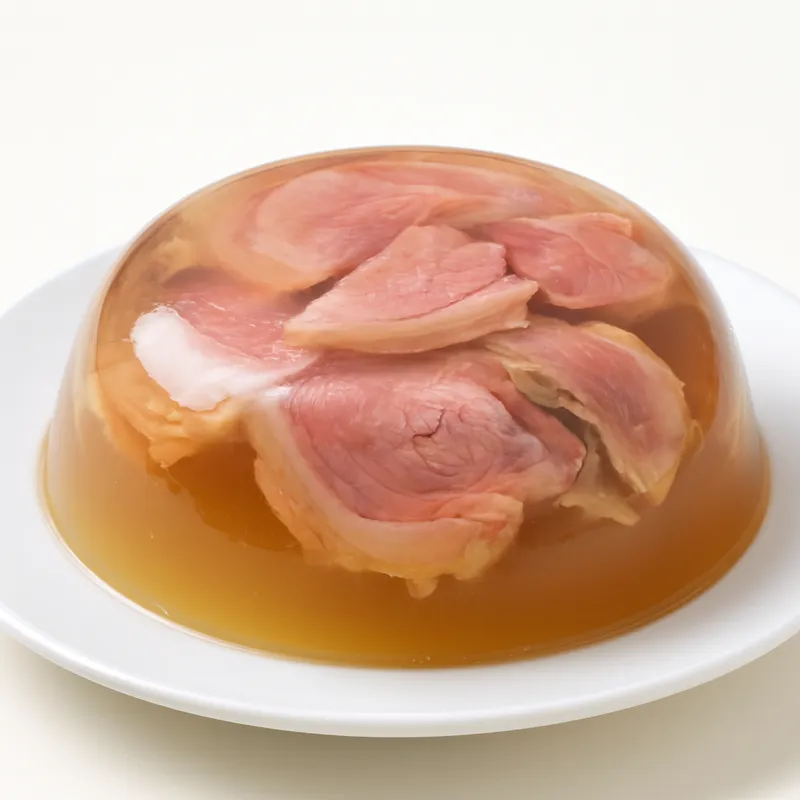
Whole goose air-dried and lacquered with a maltose-vinegar glaze, then roasted in a charcoal oven until the skin shatters and the meat stays moist.




Cantonese roast goose descends from northern roast duck, brought south by Song-dynasty cooks who fled to Guangdong; lacking the fatted ducks of the Yangtze delta, they substituted local geese. The most renowned lineage, Sham Tseng-style 'deep-well' (Shenjing) roast goose, originates in Shenjing village on Changzhou Island in Guangzhou's Huangpu district — named for the village's deep wells and for a pit-oven method in which a clay urn of lychee-wood charcoal is sunk into a dry well and the goose hung inside. It later spread to Hong Kong and Macau, where Yung Kee (opened 1942) became famous for it. — Yung Kee's roast goose was famous enough that diplomats reportedly carried it on flights. Sham Tseng remains the goose-roasting district today.
Yat Lok and Kam's Roast Goose in Hong Kong both run 60-year+ ovens; the bird is black-haired Lion-head goose, air-dried 8 hours after a maltose-vinegar bath, then charcoal-roasted skin-down to lacquer.
The goose comes to the table dark-amber and chopped through bone into 3cm pieces. Skin shatters under the chopstick — it's almost sheet-glass crisp. The fat layer beneath has rendered to a thin gloss; the meat is darker and richer than duck, more iron-flavored. Plum sauce on the side cuts through. Eat the skin first while it's still glassy; the second-best part is the cavity-soaked breast meat.
The skin's glassy crackle depends on three steps that all matter: (1) air-pumping separates skin from fat so render goes outward, not inward into the meat; (2) the maltose-vinegar glaze caramelizes at higher temperature than sugar alone, producing the deep amber rather than pale tan; (3) the 24-hour air-dry pulls surface moisture out so the skin enters the oven dehydrated and dries to glass instead of chewy leather. Skip any one and the skin is wrong.
Variations
Shenzhen Shiyan style (the rural cousin) uses brick ovens and lychee wood; Hong Kong Sham Tseng village version is leaner; Kam's Roast Goose runs the Michelin-tier glaze with plum sauce on the side.
On the Palate
Where Cantonese Roast Goose sits in the Chinese flavor cloud
Ingredients
Serves 6



How it's made
5 steps · 1 hour 30 min active + 23 hours 30 min waiting
- 120 min
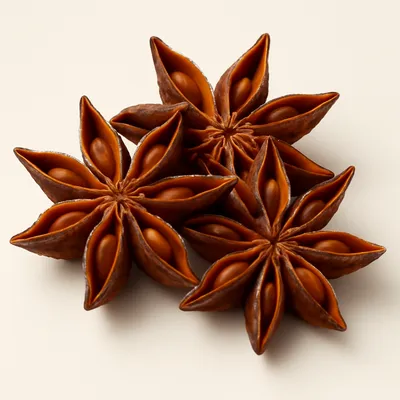
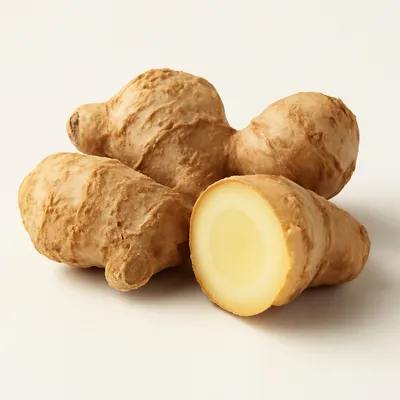
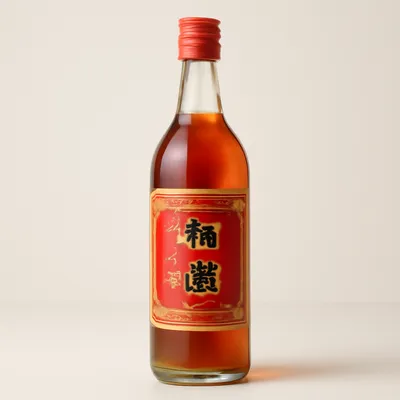
Clean a 4kg goose. Stuff cavity with star anise, cassia, sand ginger, scallion, ginger, soybean paste, sugar, salt, Shaoxing wine. Sew or pin closed.
- 210 min
Inflate the skin: insert an air pump between skin and flesh and pump until skin separates. This is what produces crackling crust later. Tie neck shut.
Watch outPump air between skin and flesh until the whole skin lifts and loosens like a drum — this is what lets the fat render outward and crisp; skip it and the skin stays leathery.
- 315 min
Blanch the goose in boiling water 15 seconds to tighten skin. Brush all over with a glaze of maltose syrup, white vinegar, hot water, Shaoxing wine. Hang to air-dry for 24 hours in a cool, breezy place.
Watch outAfter glazing, hang it in a cool breeze a full day until the skin is dry and taut to the touch — bone-dry skin bakes to glass; damp skin bakes to chewy leather.
- 470 min
Hang inside a charcoal oven (or convection oven at 200°C) for 60-75 minutes, rotating quarter-turn every 15 minutes. Check internal temperature reaches 75°C at the thickest thigh.
Watch outRotate a quarter-turn every fifteen minutes for even color and pull it when the thickest thigh hits temperature — uneven hanging scorches one side before the other renders.
- 515 min
Rest 15 minutes. Chop through bone with a heavy cleaver into 3cm chunks — Cantonese style serves goose on the bone. Plate with plum sauce on the side. Skin should be glassy-amber and shatter under chopstick pressure.
Watch outLetting the goose rest is crucial for moisture retention; don't skip this step.
Archive tool suggestions — not reviewed
These legacy suggestions have not been evidence-reviewed and are not presented as required tools.
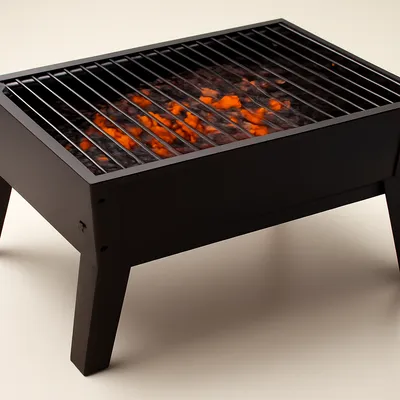
An open or hooded metal frame holding a bed of glowing charcoal embers, with a grate above. Charcoal burns at 700°C+ on the surface and emits short-wave infrared, which cooks proteins faster and with deeper Maillard browning than gas. Hardwood lump charcoal (oak, mesquite, fruitwood) lends its own smoke; cheap briquettes do not. Mastery is mostly heat zoning — direct over coals for searing, indirect off-coals for slow-roasting.

A heavy rectangular Chinese knife — the cai dao — with a flat 18-22 cm blade about 2 mm thick. The single tool handles every kitchen job: julienning ginger, splitting whole chickens, smashing garlic with the side of the blade, scooping diced onions on the broad face. The flat profile means knife-skill in Chinese kitchens is fundamentally different from Western technique — you push-cut and rock-cut, never slice through.