
A Cantonese banquet classic: a whole squab (young pigeon) brined in a spiced master stock, coated in a maltose syrup, air-dried, then deep-fried or roasted to a mahogany, glass-thin crackling skin over juicy, faintly pink meat. Eaten by hand with a salt-pepper dip.



A product of the 'Western food, Cantonese hand' tradition. The dish descends from the 'red-roast squab' (hongshao ruge) created in 1885 at Taipingguan (太平馆), the first Western-style restaurant opened by a Chinese cook (Xu Laogao) in Guangzhou; despite the name 'red-roast,' a 1963 Guangzhou culinary-school text records that 'roast squab is simply deep-fried squab' — brined, air-dried, then plunged into hot oil rather than oven-roasted. The famous bird is the Shiqi squab of Zhongshan: the Shiqi breed was developed from about 1915, when returning Zhongshan emigrants brought back American White King and Homer pigeons and crossed them with local stock. A Macau restaurant, Fat Siu Lau (佛笑楼), run by Zhongshan native Huang Mincheng, formalized the use of Shiqi squab — brined in a white master stock, then roasted. Shiqi squab earned national geographical-indication status in 2020, and its cooking technique was listed as Zhongshan municipal intangible heritage in 2022.
A whole squab arrives small — about half a catty, fitting in the hand — its skin a deep mahogany lacquer that shatters and crackles audibly at the first bite, scattering thin shards. Underneath, the breast meat stays juicy, tender, faintly rose-pink at the bone, with the gamey sweetness of young pigeon. There is no sauce on the plate: you tear it apart by hand and dip the pieces in fragrant salt-pepper (huai salt) or pepper-salt, sometimes with a squeeze of lemon. If the skin has gone leathery or chewy rather than glassy, the bird was fried before its skin was properly dried — the dish is finished the moment that crackle is lost.
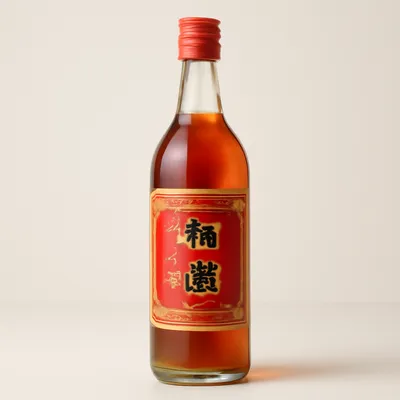
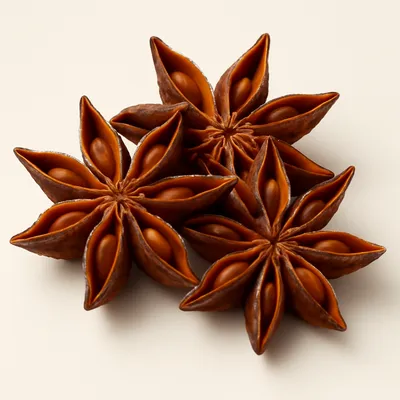
Two physical steps do the work. First, the squab is poached or steeped in a spiced master stock (star anise, ginger, scallion, rice wine, soy) that seasons it to the bone and partly cooks it. Then comes the skin syrup (cuipi shui): maltose dissolved in vinegar with a splash of liquor. Maltose is a reducing sugar, so during frying it browns by caramelization (gold → red → deep red) while its carbonyls react with amino acids on the skin in the Maillard reaction, building both the mahogany color and the roasted aroma. The decisive step is air-drying the coated bird in a cool, breezy place: skin must be dehydrated, because surface water cools the oil and steams the skin soft instead of crisping it. Finally the bird goes into oil started gently around 50-percent heat (about 150°C) with constant ladling for even color, then raised toward 180°C to blister the skin glass-crisp while sealing the juices inside. Skip the drying and the skin will never shatter.
Variations
In Cantonese usage the dish is most often called 'red-roast squab' (hongshao ruge) — here 'red-roast' means brined-then-fried, not the northern braise. The roads diverge mainly in heat and seasoning: 'crispy-skin squab' is deep-fried (or ladled with hot oil) for the thinnest crackling; 'roast squab' is oven- or fire-cooked after the brine, for a smokier skin; and 'raw-fried squab' (sheng zha ruge) skips the brine and fries the bird straight, for a cleaner pigeon flavor. The prized raw material is Zhongshan's Shiqi squab. Dips vary by house — fragrant salt-pepper (huai salt), plain pepper-salt, or Worcestershire-style jip sauce. This is distinct from Anhui-style stewed Huangshan pigeon, which is braised in a clear broth, not crisped.
On the Palate
Where Crispy-Skin Roast Pigeon sits in the Chinese flavor cloud
Ingredients
Serves 2


How it's made
7 steps · 30 min
- 110 min
Clean two squabs, removing innards and pin feathers; blanch briefly in boiling water with ginger and rice wine, then rinse.
- 2360 min
Steep or poach the squabs in a spiced master stock (star anise, ginger, scallion, soy, rice wine, salt) for half a day or more, until seasoned to the bone and just part-cooked.
- 38 min
Make the skin syrup: warm maltose with rice vinegar and a splash of liquor until smooth, then brush an even coat over the drained squabs.
Watch outBrush the maltose syrup on in a thin, even coat — it is a reducing sugar that browns to mahogany in the fry, so streaks mean uneven color.
- 4240 min
Hang the coated squabs in a cool, breezy place and air-dry for several hours until the skin is taut and dry to the touch.
Watch outAir-dry until the skin is taut and dry to the touch — a dry skin is what crisps glass-hard; fry it damp and it stays leathery.
- 56 min
Heat frying oil to about 50-percent heat (150°C); lower the squabs in and fry gently, ladling hot oil over the skin constantly for even color.
- 62 min
Raise the oil toward 180°C in the final minute to blister the skin glass-crisp and deep mahogany.
Watch outPush the oil toward 180 degrees in the last minute — this final blast blisters the skin glass-crisp and deep mahogany.
- 74 min
Drain well, chop or leave whole, and serve at once with a dish of fragrant salt-pepper and lemon.


